Eagle Hills’ $12 Billion Maldives Project: What the Deal Means for the Country’s Investment Plans
The development brings together hospitality, residential property, retail, leisure, and marina facilities in Ras Malé, while introducing a much larger residential and commercial component alongside the Maldives’ established resort industry
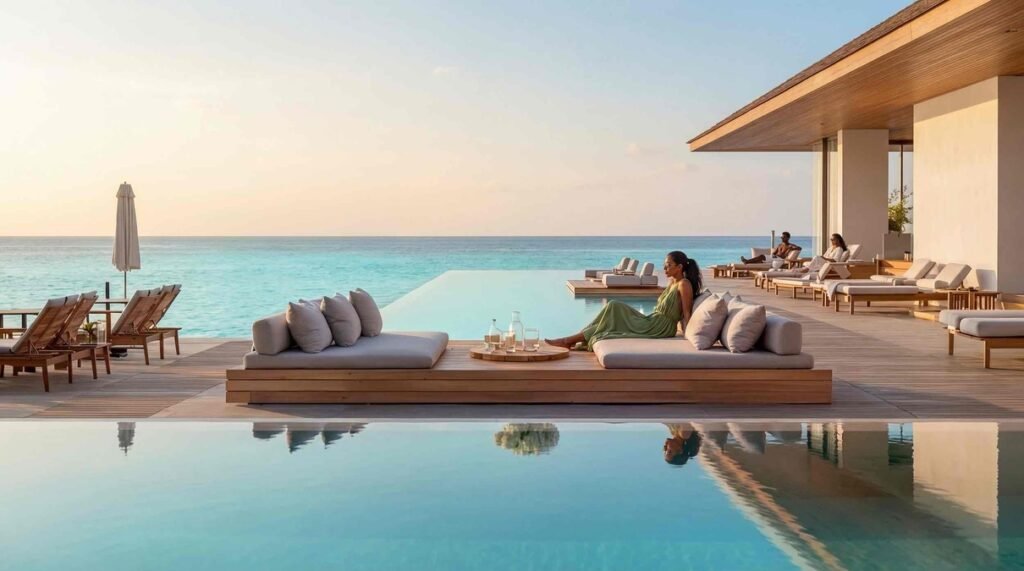
Abu Dhabi-based real estate investment and development company Eagle Hills has signed a commercial terms agreement with the Government of Maldives for the development of the Maldives Waterfront and Marina, a large mixed-use destination planned for the Ras Malé area.
Eagle Hills puts the overall development scale at about $12 billion across multiple phases. The agreement sets out the principal commercial terms and the parties’ shared vision for the project, while detailed terms are expected to be developed as the project progresses.
The planned destination is expected to include hotels and resorts, premium and branded residences, a marina, waterfront leisure facilities, retail, restaurants, entertainment, and wellness facilities. Education, healthcare, community infrastructure, and public spaces are also included in the proposed development.
Why does the project matter to the Maldives
The importance of the project goes beyond the size of its headline figure. Tourism is a major part of the Maldivian economy, making the ability to attract international capital into tourism and related infrastructure particularly important.
Makon Financials confirmed that the Maldives recorded 2.25 million tourist arrivals in 2025, while estimated travel receipts reached $5.57 billion, according to the Maldives Monetary Authority. Tourist arrivals have increased substantially since the pandemic, rising from 1.32 million in 2021 to more than 2.24 million in 2025.
Eagle Hills is positioning the Ras Malé development around a broader tourism and residential model. Rather than relying solely on resort accommodation, the project is designed to combine hospitality, residences, retail, leisure, and community facilities within one destination.
The company says the development is intended to create additional reasons for visitors to stay longer while attracting new international visitors and investors. If delivered as planned, the development could create activity across construction, hospitality, retail, marine services, and other businesses connected to the destination.
A larger role for real estate
Properties within the Maldives Waterfront and Marina are expected to be offered under a long-term leasehold structure in accordance with Maldivian law, with lease terms of up to 99 years. Eagle Hills says a new leasehold term of up to 99 years would begin when a property is transferred through sale or inheritance.
ALSO READ
For Maldives, a large-scale residential development alongside its established resort industry could broaden the country’s real estate market. Maldivian government officials have described the project as part of an effort to establish real estate as another pillar of the economy. That outcome, however, will depend on how successfully the residential, hospitality, and commercial components are developed and absorbed by the market.
The $12 billion figure needs context
The $12 billion figure requires careful interpretation. Eagle Hills describes the project as having an overall development scale of approximately $12 billion across multiple phases. It does not mean that $12 billion has already been committed or deployed.
Eagle Hills chairman Mohamed Alabbar has said projects of this nature can be financed through a combination of equity, debt, and property pre-sales, with the financing mix depending on market conditions. The total value of a large development can also be measured across the project’s entire development period rather than as an upfront investment.
This makes the project’s financing structure, construction schedule, and sales performance important indicators to follow. The commercial terms agreement represents a significant step, but it is not the same as the full project being financed, constructed, or completed.
Why Ras Malé matters
The development is planned for Ras Malé, an urban expansion area at Fushi Dhiggaru Lagoon near the capital, Malé.
The wider Ras Malé development is intended to provide additional residential, commercial, and tourism capacity as Maldives expands its urban infrastructure. For Eagle Hills, the location creates an opportunity to develop a destination combining tourism, residential, and commercial uses rather than another standalone resort island.
The company says the project will be developed on reclaimed land and that it will undertake no further dredging. Eagle Hills has also said that independent marine monitoring will be carried out during construction.
Environmental management will, therefore, be an important part of the project’s execution. The Maldives’ tourism industry depends heavily on its marine environment, making the condition of surrounding waters and coastal areas relevant to the long-term value of waterfront development.
What investors should watch next
The commercial terms agreement establishes the framework for the development, but detailed arrangements still need to be developed. The project’s phasing, financing, construction schedule, property sales, and delivery of its different components will determine how much of the proposed $12 billion development eventually translates into economic activity.
Tourism demand will also be important. The Maldives recorded more than 2.24 million tourist arrivals in 2025, while the government has set a target of 2.5 million visitors for 2026.
If visitor demand continues to support additional accommodation, residences, and related services, the project could give the Maldives another channel for attracting international capital beyond traditional resort investment. If demand or sales develop more slowly, the multi-phase structure could allow construction and investment to proceed more gradually.
For now, the agreement marks the beginning of a major development programme rather than its completion. The key issue for the Maldives will be whether the proposed waterfront destination can turn its projected development scale into sustained investment, tourism activity, business opportunities, and government revenue over the years required to build it.
Makon Financials