Saudi Aramco Restarts East-West Pipeline: What It Means for Oil Supply and Hormuz Risk
The restart allows Saudi Arabia to move crude toward the Red Sea again after the pipeline was shut down earlier this month. Flows remain below normal as repairs continue.
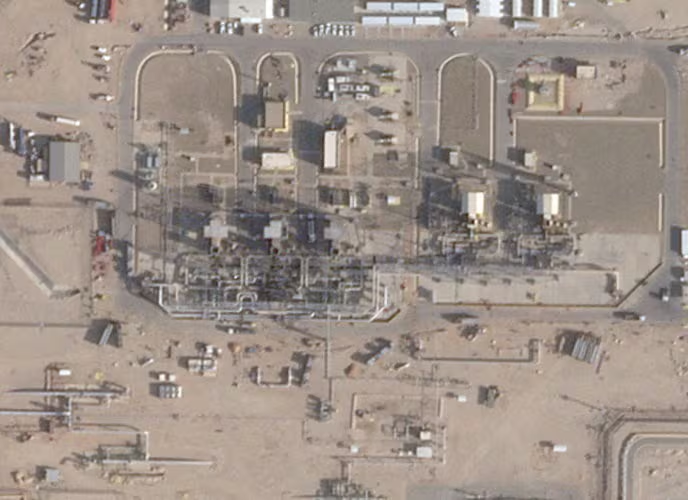
Saudi Arabia has restarted operations on its East-West Pipeline, restoring a major route for moving crude from the kingdom’s eastern oil-producing region to the Red Sea port of Yanbu without relying on the Strait of Hormuz
The restart follows the shutdown caused by drone attacks on September 11, which halted crude loadings at Yanbu. The pipeline is now operating again, but at a reduced rate as Saudi Aramco works to restore higher flows.
The development gives Saudi Arabia greater flexibility in moving oil at a time when disruptions around the Strait of Hormuz have placed pressure on Gulf energy flows.
The East-West Pipeline, also known as Petroline, stretches about 1,200 kilometres across Saudi Arabia, connecting the kingdom’s eastern oil-producing areas with its western coast.
Aramco says the pipeline has crude capacity of about 7 million barrels per day. That figure includes roughly 2 million barrels per day of capacity serving refineries, meaning the entire 7 million bpd should not be treated as export capacity. Aramco said the system reached its 7 million bpd crude capacity during the first quarter of 2026.
Before the latest shutdown, Saudi Arabia was using the pipeline to reroute around 4 million barrels per day of crude toward Yanbu. Reuters estimates that volume at roughly 4% of global oil supply.
The current restart is below that level. Reuters reported that pumping resumed at a low rate, with Aramco seeking to increase flows back toward 4 million bpd.
Three pumping stations were damaged in the September 11 attack, according to satellite imagery and industry sources cited by Reuters. A security source estimated that reaching 40% of the pipeline’s capacity would take a couple of days, while a full restart could take six to eight weeks. Another industry source put the timeline at up to six weeks.
That means the pipeline is operational again, but its previous level of crude movement has not yet been fully restored.
Why Yanbu matters
The importance of the East-West Pipeline is its ability to move Saudi crude toward the Red Sea.
Oil transported through the pipeline can reach Yanbu without travelling through the Strait of Hormuz. This gives Saudi Arabia an alternative route for part of its crude supply when maritime movements through the Gulf are disrupted.
Aramco identifies the East-West Pipeline as part of its supply-chain resilience, describing it as an alternative route that enables crude and petroleum-product exports through the kingdom’s west coast.
The route does not eliminate Saudi Arabia’s exposure to Hormuz. Instead, it reduces the amount of Saudi crude that needs to depend on the waterway.
What changes for oil supply
The immediate change is that Saudi Arabia can begin restoring crude movements toward Yanbu and resume activity at the Red Sea port.
ALSO READ:
Reuters reported that one cargo was scheduled to load at Yanbu for China following the restart. Traders were also positioning tankers around Egypt in anticipation of renewed Saudi oil movements from the Red Sea route.
The return of the pipeline has therefore increased expectations that more Middle Eastern crude can reach international markets.
Oil prices responded to the development. Brent crude fell by more than $2 a barrel toward $97 on September 22, reaching its lowest level since September 8. However, the decline was not caused by the pipeline restart alone. Expectations surrounding Hormuz and increased Saudi shipments from Ras Tanura also contributed to the move.
The Red Sea route also matters for international buyers
Restoring Yanbu operations gives Saudi Arabia another outlet for supplying international markets.
From the Red Sea, Saudi crude can move toward markets outside the Gulf without first travelling through Hormuz. The route also connects with infrastructure in Egypt that can facilitate the movement of oil toward the Mediterranean.
That makes the restoration of Yanbu exports relevant to both Asian and European oil flows.
The positioning of tankers around Egypt following the pipeline restart indicates that traders are already preparing for renewed movements of Saudi crude through the Red Sea route.
What investors should watch next
The key issue is no longer whether the East-West Pipeline has restarted. The next question is how quickly Aramco can increase the flow rate.
Reuters reported that Aramco was seeking to restore pumping toward 4 million bpd, while sources estimated that a return to full pumping rates could take between six and eight weeks.
Investors and oil traders will therefore be watching Saudi crude loadings at Yanbu, the pace of repairs to the damaged pumping stations, flows through the East-West Pipeline and developments affecting shipping through the Strait of Hormuz
For Saudi Arabia, the restart restores an important alternative oil route. For the wider market, it provides some additional supply flexibility, but the significance of that relief will depend on how quickly pipeline flows recover and how the broader disruption around Hormuz develops.
Makon Financials