Nigeria’s 23% Interest Rate: What Has Changed for Borrowers, Banks, and Inflation
The CBN’s latest rate decision changes the cost of money in Nigeria, but its effect will depend on how banks respond. With inflation easing and external reserves strengthening, the lower benchmark creates room for cheaper credit, while higher energy costs and foreign exchange pressures remain important risks.
Makon Financials | Analysis |
Nigeria’s benchmark interest rate has fallen sharply, with the Central Bank of Nigeria (CBN) cutting the Monetary Policy Rate (MPR) to 23% from 26.5%.
The 350-basis-point cut followed the Monetary Policy Committee’s September 21–22 meeting. The CBN also adjusted the standing facilities corridor to +50/-300 basis points around the MPR while leaving cash reserve requirements unchanged.
The decision comes as inflation has eased, foreign-exchange conditions have improved, and Nigeria’s external reserves have strengthened. But the lower MPR does not mean Nigerians will immediately see their loan rates fall by 3.5 percentage points.
What the 23% rate means for borrowers
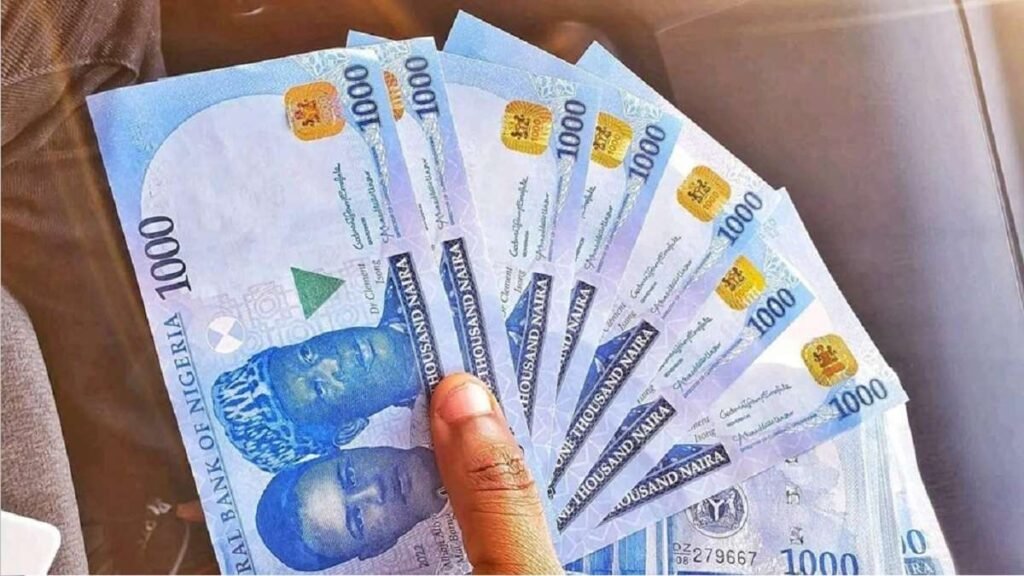
The MPR is a benchmark for monetary policy, not a fixed rate for bank customers. Banks consider their funding costs, liquidity, credit risk and market conditions when setting lending rates. So a loan priced at 30% does not automatically become a 26.5% or 23% loan after the CBN cut.
The impact should come through gradually as market rates adjust and banks reassess the cost of lending.
For businesses that rely heavily on bank credit, a sustained decline in lending rates could eventually reduce the cost of financing working capital, equipment and expansion. For households, the effect will depend on whether banks pass lower funding costs through to consumer credit. That transmission is now one of the key things to watch.
What changes for banks
Banks are entering the lower-rate environment with their reserve requirements unchanged.
The CBN kept the cash reserve requirement for deposit money banks at 45%, merchant banks at 16% and non-TSA public-sector deposits at 75%.
That means the rate cut is not being accompanied by a broad release of funds that banks can immediately turn into new loans. Instead, banks will have to adjust to the lower benchmark while continuing to manage liquidity and funding costs.
Lower rates can eventually affect the returns banks earn on loans and other interest-bearing assets, as well as what they pay on deposits. The effect on individual banks will depend on how quickly those rates adjust and how their loan and deposit books are structured.
Inflation gives the CBN more room
The decision comes after a period of slower price growth. Nigeria’s headline inflation rate fell to 15.39% in August from 15.43% in July. Food inflation stood at 19.57%, while core inflation declined to 13.29%. Monthly headline inflation also slowed to 0.71% from 1.57%.
That improvement gives the CBN more room to reduce the degree of monetary restraint without abandoning its focus on price stability.
But inflation is still high in absolute terms. A renewed increase in food, fuel or transport costs could slow the disinflation process and limit how quickly the CBN can ease policy further.
Energy prices remain a risk
Energy costs remain one of the biggest risks to the inflation outlook. Higher global energy prices can feed into transportation, manufacturing and logistics costs in Nigeria, with knock-on effects across the wider economy.
This creates a difficult balance for the CBN. Lower interest rates can support credit and economic activity, but a fresh rise in costs could put pressure on inflation again. The central bank has also flagged geopolitical developments and election-related spending as risks to the inflation outlook.
Stronger reserves give the CBN more room
Nigeria is also entering the rate-cut cycle with a stronger external position.
Gross external reserves reached $55.25 billion as of September 18, according to the CBN, equivalent to about 11.3 months of imports of goods and services.
The country recorded a balance-of-payments surplus of $3.51 billion in the second quarter, up from $2.38 billion in the first quarter. The current-account surplus also increased to $7.54 billion from $4.49 billion.
ALSO READ
Stronger reserves and improved external balances provide a larger buffer for the central bank as monetary policy becomes less restrictive.
But the relationship between interest rates and the naira still matters. If lower rates reduce the attractiveness of Nigerian assets or trigger renewed pressure in the foreign-exchange market, imported inflation could become a problem again.
What happens next
The real test of the 23% MPR will be how quickly it reaches the wider economy. If banks lower lending rates, businesses could gain access to cheaper financing, and households could eventually see some relief on credit costs. More affordable credit could also support investment and economic activity.
If lending rates remain high, however, the effect of the CBN’s decision on consumers and businesses will be limited.
Economic growth has already strengthened, with Nigeria’s GDP expanding 4.43% year-on-year in the second quarter of 2026, compared with 3.89% in the first quarter. Non-oil growth was 4.31%, while the oil sector grew 7.31%.
The rate cut, therefore, comes at a point when growth is improving and inflation is moderating, but energy prices, foreign exchange conditions, and domestic spending remain important risks.
For borrowers and businesses, the question is no longer simply whether the CBN has cut rates. It is how much of that cut will actually reach the cost of credit.