Dangote Refinery’s New York Listing Plan: What Investors Need to Know
Dangote Refinery’s proposed New York listing will depend on more than its expansion plans. Investors will be watching whether higher refining capacity translates into sustainable earnings, reliable crude supply, stronger cash flow and consistent utilization as the company moves toward its 2029 target.
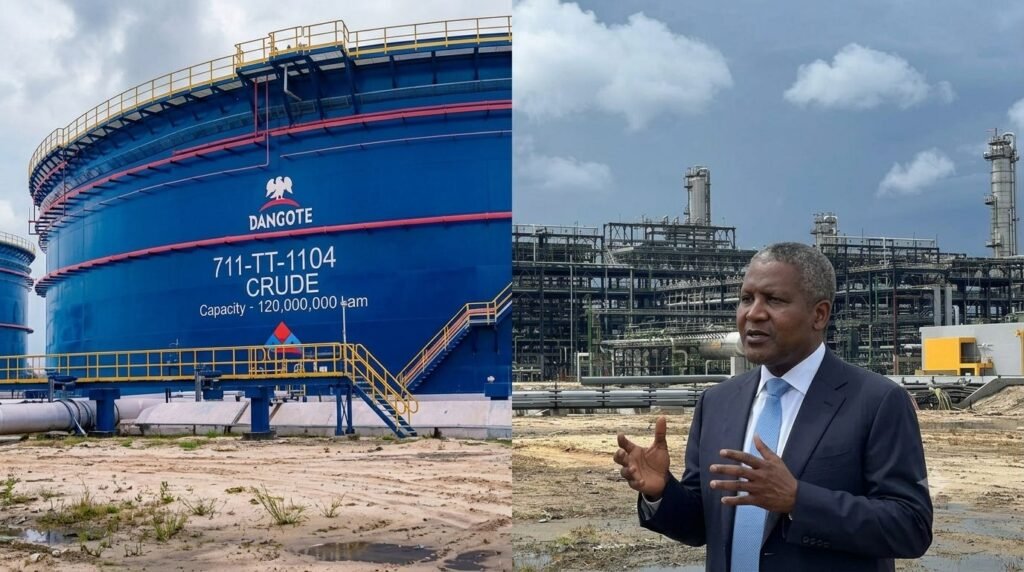
Dangote Petroleum Refinery is preparing for a possible second phase in its capital-market strategy: a future listing on a U.S. stock exchange after expanding its refining capacity to 1.4 million barrels per day.
Aliko Dangote said the company could pursue a U.S. listing in roughly three to four years, while the refinery’s chief financial officer, Bruce Tanner, has said an international secondary listing is part of the company’s longer-term plans. The timing is linked to the refinery’s expansion, which is expected to be completed around 2029.
That makes the proposed New York listing more than a separate financing event. It is tied to whether Dangote Refinery can turn its current scale, earnings, and expansion programme into a business that can attract a much wider international investor base.
The expansion is the key condition
Dangote Refinery currently has a nameplate capacity of 700,000 barrels per day. The company plans to spend about $14.3 billion to double that capacity to 1.4 million barrels per day by 2029.
The current Nigerian IPO is an important part of that financing strategy. The company is offering 4.1 billion ordinary shares at ₦525 each, with the offer running from September 14 to October 13, 2026.
The proceeds are largely intended to support the expansion. That means investors buying into the Nigerian offering are not simply buying into the refinery as it operates today. They are also exposed to the financial outcome of a much larger operation that has yet to be completed.
A larger refinery could generate substantially greater sales and cash flow, but only if the additional capacity is completed on schedule, receives enough crude, and operates efficiently at a commercial scale.
How does New York change the investor base
A U.S. listing would put Dangote Refinery in front of a much broader pool of institutional investors than the company can reach through Nigeria alone.
It could also make the company’s shares easier for dollar-based investors to access and potentially improve international liquidity. Dangote has specifically described the U.S. market as the likely destination for an overseas listing after the refinery reaches its planned expansion capacity. But a U.S. listing does not automatically create a higher valuation.
International investors will still examine earnings, cash flow, debt, refining margins, crude supply, capital expenditure, and the sustainability of the company’s growth. The listing venue can broaden access to capital; it can not remove the underlying operating risks.
The earnings story is already changing
The refinery’s financial performance has improved sharply as operations have scaled up.
Dangote Refinery reported $1.82 billion in net profit on more than $13 billion of revenue in the first half of 2026, compared with a $476 million loss for the whole of 2025. Reuters reported that exports increased significantly during disruptions to Middle Eastern fuel supplies, including higher shipments of jet fuel and diesel.
That performance provides a stronger foundation for an international capital-market story, but investors have to separate temporary market conditions from the refinery’s underlying economics.
The first half of 2026 benefited from unusually tight global fuel markets. A future U.S. investor will want to know how much of the refinery’s earnings can be maintained when refining margins and international fuel prices return to more normal conditions.
This is one of the most important issues behind the proposed listing.
Crude supply could become more important as capacity rises
Doubling refining capacity also doubles the importance of securing reliable feedstock.
The refinery already sources crude from both Nigeria and international markets. Its IPO prospectus shows that approximately 60% of its crude feedstock in 2025 came from Nigeria, while the remainder was sourced through international purchases and other arrangements. The company had processed crude grades from Africa, South America, the United States, and the Middle East by June 2026.
Related News
At 1.4 million barrels per day, maintaining high utilization will require a significantly larger and dependable crude supply network.
That makes feedstock security a central financial issue, not just an operational one. If the expanded refinery can not run consistently because of crude shortages or unfavorable procurement costs, the additional capacity would not translate fully into additional earnings.
The Nigerian listing comes before the U.S. test
The proposed New York listing also gives the company an opportunity to establish a public-market track record in Nigeria first.
The current IPO is expected to give investors a clearer view of the refinery’s financial performance, capital spending, and dividend capacity as the company moves through its expansion.
That track record could become important when the company approaches international investors.
A U.S. listing would, therefore, be a second-stage test of the business. By then, investors should have more evidence on whether the refinery can consistently convert its enormous physical capacity into profits and cash flow.
What investors should watch
The most important indicators between now and a potential U.S. listing is not the listing announcement itself.
Investors should watch the progress of the 1.4 million-barrel-per-day expansion, the amount of capital still required, the refinery’s utilisation rate, crude procurement costs, and the stability of refining margin
The company’s ability to expand exports across Africa will also matter. Management has said the long-term strategy is not limited to Nigeria and that the refinery is intended to supply fuel to other African markets.
The scale of that opportunity is substantial, but distribution infrastructure, logistics, pricing, and competition will determine how much of the regional market Dangote can actually capture.
The bigger financial-market question
Dangote Refinery’s proposed New York listing is ultimately a test of whether an African industrial company can use scale and operating performance to build a durable presence in global capital markets.
The company is approaching that goal in stages: establish a public market presence in Nigeria, finance a major capacity expansion, increase production and exports, and then seek access to international investors.
The plan is still prospective. Dangote has discussed a U.S. listing in roughly three to four years, while the expansion is targeted for completion around 2029. There is therefore no confirmed U.S. listing date yet.
The more important question before that stage arrives will be whether the refinery’s expansion produces the earnings, cash flow, and operating consistency needed to justify its international ambitions.
Makon Financials