Saudi Arabia’s Oil Pipeline Shutdown Changes the Risk Equation for Global Oil Markets
Saudi Arabia’s Oil Pipeline Shutdown Changes the Risk Equation for Global Oil Markets
Saudi Arabia has shut its East-West oil pipeline after multiple drone attacks damaged facilities in the Riyadh and Medina regions, removing a major route for moving Saudi crude to the Red Sea at a time when shipping through the Strait of Hormuz remains severely disrupted. The shutdown has added fresh pressure to an already strained global oil market, with Brent crude trading above $100 a barrel as traders assess the risk of further supply disruptions.
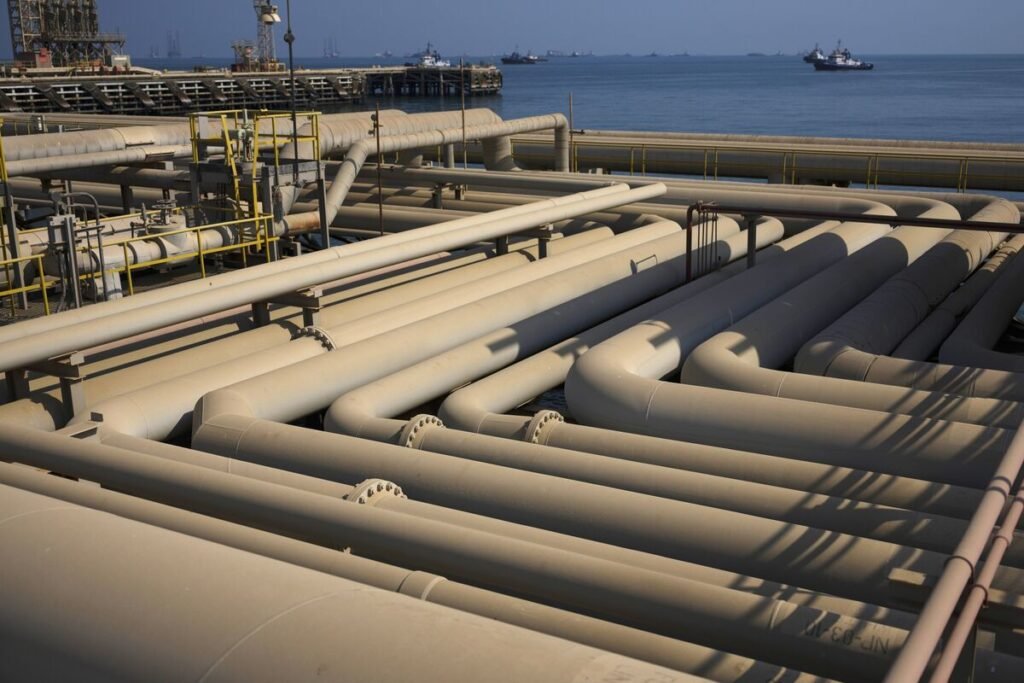
The 1,200-kilometre pipeline runs from Saudi Arabia’s oil-producing areas in the east across the kingdom to Yanbu on the Red Sea coast. It has become particularly important during the disruption in Hormuz because it allows Saudi crude to reach the Red Sea without travelling through the strait, which has seen tanker traffic fall sharply during the conflict.
ALSO READ:
The pipeline had been moving around 4 million to 5 million barrels of oil per day in recent months, according to ship-tracking companies and analysts cited by Reuters. That represents roughly 4% to 5% of global oil supply. The figure refers to recent flows, not the pipeline’s maximum capacity, so the shutdown does not automatically mean that an equivalent amount of oil has disappeared from global production.
Saudi Arabia said the attacks involved drones launched from Iraqi territory and caused injuries and infrastructure damage. Iraq has acknowledged that the attack originated from its territory and has taken action in response, while no group has publicly claimed responsibility for the pipeline strike. U.S. President Donald Trump has said Iran was probably responsible, but that remains an attribution rather than a confirmed finding about who carried out the attack.
The Saudi Energy Ministry said the pipeline was shut as a precaution after the attacks and that emergency and specialised technical teams were working to secure the line and assess its condition. Saudi Arabia has not announced a date for the pipeline to resume operations.
The timing of the shutdown is what makes the development important for oil markets. The East-West pipeline had become Saudi Arabia’s principal alternative for moving crude around the Strait of Hormuz, so taking it offline leaves the kingdom with less flexibility while the main maritime route remains heavily restricted. The market is therefore dealing with pressure on both a major shipping route and an important overland export route at the same time.
Oil prices have already responded to the growing uncertainty. Brent crude has moved above $100 a barrel, while U.S. diesel prices have reached record levels, according to Reuters. The latest pressure came as maritime authorities reported that a vessel was struck by an unknown projectile while travelling through the Strait of Hormuz on Sunday, adding another incident to the growing concerns around Gulf shipping.
The situation is also developing on the other side of Saudi Arabia’s alternative export route. Iran-aligned Houthi forces have advanced in Yemen and seized Perim Island, also known as Mayun, in the Bab el-Mandeb Strait. The island sits along a major shipping corridor linking the Red Sea with the Gulf of Aden, giving the latest Houthi advance significance for vessels using the Red Sea route.
That creates a difficult situation for Saudi oil exports. The East-West pipeline was useful precisely because it allowed crude from eastern Saudi Arabia to bypass Hormuz and reach export facilities at Yanbu. But with the pipeline now shut and security concerns increasing around the Red Sea and Bab el-Mandeb, the kingdom faces greater pressure over the routes available for moving crude to international customers.
The immediate question for the oil market is how long the pipeline remains out of service. A short shutdown would limit the disruption, particularly because Saudi Arabia has other infrastructure and crude-storage capabilities. A prolonged closure would be more significant because the pipeline had been carrying millions of barrels per day during the period when Hormuz was heavily disrupted.
The distinction between production and transportation is important here. Saudi Arabia has not suddenly lost the ability to produce the crude that normally moves through the pipeline. What has been hit is the infrastructure used to transport a substantial volume of that crude toward the Red Sea. The longer the route remains unavailable, the more pressure there could be on other parts of the kingdom’s oil-export system.
For the wider market, the concern is that the number of reliable routes for moving Middle Eastern oil is being reduced at the same time. Hormuz remains under severe pressure, Saudi Arabia’s East-West pipeline is shut, and the security situation around Bab el-Mandeb is deteriorating. Another attack on energy infrastructure or shipping could therefore have a larger effect because there are fewer alternative routes available.
Saudi Arabia’s pipeline shutdown does not by itself mean that millions of barrels of oil have permanently disappeared from global supply. Its significance is that a major alternative route has been taken offline while the world’s most important oil-shipping chokepoint remains severely disrupted. With Brent already above $100 and another vessel incident reported in Hormuz, the market is now facing a narrower margin for absorbing another supply or transportation shock.