Indian Central Bank Steps In as Traders See Efforts to Curb Rupee Weakness
Indian Central Bank Steps In as Traders See Efforts to Curb Rupee Weakness
Makon Financials | August 25, 2026
The Reserve Bank of India is likely intervening in the foreign exchange market to limit further weakness in the rupee, according to traders cited by Reuters, as higher oil prices and persistent corporate demand for U.S. dollars put pressure on the currency.
The rupee was trading at around 95.7350 per U.S. dollar on Tuesday and moved within a range of less than one paisa during the session, highlighting how tightly the currency has been trading under the central bank’s market presence.
Traders said state-run banks were seen offering dollars in the market, which they believed was being done on behalf of the Reserve Bank of India (RBI). The central bank itself did not publicly confirm the intervention.
RECOMMENDATION
US awards Raytheon $22.9 billion seven-year deal to boost Tomahawk output
RBI intervention keeps rupee movement contained
The latest activity follows repeated signs of RBI intervention in recent weeks as policymakers seek to prevent sharp movements in the rupee.
The intervention appears to be limiting the currency’s ability to weaken rapidly. Traders have become increasingly cautious about taking large positions against the rupee because the RBI has repeatedly appeared in the market when selling pressure builds.
A separate Reuters report on August 25 said persistent central bank intervention had kept the rupee among Asia’s quieter currencies over the previous two weeks. The currency had remained within a range of roughly 95.45 to 95.75 per dollar during that period.
The effect has been particularly visible in day-to-day trading. Instead of large swings, the rupee has remained close to the 95.70–95.75 area, with traders reporting that gains in the dollar-rupee pair were being capped by RBI activities
Oil prices are adding pressure to the rupee
Higher crude oil prices are an important source of pressure for India’s currency because the country relies heavily on imported oil.
Brent crude was around $92.30 a barrel on Tuesday, according to Reuters, as concerns over Middle East supply disruptions continued to support prices.
For India, a more expensive crude can increase the country’s demand for dollars because oil imports are largely settled in the U.S. currency. That creates additional pressure on the rupee when companies are already seeking dollars for imports and other foreign-currency payments.
Reuters also reported that corporate demand for dollars remained an important factor behind the pressure on the currency.
Rupee has stayed close to 96 per dollar
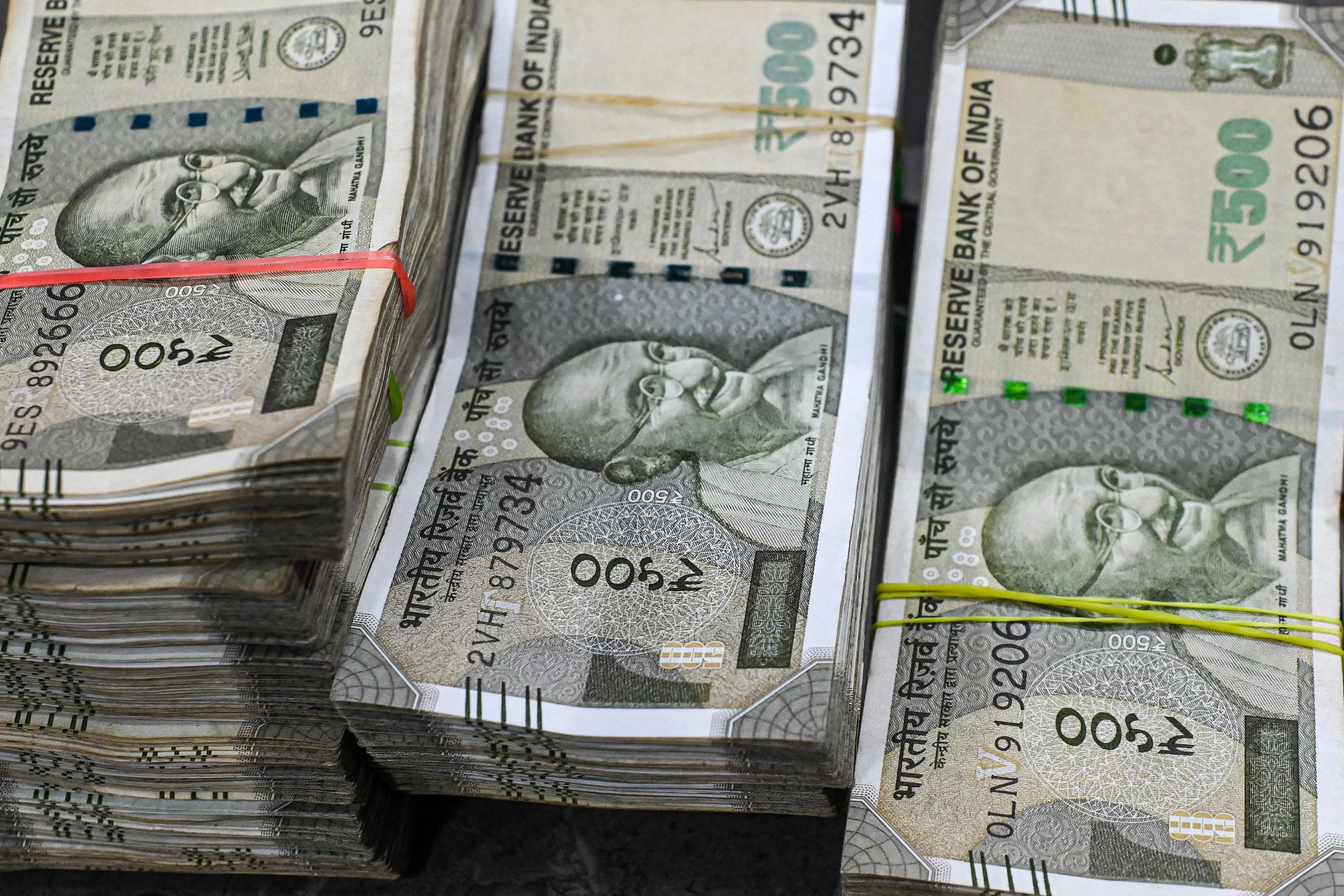
The RBI’s intervention has become particularly important as the rupee approaches the 96-per-dollar level.
On August 21, Reuters reported that intervention had helped prevent the currency from weakening beyond 96 per dollar after oil-related pressure pushed the rupee lower.
The currency had also fallen to a three-week low of 95.7525 per dollar on August 19, before RBI intervention helped limit further losses. Reuters reported that state-run banks were active in the market during the period, reinforcing traders’ expectations that the central bank was intervening.
The repeated intervention has therefore created an important dynamic in the market: traders continue to see fundamental reasons for rupee weakness, but they also expect the RBI to resist an abrupt decline.
RBI activity is reducing volatility
The central bank’s market activity is not simply about the rupee’s closing level. It is also changing how the currency trades.
Reuters reported that persistent intervention had significantly reduced rupee volatility over the previous two weeks. With the currency repeatedly being kept within a narrow range, speculative trading has also become more limited.
That does not eliminate the underlying pressures facing the rupee. Instead, it means those pressures are being absorbed more gradually through the foreign exchange market.
The approach also gives businesses greater predictability when managing dollar payments, although it can make the currency less responsive to short-term changes in global market conditions.
Foreign inflows provide some support
The pressure on the rupee is partly offset by stronger foreign-currency inflows.
Reuters reported that inflows from measures including foreign-currency deposits and other balance-of-payments channels had reached about $73 billion between June 8 and August 21. These inflows have helped push India’s foreign exchange reserves close to a record level.
That gives the RBI greater room to manage periods of heavy dollar demand while maintaining liquidity in the foreign exchange market.
However, stronger inflows do not necessarily mean the rupee will strengthen sharply. Market participants are also watching whether the central bank continues to absorb incoming dollars while supplying dollars when demand rises.
What happens next for the rupee
The immediate direction of the rupee will depend heavily on oil prices, corporate dollar demand, foreign portfolio flows, and geopolitical developments.
A further rise in crude prices could increase India’s import bill and strengthen demand for dollars. At the same time, continued foreign inflows could provide an offsetting source of dollar supply.
For now, the RBI’s presence is the dominant feature of the currency market.
The central bank has not publicly confirmed Tuesday’s intervention, so the most accurate description is that traders believe the RBI was active through state-run banks. That distinction matters because the reported intervention is based on market observations rather than an official RBI announcement.
The rupee’s position around 95.7350 per dollar on Tuesday shows the result: despite higher oil prices and strong demand for dollars, the currency remained tightly contained rather than extending its decline.
For Makon Financials, the key takeaway is straightforward: the rupee remains under pressure, but repeated RBI intervention is limiting the speed and volatility of its decline.
source: Reuters | Reserve Bank of India