China-UAE Shipping Costs Surge as Gulf Importers Reroute Cargo
Some UAE importers are facing much higher costs and longer delivery times for goods arriving from China, as shipping disruptions push cargo onto alternative routes through the region.
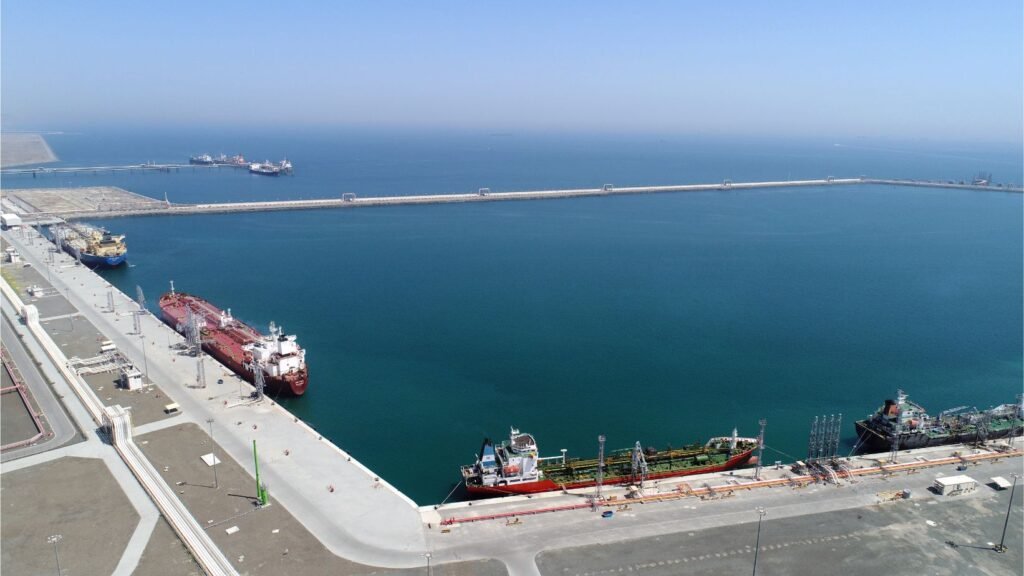
Shipping costs for cargo moving from China to the UAE have risen sharply as disruptions around the Strait of Hormuz force importers and shipping companies to use alternative routes.
The Financial Times reported on September 20 that a Dubai-based importer of medical examination gloves was paying up to $10,000 to ship a 40-foot container from China to the UAE, compared with about $1,250 before the disruption. The importer also said marine insurance had risen from around $120 to $1,000 per container, while typical transit times had increased to about 60 days from roughly 30 days.
The $10,000 figure is the cost reported by that importer. It nevertheless shows the scale of the increase facing some businesses that depend on imported goods.
Fujairah becomes an alternative route into the UAE
The disruption is also changing where some cargo is discharged.
Maersk said selected shipments originally booked for Khor Fakkan are being redirected, with some containers discharged at Fujairah and moved by bonded land transport to Jebel Ali The shipping company said the change applies to affected shipments whose final destination has been amended from Khor Fakkan to Jebel Ali.
Dubai Customs has separately introduced a temporary facilitation for cargo destined for Jebel Ali Port and Dubai free zones through Khorfakkan and Fujairah. Containers can be transported by road directly to Jebel Ali and the free zones without undergoing the regular customs-clearance procedure at the intermediate port.
The arrangement gives importers another way to move cargo into Dubai when the original maritime routing can not be used normally.
Rerouting is adding to freight costs
The alternative arrangements come with additional charges.
Maersk has introduced an emergency freight rate of $1,800 per 20-foot dry container, $3,000 per 40-foot dry container, and $3,800 for reefer, special and dangerous-goods containers for affected cargo. Any vessel transiting the Strait of Hormuz incurs an additional $1,000 per container.
Maersk says the emergency rate is intended to cover the additional costs of alternative routing, including onward transportation and potential storage arrangements. The separate $1,000 charge for vessels using the Strait is intended to cover additional costs, including insurance premiums and crew-risk compensation.
Storage can add another expense. Under Maersk’s current arrangements, cargo covered by the emergency freight option includes 14 days of storage in transit. After that, storage is charged at $25 per TEU per day, alongside applicable reefer monitoring and plug-in charges.
ALSO READ
For importers, the financial impact, therefore, extends beyond the original ocean-freight quotation. A shipment that takes longer to reach its destination can also leave working capital tied up in inventory for a longer period.
Fujairah’s port capacity is also being expanded
The increased use of Fujairah comes as the UAE is investing in additional port capacity on its east coast.
DP World announced in July that it had reached an agreement in principle with the Fujairah Ports Authority to develop two terminals under a 50-year concession. The planned Al Rugaylat terminal is designed to handle up to 2.5 million TEUs annually, along with 1.7 million tonnes of general cargo and 190,000 car-equivalent units. The planned Dibba terminal will add up to 3.6 million tonnes of annual general-cargo capacity.
The project is separate from the current emergency rerouting arrangements. DP World expects construction to take approximately 24 to 30 months from commencement, meaning the new capacity will not immediately address today’s disruption.
DP World says the new terminals will be connected to Jebel Ali through its inland logistics network and integrated with Jafza. The aim is to give cargo owners more flexibility across the UAE’s port and logistics network.
What Importers Should Watch
Importers should watch freight charges, transit times, and storage costs closely as alternative routes remain in use.
They should also confirm the port of discharge and final delivery arrangement before booking cargo. Maersk is changing the final destination for some Khor Fakkan shipments to Jebel Ali via Fujairah, while Dubai Customs is allowing eligible cargo entering through Fujairah and Khorfakkan to move by road to Jebel Ali and Dubai free zones without normal customs clearance at the intermediate port.
For businesses importing from China, the main consideration is, therefore, not simply the ocean-freight quotation. The total landed cost, delivery time, and amount of working capital tied up in transit are becoming equally important.
Makon Financials