Why Japanese Bond Yields Affect the Yen and Global Financial Markets

Reported by Victor Brooks | Makon Financials
Why Japanese Bond Yields Affect the Yen and Global Financial Markets
Japanese government bond yields are closely watched far beyond Japan.
The reason is not simply that Japan has a large bond market. Changes in Japanese interest rates can alter the relative attractiveness of yen-denominated assets, influence decisions by Japanese investors with large overseas portfolios, and affect the cost of funding strategies built around the yen.
The relationship is not mechanical. Higher Japanese bond yields do not automatically produce a stronger yen or falling foreign bond prices. What matters is why yields are rising, how quickly they are moving, and how Japanese rates compare with those in other major economies.
Understanding that distinction is important for anyone trying to follow the yen, Japanese government bonds, or global interest rates.
What Are Japanese Government Bonds?
Japanese government bonds, known as JGBs, are debt securities issued by the Japanese government.
Investors buy them in exchange for interest payments and repayment of principal at maturity.
Like other bonds, JGB prices and yields move in opposite directions. When investors sell existing bonds, their prices generally fall, and their yields rise. When demand increases, prices rise and yield fall.
The yield, therefore, provides a market-based measure of the return investors require to hold Japanese government debt.
Short-term JGB yields are particularly sensitive to expectations for Bank of Japan policy, while longer-term yields reflect a wider range of factors, including expected future interest rates, inflation and the compensation investors require for holding longer maturities.
SUGGESTED STORY
Japanese Bonds and Yen Come Under Pressure as Jackson Hole Reshapes Rate Expectations
Why JGB Yields Matter
Japanese interest rates remained exceptionally low for many years.
The Bank of Japan used extensive monetary easing and large-scale JGB purchases as part of its effort to raise inflation and support economic activity.
That environment changed significantly in 2024 when the BOJ ended its negative interest-rate policy and discontinued its yield-curve-control framework.
The central bank subsequently began reducing the pace of its JGB purchases.
In its assessment of the change, the BOJ said the reduction in purchases had allowed long-term interest rates to be formed more freely in financial markets and that underlying inflation had contributed to higher long-term yields.
That makes the JGB market increasingly important as a source of information about investors’ expectations for Japanese monetary policy and inflation.
How Japanese Bond Yields Can Affect the Yen
Interest rates are one factor used by investors when deciding where to hold capital.
If Japanese government bonds offer higher yields than before, Japanese assets can become more attractive relative to other investments.
For an overseas investor, however, the calculation involves more than the bond’s yield.
The investor also has to consider the expected movement of the yen, the cost of hedging currency exposure, and the return available on comparable assets elsewhere.
This is why a rise in JGB yields does not automatically mean the yen will appreciate.
If U.S. yields are rising at the same time. For example, the relative advantage of Japanese assets may not increase significantly.
The yen is also influenced by capital flows, expectations, risk appetite, and positioning in the foreign exchange market.
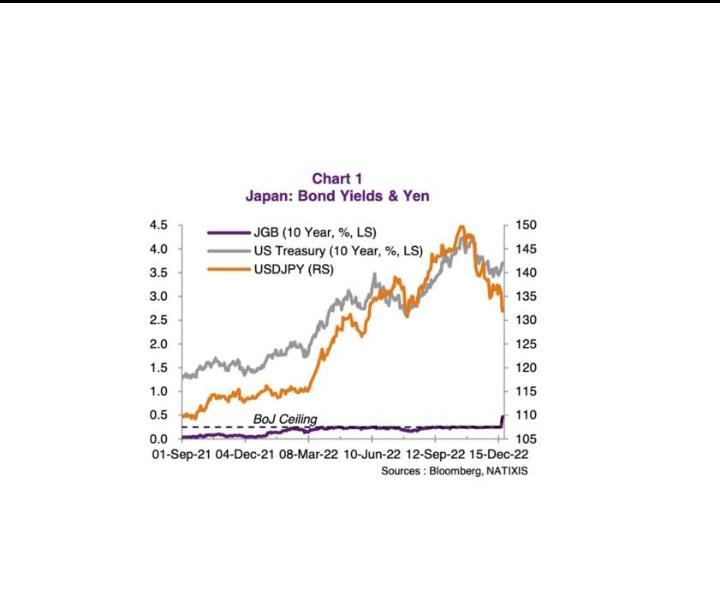
The International Monetary Fund has noted that the relationship between the yen and the U.S.-Japan yield differential has weakened in recent periods, showing why the currency can not be explained by interest-rate differences alone.
The Interest-Rate Differential
The difference between Japanese and foreign interest rates remains important because it affects the relative return investors can obtain from different currencies and assets.
For much of the period when Japanese interest rates were close to zero, investors could obtain yen funding at relatively low cost and invest in assets offering higher expected returns elsewhere.
This helped make the yen an important funding currency in what is known as the carry trade.
When Japanese interest rates rise, the cost of yen funding can increase.
That can change the economics of existing carry trades, particularly when the increase in Japanese rates is large or occurs alongside a stronger yen.
But carry trades are exposed to exchange-rate risk.
An investor can earn a higher interest return abroad and still lose money if the currency moves sharply against the position.
How a Yen Carry Trade Works
A simplified carry trade involves borrowing in a relatively low-interest-rate currency and investing in an asset or currency with a higher expected return.
Consider an investor who borrows yen and converts the money into the U.S. dollars to buy a dollar-denominated asset.
The investor benefits from the interest-rate difference if the exchange rate remains sufficiently stable.
But if the yen strengthens sharply, the investor needs more dollars to obtain the yen required to repay the borrowing.
That can turn a profitable position into a loss.
This is why changes in Japanese monetary-policy expectations can affect global markets even when the underlying investment is outside Japan.
Why Japanese Investors Matter to Global Markets
Japan is a major international investor.
Japanese banks, insurers, pension funds, and other institutions hold substantial portfolios of foreign securities.
That creates another channel through which Japanese interest rates can affect global markets.
Suppose the yield available on Japanese government bonds rises substantially.
A Japanese investor comparing a domestic government bond with a foreign bond may find that the additional return from the foreign asset is no longer as attractive after accounting for currency-hedging costs and other risks.
The investor does not necessarily sell the foreign asset.
But the relative return has changed, and that can influence future portfolio decisions.
The IMF has identified Japan’s large international investment position and open capital account as important channels for financial spillovers between Japan and the rest of the world.
Why U.S. Treasuries Are Part of the Story
U.S. Treasuries are particularly relevant because they are a major destination for international capital, including investment from Japan.
If Japanese yields rise while U.S. Treasury yields remain unchanged, the relative attractiveness of the U.S. government bonds can change for Japanese investors.
Currency-hedging costs are particularly important in this comparison.
A foreign bond’s headline yield is not necessarily the return a Japanese investor ultimately receives after hedging the currency exposure.
If hedging costs rise, the advantage of owning the foreign bond can shrink.
This is one reason Japanese investors monitor both domestic yields and overseas yields when deciding how to allocate capital.
It would nevertheless be wrong to attribute movements in the U.S. Treasury yields solely to Japan.
U.S. inflation, Federal Reserve policy, economic growth, government borrowing, and global demand for safe assets remain major forces in the Treasury market.
Japan is one transmission channel, not the entire explanation.
Why the BOJ’s Bond Purchases Matter
The Bank of Japan has historically been a very large buyer of Japanese government bonds.
Large-scale central-bank purchases affect the supply and demand balance in the bond market and can influence yields.
The BOJ is now reducing those purchases.
The central bank’s own analysis says the reduction has allowed market participants to play a greater role in determining long-term interest rates.
That does not mean the BOJ has stopped influencing financial conditions.
Its policy rate, communications, and balance sheet still matter.
But with fewer JGB purchases, market pricing has a greater role in determining the yield investors receive.
Inflation Is a Major Driver of Long-Term Yields
Inflation expectations are another important part of the JGB market.
An investor buying a long-term bond is locking in a nominal return for many years.
If investors expect inflation to remain higher, they may demand a higher yield to compensate for the loss of purchasing power.
Japan’s monetary policy, therefore, remains closely tied to whether inflation is viewed as sustainable.
The BOJ’s price-stability target is 2%, and the central bank assesses monetary policy using developments in prices, economic activity, and financial conditions.
A change in the inflation outlook can, therefore, move JGB yields even without an immediate change in the BOJ’s policy rate.
Why Higher JGB Yields Affect Government Borrowing
Higher market yields eventually increase the cost at which the Japanese government can issue new debt.
They do not, however, immediately reprice the entire existing debt stock.
A government bond already issued continues to pay according to its original terms until maturity.
The fiscal impact develops as older bonds mature, and the government replaces them with new debt issued at prevailing market rates.
That distinction matters when assessing the effect of rising JGB yields on Japan’s public finances.
A rise in yields can increase future interest costs, but the full effect takes time to work through the government’s debt portfolio.
Why Rising Yields Do Not Automatically Mean a Bond Crisis
A rise in JGB yields is not, by itself, evidence of a loss of confidence in Japan.
Yields can rise because investors expect:
higher BOJ policy rates;
higher inflation;
stronger economic activity;
a larger term premium;
changes in government borrowing; or
a reduction in central-bank demand for government bonds.
These causes have different implications.
For example, yields rise because investors expect the economy to move toward a more normal interest-rate environment, which is different from yields rising because investors are demanding substantially greater compensation for fiscal risk.
The reason behind the move matters.
Why the Yield Curve Matters
Investors, therefore, watch more than the benchmark 10-year JGB yield.
The entire yield curve provides information.
Shorter-term yields tend to respond strongly to expectations for the BOJ’s policy rate.
Longer-term yields incorporate expectations about future monetary policy, inflation, and the premium investors require for lending money to the government for longer periods.
A sharp move in the short end can indicate changing expectations for near-term monetary policy.
A larger move in longer maturities can indicate that investors are reassessing the longer-term economic and inflation outlook as well.
What Happens When the Yen Strengthens?
A stronger yen can have a significant effect on investors who have borrowed the currency.
Returning to the carry-trade example, an investor who borrowed ¥1 billion must repay ¥1 billion regardless of the exchange rate.
If the yen strengthens against the investor’s home currency, purchasing those yen becomes more expensive.
That can produce losses even if the underlying foreign investment continues to perform well.
If many leveraged investors attempt to reduce similar positions at the same time, demand for yen can increase further.
This can amplify currency movements.
The risk is, therefore, not limited to Japanese investors. International funds using yen financing can also be exposed.
What Happens When the Yen Weakens?
A weaker yen has a different set of effects.
Japanese companies with substantial overseas revenue can receive more yen when foreign earnings are converted into domestic currency.
But Japan also imports energy, raw materials, and manufactured goods.
A weaker yen raises the yen cost of those imports, which can contribute to higher domestic prices.
For the Bank of Japan, this creates a policy trade-off.
Currency weakness can support some exporters while increasing the cost of imported goods.
Currency strength can reduce import costs while making overseas earnings worth fewer yen.
The economic effect, therefore, depends on the structure of the Japanese economy and the reason for the currency movement.
How Japanese Bond Yields Spill Into Global Markets
The international impact of JGB yields works through several channels rather than one direct chain.
The first is portfolio allocation.
Japanese investors may reconsider the balance between domestic and overseas assets as relative yields change.
The second is currency markets.
Changes in Japanese interest-rate expectations can affect demand for yen and the attractiveness of yen-funded positions.
The third is global bond pricing.
Changes in Japanese investors’ demand for foreign bonds can affect international capital flows.
The fourth is funding markets.
Changes in the cost of yen borrowing can affect leveraged investors using the currency to finance positions elsewhere.
The IMF has found evidence that changes in Japanese monetary policy and JGB yields can transmit to global sovereign bond yields.
That does not mean every movement in global bonds originates in Japan.
It means Japan is an important part of the international transmission mechanism.
What Investors Should Watch
Investors trying to understand the next major move in Japanese markets should watch several indicators together.
JGB yields: These show how investors are pricing Japanese interest rates, inflation, and government debt.
The yen: Currency movements reveal how markets are assessing Japan relative to other economies.
BOJ communication: Policy statements and speeches can change expectations before an actual rate decision.
Inflation: Persistent inflation affects expectations for future monetary policy and bond yields.
Wages: Wage growth is important when assessing whether inflation can remain sustainable.
U.S. Treasury yields: The comparison between Japanese and U.S. returns is central to global capital allocation.
Japanese overseas investment flows: These can provide clues about whether changes in domestic yields are influencing portfolio decisions.
The important point is to read these indicators together rather than treating any single one as a definitive signal.
Bottom Line
Japanese government bond yields matter globally because Japan sits at the intersection of several major financial markets.
JGB yields influence the relative attractiveness of Japanese assets. Japanese interest rates affect the cost of yen funding. Changes in the yen can alter the profitability of carry trades. Japanese investors’ large overseas portfolios create a channel through which domestic financial conditions can influence international markets.
But there is no simple rule that says higher JGB yields equal a stronger yen or falling foreign bond prices.
The outcome depends on what is driving the yield increase and how Japanese financial conditions compare with those in the United States and other major economies.
That is ultimately why investors watch the JGB market.
It is not simply a market for Japanese government debt. It is one of the places where changes in monetary policy, inflation expectations, currency valuations, and global capital flows meet.