Gulf equities came under pressure as investors reassessed the U.S. interest-rate outlook
Gulf Stocks Fall as Fed Rate-Hike Bets Rise After Warsh Comments
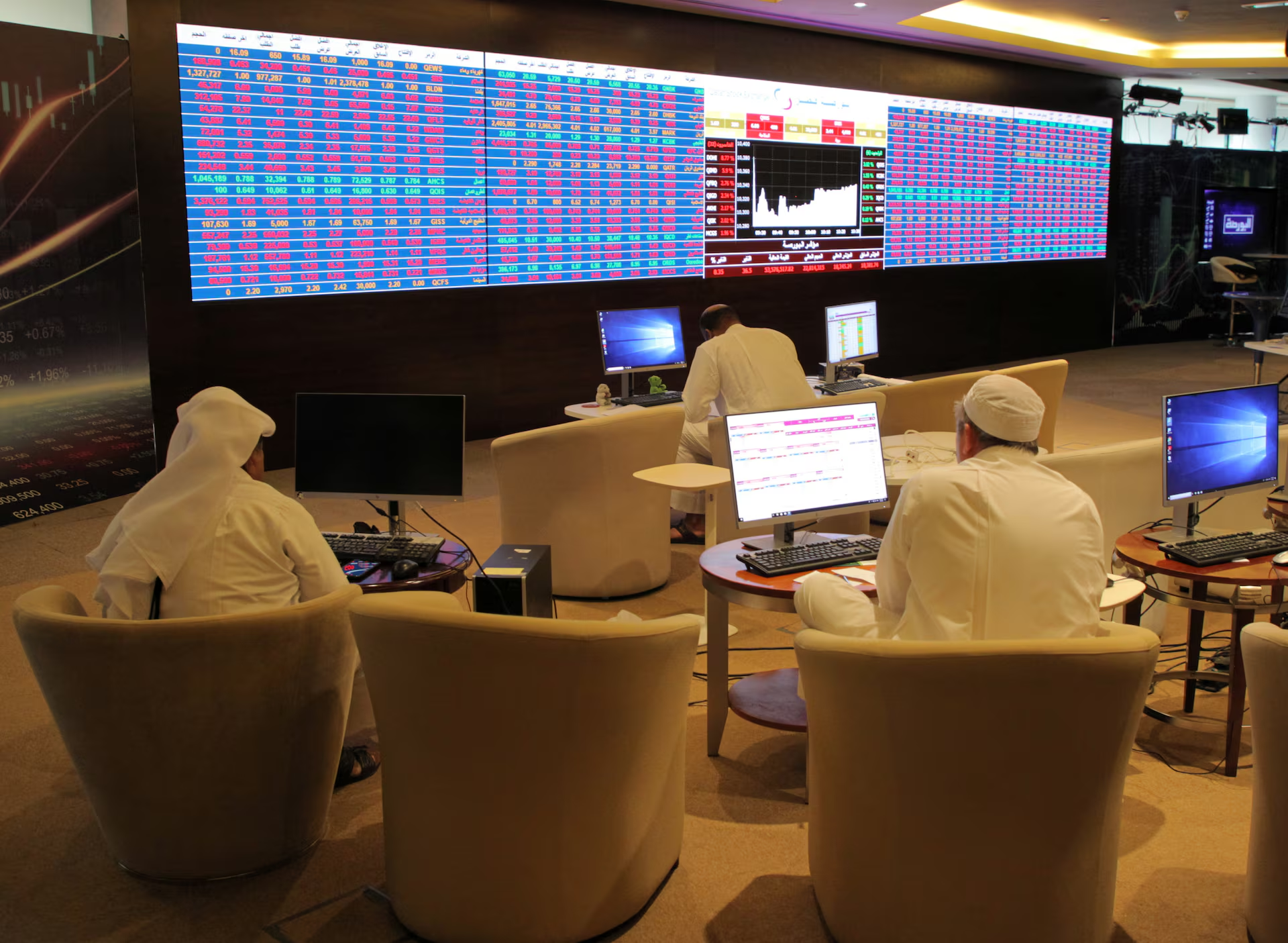
Most Gulf stock markets closed lower on Sunday as investors turned more cautious after Federal Reserve Chair Kevin Warsh reinforced the U.S. central bank’s focus on bringing inflation back to its 2% target, pushing up expectations for another U.S. interest-rate increase.
The shift in rate expectations added pressure to Gulf equities, with regional markets particularly sensitive to changes in the U.S. monetary policy because most Gulf currencies are pegged to the U.S. dollar.
Market-implied odds of a Federal Reserve rate increase at the September meeting rose to 55.7% from 35.4% on Thursday, according to CME Group’s FedWatch tool. The move followed Warsh’s comments at the Federal Reserve’s annual economic symposium in Jackson Hole.
Saudi Stocks Lead Gulf Declines
Saudi Arabia’s benchmark index fell 0.7%, extending its decline to a second consecutive session. Most of the index’s constituents ended lower.
Saudi Arabian Mining Co. dropped 3.3%, while Saudi National Bank, the kingdom’s largest lender by assets, declined 1.2%.
Hani Abuagla, senior market analyst at XTB MENA, said the Saudi market could remain vulnerable to further declines if investors continue taking profits following several sessions of gains.
The “higher U.S. rates” affecting equity valuations, financing costs, and fixed-income attractiveness latest signals from the Federal Reserve. Higher U.S. rates can affect the attractiveness of equities by increasing financing costs and raising the returns available from interest-bearing assets.
RELATED ARTICLE
Rising Bond Yields Add Billions to G7 Borrowing Costs as Debt Pressure Builds
Qatar Market Slips as Financial Stocks Weaken
Qatar’s benchmark index fell 0.1%, with financial and communications stocks among the main sources of pressure.
Doha Bank fell 5.1%, while Commercial Bank declined 2.5%. The losses were partly offset by gains in energy-related companies. Industries Qatar rose 0.6%, while Gulf International Services gained 3.9%.
QatarEnergy also sold at least 7 million barrels of various Qatari crude grades through a tender during the week for October loading, according to trade sources cited by Reuters.
Why the Fed Matters to Gulf Markets
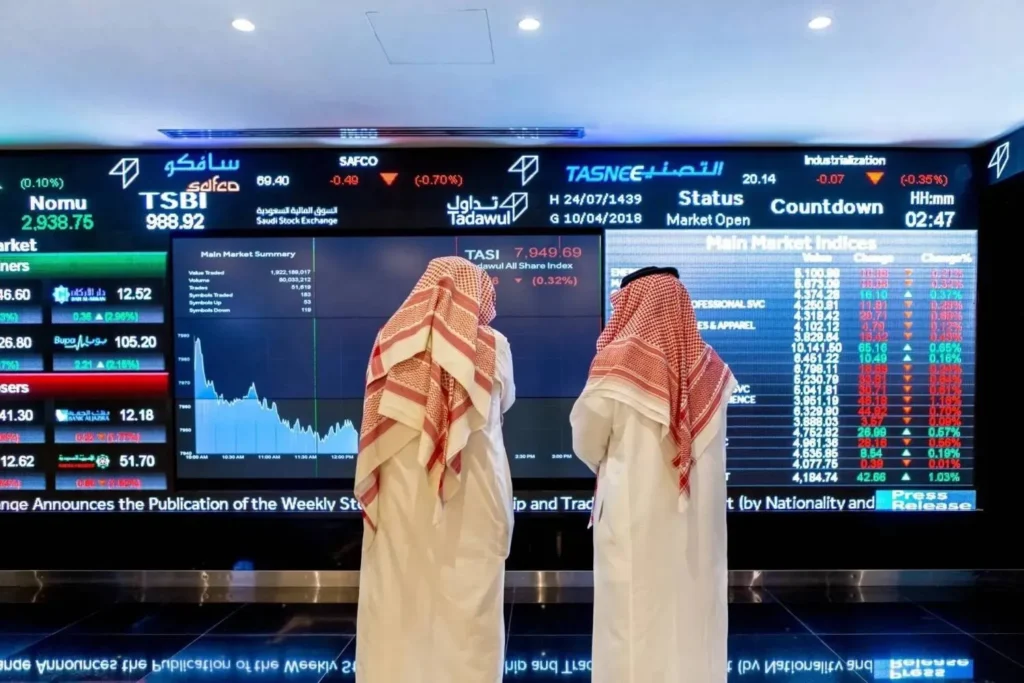
The Federal Reserve’s policy outlook is closely watched across the Gulf because most regional currencies are linked to the U.S. dollar.
When U.S. interest-rate expectations rise, Gulf central banks can face pressure to maintain closely aligned monetary conditions to preserve their currency pegs. That can influence local borrowing costs, liquidity, and the valuation of financial assets.
For investors, the effect extends beyond interest rates themselves. Higher global bond yields can make fixed-income assets more attractive relative to equities and can raise the cost of financing for companies.
That sensitivity was visible in Sunday’s trading as investors responded to the prospect of a higher-for-longer U.S. interest-rate environment. A market analyst cited by Reuters said GCC markets could remain sensitive to global bond yields and developments ahead of the Fed’s next meeting.
Egypt Stocks Also Decline
Outside the Gulf, Egypt’s EGX30 blue-chip index fell 0.3%, with most stocks trading lower.
Commercial International Bank declined 0.8%, while Talaat Moustafa Group fell 1.3%.
Abu Qir Fertilizers and Chemical Industries moved in the opposite direction, rising 4.8% after the company said it had expanded ammonia production capacity and reduced natural gas consumption.
Markets Turn to the Fed
The immediate focus for investors is now the Federal Reserve’s next policy decision and whether incoming U.S. inflation and economic data reinforce the latest increase in rate-hike expectations.
Warsh said policymakers would have more work to do if they were not confident that underlying inflation was returning to the Fed’s 2% target. He also said financial conditions did not appear restrictive.
For Gulf markets, the combination of higher U.S. rate expectations and rising global bond yields create a more demanding environment for equities. At the same time, domestic economic conditions and company-specific earnings will remain important in determining how individual Gulf markets and stocks perform.
The next Federal Reserve meeting will, therefore, be a key event for investors across the region as markets assess whether the recent increase in rate-hike expectations becomes a lasting shift in the U.S. monetary-policy outlook.
Source: Federal Reserve | Reuters





