Saudi Arabia’s Vast Oil Supplies Now Increasingly Depend on a Single Exit
Saudi Arabia’s Vast Oil Supplies Now Increasingly Depend on a Single Exit
By Makon Financials Editorial Team
Saudi Arabia has long been at the centre of the global oil market. With some of the largest proven crude reserves in the world, the Kingdom has built its economic strength on reliable production and a robust export network that connects it to key markets across Asia, Europe, and beyond.
For decades, this system has been supported by a combination of maritime routes and inland pipelines, allowing Saudi Arabia to maintain flexibility in how it delivers oil to international buyers. This diversification has been critical in ensuring stability, especially during periods of geopolitical tension in the Middle East.
However, recent trends indicate a gradual but important shift. A growing share of Saudi Arabia’s crude exports is now increasingly dependent on a single primary exit route. This development is subtle, but its implications are significant for both the Kingdom and the global energy market.
At the centre of this dependency is the Persian Gulf, particularly the Strait of Hormuz. This narrow waterway is one of the most strategically important oil transit points in the world, handling a substantial portion of global crude shipments each day.
Saudi Arabia’s eastern oil fields are naturally aligned with this route, making it an efficient and cost-effective pathway for exports. As a result, a large volume of crude continues to flow through Gulf terminals before reaching international markets.
From an operational perspective, this concentration makes sense. The infrastructure in the Gulf region is highly developed, with advanced loading facilities, storage capacity, and established shipping networks. These advantages make it the most economically viable route in many cases.
SUGGESTED ARTICLES
Oil Prices Slip to $87 After Hitting $91 Earlier This Week Amid Middle East Tensions
Saudi Arabia’s Vast Oil Supplies Now Increasingly Depend on a Single Exit
Yet, this efficiency comes with a trade-off. Relying heavily on a single export corridor increases exposure to potential disruptions. Any instability in the region could have immediate consequences for oil supply.
Geopolitical tensions remain a key concern. The Strait of Hormuz has historically been a flashpoint for regional disputes, and even minor incidents can create uncertainty in energy markets.
Maritime security risks also play a role. Shipping lanes in the Gulf must remain open and secure to ensure uninterrupted flows of crude oil. Any threat to vessel movement could delay shipments and affect supply chains.
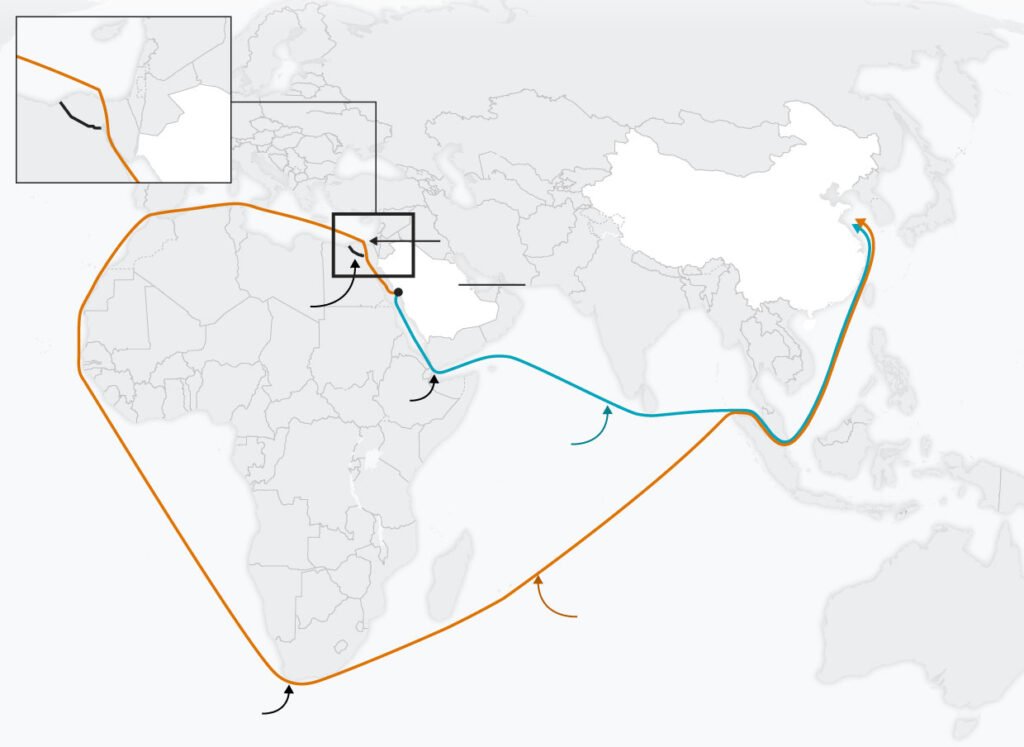
In response to such risks, Saudi Arabia has previously invested in alternative export routes. One of the most notable examples is the East-West pipeline, which transports crude from the eastern region to ports on the Red Sea.
This pipeline was designed to provide a strategic backup, allowing oil to bypass the Strait of Hormuz entirely if needed. It represents a critical component of the Kingdom’s broader energy security strategy.
Despite this capability, the utilisation of alternative routes has not fully offset the growing concentration in the Gulf. Market dynamics often favour the most direct and cost-efficient pathways, which continue to point toward Gulf export terminals.
Global demand patterns also influence these decisions. Major buyers in Asia are geographically positioned in a way that makes Gulf routes more practical and economically attractive.
As a result, even with diversification infrastructure in place, export flows have gradually become more centralised. This trend reflects a balance between operational efficiency and strategic risk management.
For global markets, the implications are far-reaching. Saudi Arabia plays a vital role in maintaining supply stability. Any disruption to its exports can quickly ripple through international energy markets.
Oil prices are particularly sensitive to perceived risks. Even the possibility of disruption in a key transit route like the Strait of Hormuz can lead to price volatility.
Investors closely monitor these developments. A more concentrated export system may increase uncertainty, especially during periods of heightened geopolitical tension.
Energy-importing nations are also paying attention. Many countries depend on steady flows of Saudi crude to meet their domestic energy needs. Any disruption could affect fuel availability and economic stability.
At the same time, the evolving landscape presents opportunities. Infrastructure investment, shipping security, and alternative energy logistics are becoming increasingly important areas of focus.
Saudi Arabia itself is aware of these challenges. Under its broader economic transformation agenda, the Kingdom is working to strengthen resilience across multiple sectors, including energy.
Initiatives aimed at improving infrastructure reliability and expanding logistical capabilities are likely to play a key role in addressing these concerns.
Technology is another important factor. Advanced monitoring systems, predictive analytics, and improved maritime security measures can help mitigate risks associated with concentrated export routes.
In addition, global energy transitions may gradually reshape demand patterns. As countries invest in renewable energy and diversify their energy mix, the structure of oil trade could evolve over time.
However, oil will remain a critical component of the global energy system for the foreseeable future. This means that the reliability of export routes will continue to be a central concern.
For Saudi Arabia, the challenge lies in balancing efficiency with resilience. Maintaining cost-effective operations while reducing vulnerability will be essential in the years ahead.
Strengthening alternative routes, ensuring redundancy in infrastructure, and enhancing security measures can all contribute to a more robust export system.
From a strategic perspective, diversification is key. Not only in terms of export routes but also in the broader economic sense, as the Kingdom continues to reduce its reliance on oil revenues.
The current trend serves as a reminder that energy security is multi-dimensional. Production capacity alone is not enough; the ability to deliver resources safely and reliably is equally important.
For market participants, this development underscores the importance of monitoring supply chain dynamics. Changes in export patterns can signal shifts in risk and opportunity within the energy sector.
As global markets become more interconnected, the impact of such changes is amplified. A disruption in one region can quickly affect prices, supply, and economic conditions worldwide.
In this context, Saudi Arabia’s growing reliance on a single export route is not just a national issue. It is a matter of global significance with implications for energy stability and market confidence.
Looking ahead, the Kingdom’s ability to adapt will be closely watched. Strategic investments, policy decisions, and market responses will shape the future of its export infrastructure.
Ultimately, ensuring the stability of oil flows is critical not only for Saudi Arabia but for the global economy as a whole.
Makon Financials Insight
The increasing concentration of Saudi Arabia’s oil exports highlights a broader trend in global energy markets. Efficiency often drives decision-making, but resilience remains essential.
For investors and stakeholders, understanding the balance between these two factors is key to navigating market risks and identifying emerging opportunities.
Monitoring infrastructure developments, geopolitical conditions, and trade patterns will continue to provide valuable insights into the future direction of the energy sector.