Oil Prices Slip to $87 After Hitting $91 Earlier This Week Amid Middle East Tensions
Oil Prices Slip to $87 After Hitting $91 Earlier This Week Amid Middle East Tensions
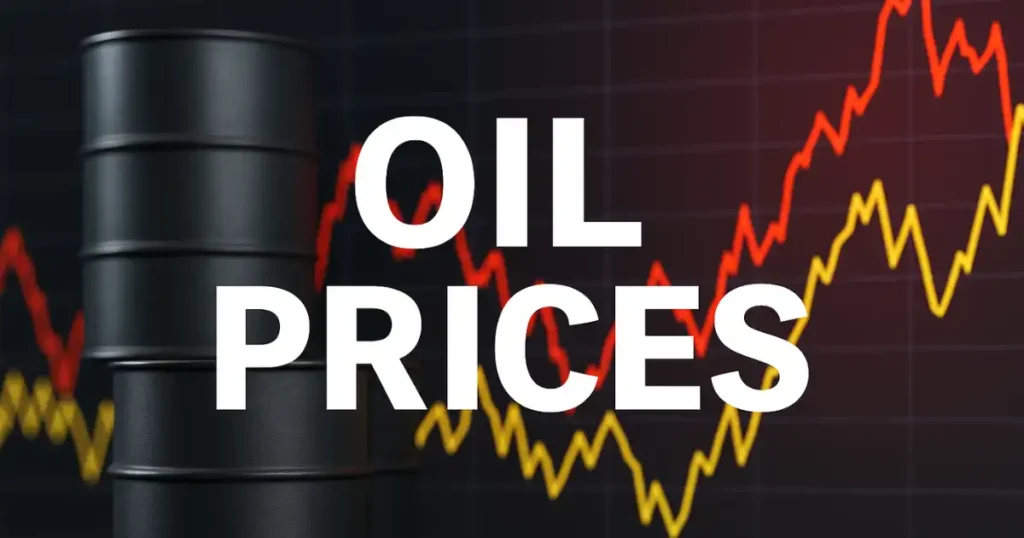
Oil Prices Slip to $87 After Hitting $91 Earlier This Week Amid Rising Middle East Tensions
Makon Financials Global Energy & Markets Report
26/07/26 Reporter: MARK FESTUS
Global oil markets experienced sharp volatility this week as Brent crude surged to $91 per barrel before retreating to $87–$88 today. The movement reflects a complex mix of geopolitical tension, supply risk, investor sentiment, and shifting expectations around global inflation. For businesses, investors, and consumers, this week’s oil dynamics offer a clear reminder of how energy markets continue to shape financial realities across the world.
what happened, why it happened, and how it affects global financial lines. As always, Makon Financials delivers clarity, accuracy, and economic insight for decision‑makers navigating today’s fast‑moving markets.
Weekly Price Snapshot: From $91 High to $87 Today
Oil markets opened the week with strong upward momentum. Brent crude climbed aggressively, touching $90.80–$91.20 depending on the exchange and time of day. This spike was driven by:
- Renewed Middle East conflict concerns
- Supply disruptions in key shipping routes
- Strong summer demand from Asia and Europe
- Investor positioning ahead of central bank inflation updates
However, by today, prices cooled slightly:
- Brent crude: ~$87.10–$88.00
- WTI crude: ~$83.40–$84.20
These figures reflect real‑time market data from major commodity trackers and global energy exchanges.
The retreat from $91 does not signal weakness rather, it shows traders reassessing risk after the initial shock. Markets remain sensitive, and any additional geopolitical flare‑ups could push prices back toward the $90+ range.
Oil Prices Slip to $87 After Hitting $91 Earlier This Week Amid Middle East Tensions
Why Oil Hit $91 Earlier This Week
- Middle East Escalation
The biggest driver was renewed tension in the Middle East, a region responsible for over 30% of global oil supply. Any threat to production or transport routes immediately triggers price spikes.
Shipping insurers raised risk premiums. Tanker operators slowed movement. Traders priced in potential supply disruptions.
- Strong Global Demand
Summer travel season boosted jet fuel and gasoline consumption.
Asia especially China and India, increased refinery runs.
Europe’s heatwave raised electricity demand, pushing utilities toward oil‑based generation. - Supply Tightness
OPEC+ maintained output discipline.
U.S. shale production remained steady but not enough to offset global tightness.
Inventories in Europe and Asia fell to multi‑month lows. - Investor Sentiment
Funds rotated into commodities as a hedge against inflation.
Energy stocks rallied, pulling oil futures upward.
Speculative traders added long positions, amplifying the upward move.
Why Prices Dropped Back to $87 Today
- Traders Taking Profit
After the $91 spike, many short‑term traders closed positions.
Profit‑taking naturally cools prices. - Reassessment of Supply Risk
While tensions remain high, no major supply disruption occurred.
Shipping routes stayed open.
OPEC+ signalled stability. - Central Bank Messaging
Global central banks — especially the U.S. Federal Reserve — hinted at cautious optimism on inflation.
This reduced panic buying in commodities. - Strong Dollar Movement
A stronger U.S. dollar makes oil more expensive for non‑U.S. buyers, reducing demand slightly.
Financial Impact: What This Means for the World
- Inflation Pressure
Oil is a core input for transportation, manufacturing, logistics, and energy.
Higher oil → higher costs → higher inflation.
Countries dependent on imports (India, Japan, most of Europe) feel the pressure first.
- Energy Stocks Benefit
Oil producers, refiners, and service companies see revenue boosts.
Global energy indices rose 2–4% during the $91 spike. - Currency Movements
Oil‑importing nations face currency weakness.
Oil‑exporting nations (Saudi Arabia, UAE, Nigeria) gain fiscal strength. - Consumer Costs
Fuel prices rise.
Transport fares adjust.
Goods become more expensive due to logistics inflation. - Government Policy
Some governments may:
- Increase subsidies
- Adjust interest rates
Release strategic reserves - Tighten monetary policy
Market Outlook: What Analysts Expect Next
Most analysts agree on one thing: volatility will continue.
Short‑Term Outlook
If Middle East tensions escalate again, Brent could retest $90–$92.
If tensions cool, prices may stabilize around $85–$88.
Medium‑Term Outlook
Demand from Asia remains strong.
OPEC+ is unlikely to increase supply aggressively.
Global inventories remain tight.
This means oil is likely to stay elevated through the quarter.
Long‑Term Outlook
Energy transition continues, but oil remains essential.
Investment in the new supply is still below pre‑2020 levels.
Structural tightness may keep prices above $80 for extended periods.
How Businesses Should Respond
- Adjust Pricing Models
Logistics‑heavy businesses should update cost projections.
Manufacturers should prepare for higher input costs. - Review Energy Contracts
Companies with fuel‑linked contracts should renegotiate or hedge. - Monitor Currency Exposure
Import‑dependent businesses should watch exchange rates closely. - Reassess Inventory Strategy
Higher oil prices often lead to higher goods prices — early stocking may reduce cost pressure.
How Consumers Should Respond
- Expect Higher Transport Costs
Ride‑hailing, flights, and intercity transport may adjust prices. - Watch Fuel Prices
Petrol and diesel may rise in the coming days. - Budget for Higher Goods Prices
Food, electronics, and household items may see slight increases due to logistics inflation.
Oil Prices Slip to $87 After Hitting $91 Earlier This Week Amid Middle East Tensions
Makon Financials Analysis: What This Means for Everyday Financial Lines
At Makon Financials, our focus is simple:
How do global market shocks affect real people and real businesses?
This week’s oil movement shows:
Global events can change local prices overnight.
- Inflation risk remains alive.
- Businesses must stay agile.
Consumers must stay informed. - Investors must understand risk, not chase hype.
Oil touching $91 earlier this week was not just a market story it was a financial signal.
Oil settling at $87 today is not a relief it is a recalibration.
Energy markets remain the heartbeat of global finance.
Makon Financials will continue to track every pulse.
Final Makon Financials Closing Line
At Makon Financials, we deliver clear, data‑driven insights that help you understand how global market movements shape your financial world from inflation to investment strategy, from business decisions to everyday costs.