Nigeria Spent $866m on Seafood Imports: Why Is a Country With Vast Waters Still Dependent on Foreign Seafood?
Nigeria’s fisheries sector is facing pressure from illegal fishing, overfishing, and limited infrastructure, while officials are calling for stronger regulation and greater investment in aquaculture.
Nigeria’s frozen fish and seafood imports rose to $866 million in 2025, up from $606 million in 2023, according to figures from the United Nations Commodity Trade Statistics Database cited by the Director-General of the International Maritime Institute of Nigeria, Thaddeus Udofia. The value increased from $688.5 million in 2024 to $866 million in 2025, representing a compound annual growth rate of 19.54 per cent between 2023 and 2025.
The figures were presented at the 2026 National Conference on Sustainable Fishing organised by the Maritime Correspondents’ Organisation of Nigeria in Lagos. They point to a widening gap between Nigeria’s fisheries resources and the amount of seafood the country is able to supply from domestic sources.
A large resource base, but a growing import bill
Nigeria has marine and inland fisheries resources covering its coastline, inland waterways, creeks, estuaries, and the Niger Delta Basin. Udofia said these areas also have significant aquaculture potential. Despite this resource base, he described Nigeria as one of Africa’s largest seafood importers.
The rise in import value is significant because it has occurred alongside the challenges facing Nigeria’s fisheries sector. Udofia identified overfishing, climate change, and illegal, unreported, and unregulated fishing as major threats to the sector.
The issue is, therefore, not simply the amount Nigeria spends on imported seafood. It is also the difficulty of turning the country’s marine and inland resources into a reliable source of domestic supply.
Pressure on local fisheries
Udofia also raised concerns about foreign industrial trawlers operating within Nigeria’s Exclusive Economic Zone. He alleged that destructive fishing practices, including bottom trawling, were damaging marine habitats and reducing the resources available to artisanal fishermen and coastal communities.
According to him, declining catches can affect the incomes of households that depend on fishing as well as food availability and food security.
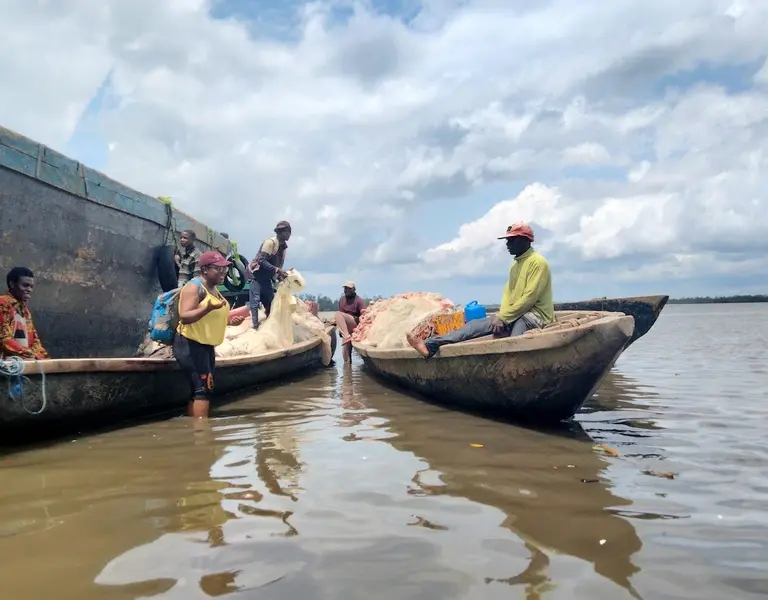
The concerns extend beyond the activities of individual fishermen. Udofia argued that Nigeria needs stronger regulation and enforcement, scientific fisheries management, better technology and data, maritime surveillance, and greater participation by coastal communities in managing fisheries resources.
The aquaculture question
One of the responses proposed by Udofia is a stronger shift from dependence on wild-capture fisheries towards technology-driven aquaculture. He called for greater investment in aquaculture as part of efforts to address Nigeria’s seafood deficit.
ALSO READ:
The proposal reflects a central issue in Nigeria’s seafood supply. Increasing production can not depend entirely on what is available from wild fisheries. Aquaculture provides another route for increasing domestic production, although the conference discussions also stressed the need for investment, technology, and better management of the wider fisheries sector.
Infrastructure remains part of the problem
The conference also highlighted infrastructure constraints in the handling and movement of fish. Nigerian Ports Authority Managing Director Abubakar Dantsoho, represented at the conference by an agency official, said specialized fishing terminals would provide infrastructure for handling fish efficiently because of its perishable nature.
The infrastructure identified included cold-storage facilities, ice plants, processing facilities, navigational channels, and loading and unloading areas, alongside road, rail, or inland-waterway connections. The NPA said a special terminal had already been designated as a dedicated fish terminal, with cold-storage and export-processing facilities available for operators.
What the $866m figure shows
Nigeria’s $866 million seafood import bill does not mean the country lacks fisheries resources. The figures instead highlight the difference between having those resources and producing enough seafood domestically to meet demand.
The increase from $606 million in 2023 to $866 million in 2025 has come as concerns over overfishing, illegal fishing, marine degradation, infrastructure and the management of fisheries resources remain part of the national discussion.
For Nigeria, reducing the gap would require the measures discussed at the conference: stronger enforcement against illegal fishing, better fisheries data and management, investment in aquaculture, and improved infrastructure for handling and processing fish.
Until those issues are addressed, Nigeria can continue to have substantial marine and inland fisheries resources while spending millions of dollars importing seafood.
SOURCE: Federal Ministry of
Marine and Blue Economy