The U.S. government has just locked in its most expensive 30-year borrowing cost in about a quarter-century
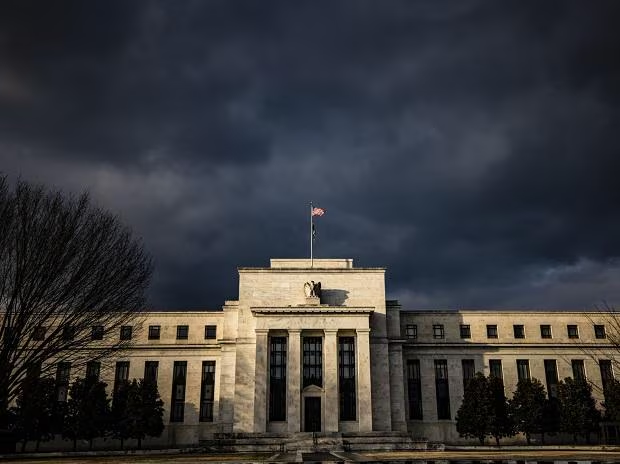
The U.S. government has just locked in its most expensive 30-year borrowing cost in about a quarter-century.
At Thursday’s Treasury auction, the government sold $25 billion of 30-year bonds at a 5.216% yield, the highest auction yield for maturity since 2001.
That puts a spotlight on an increasingly important issue for financial markets: how much investors want to be paid to lend money to the U.S. government for the next three decades.
The 5.216% yield is the headline number
The Treasury doesn’t set the final yield on an auction by simply choosing a number. Investors submit bids, and the auction determines the rate at which the bonds are ultimately sold.
This time, the winning yield reached 5.216%.
For the U.S. government, that means investors are demanding more than 5% a year for taking on a 30-year Treasury at the auction’s final yield.
It is a notable change from the ultra-low borrowing environment that dominated much of the previous decade.
Investors haven’t walked away from the U.S. debt
There is an important distinction here.
A high Treasury yield does not automatically mean investors are losing confidence in the United States.
The auction attracted enough demand to sell the entire $25 billion offering. The bid-to-cover ratio was 2.39, meaning the amount of submitted bids was roughly 2.39 times the amount of bonds available.
So there were buyers.
What has changed is the return those buyers are demanding.
Investors are effectively saying that if they are going to tie up money for 30 years, they want greater compensation for the risks that could emerge during that period.
Why do investors want a higher return
A 30-year bond exposes investors to several uncertainties.
Inflation is one of the biggest.
If inflation remains elevated over a long period, the fixed payments from a Treasury bond become less valuable in real terms. An investor receiving the same interest payment 20 years from now may be able to buy considerably less with it.
Interest rates are another factor.
If rates rise after an investor buys a long-term bond, the existing bond becomes less attractive compared with newly issued debt offering higher yields. That can push its market price lower.
Then there is the U.S. government’s borrowing requirement.
Washington continues to finance large fiscal deficits, meaning substantial amounts of Treasury debt must be issued and refinanced. Investors have to absorb that supply, and higher yields can be one way the market adjusts.
The pressure is not limited to 30-year bonds
The latest auction follows another important Treasury sale.
The government sold $42 billion of 10-year Treasury notes at a 4.683% yield on Wednesday, also showing elevated borrowing costs in the longer-dated part of the market.
That matters because the 10-year and 30-year Treasury markets influence borrowing conditions well beyond government finance.
Mortgage rates, corporate bonds, and other long-term financial products are priced partly against treasury yields.
If those benchmark yields remain high, cheaper borrowing becomes harder to achieve across the economy.
The Federal Reserve isn’t the whole story
One of the most interesting parts of the current bond-market move is that long-term yields can remain high even when expectations for Federal Reserve policy change.
The Fed has much more direct influence over short-term interest rates.
A 30-year Treasury, however, reflects what investors think could happen over decades.
That includes future inflation, economic growth, government borrowing, treasury supply, and the eventual path of interest rates.
This is why a possible change in Fed policy does not automatically translate into lower 30-year yields.
Investors are looking beyond the next few policy meetings.
Higher yields create a bigger bill for Washington
The immediate cost of a single $25 billion auction should not be exaggerated. The bigger issue is what happens as the U.S. repeatedly refinances debt and issues new bonds at higher rates.
When borrowing costs rise, the government has to devote more money to interest payments.
That doesn’t mean every existing Treasury suddenly becomes more expensive. Existing bonds generally keep their original coupon. The pressure comes as old debt matures, and new debt is issued at prevailing market rates.
If higher yields persist, the government can, therefore, face progressively higher financing costs.
What investors should watch next
The 30-year auction is one piece of a much larger bond-market story.
Investors will be watching future Treasury auctions, inflation data, employment figures, and the Federal Reserve’s policy decisions.
They will also be watching whether long-term Treasury yields stay above 5% or move back lower.
If yields remain elevated, the consequences could extend beyond government finance. Companies may face higher borrowing costs, investors may reassess stock valuations, and households could continue dealing with expensive long-term credit.
For now, the message from Thursday’s auction is relatively simple:
The U.S. can still attract buyers for its debt. But, investors are demanding a much higher return to commit their money for 30 years.
That is why a 5.216% 30-year Treasury auction yield matters. It is not evidence that the U.S. debt market has collapsed. It is evidence that the cost of long-term government borrowing has become a much bigger issue for investors than it was for most of the past two decades.