How Green Data Centers Are Lowering Energy Costs for Tech Startups
How Green Data Centers Are Lowering Energy Costs for Tech Startups
For a growing tech startup, the cloud can look deceptively simple.
You pay for computing power, storage and networking, then let someone else worry about the servers. But behind every AI model, SaaS platform, fintech application and streaming service is a physical data center consuming electricity around the clock.
That electricity bill is becoming a bigger business issue.
Data centers already consume significant amounts of power, and the rapid expansion of artificial intelligence is pushing demand even higher. The International Energy Agency estimates that global data-center electricity consumption could more than double by 2030, reaching around 945 terawatt-hours, with AI as one of the major drivers.
For startups operating on tight margins, that creates an interesting opportunity.
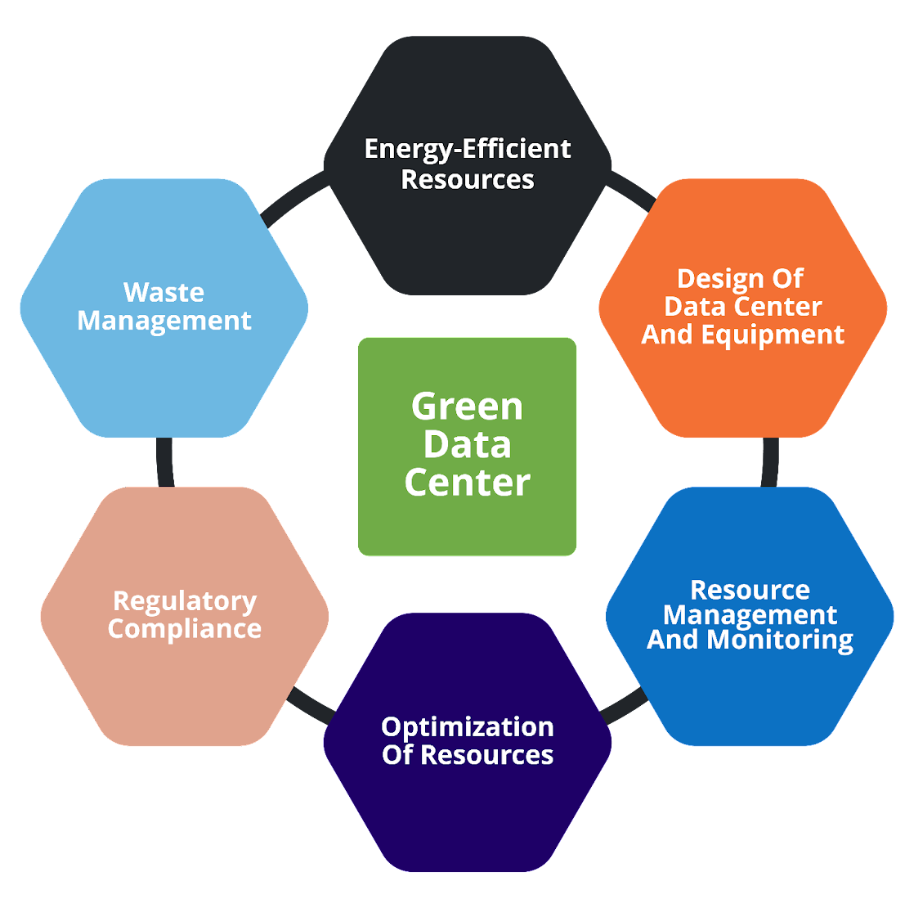
Green data centers are increasingly using renewable energy, more efficient cooling systems, smarter power management and higher server utilization to reduce the amount of electricity required to deliver computing services.
The result is not just a sustainability story. It can become a cost story.
Why are data centers becoming such an expensive energy problem?
A modern data center is essentially a giant machine that turns electricity into computing power.
Thousands of servers run continuously. Cooling systems remove the heat generated by those machines. Networking equipment moves data between servers and customers, while backup systems remain available when the main electricity supply fails.
All of that consumes energy.
The problem becomes particularly important for startups using AI.
Training and running large AI models can require substantially more computing power than traditional web applications. As companies add generative AI features, automated analytics and machine-learning workloads, their demand for high-performance computing can rise quickly.
That means electricity is becoming part of the economics behind digital products.
For a startup, even a small improvement in energy efficiency can eventually translate into lower infrastructure costs.
How green data centers are cutting energy costs
A green data center is not simply a building covered in solar panels.
The idea is broader.
Operators can reduce energy costs through efficient servers, better cooling, renewable electricity, improved power management and software that keeps computing resources from sitting idle.
One important measurement is Power Usage Effectiveness (PUE). It compares the total power consumed by a data center with the power actually delivered to computing equipment.
A lower PUE generally means less energy is being spent on overhead such as cooling and power distribution.
Google, for example, has reported a fleet-wide average PUE of 1.09 for its data centers in 2024, illustrating how much efficiency can improve when operators optimize infrastructure at massive scale.
For startups, the benefit comes indirectly: more efficient infrastructure can reduce the amount of energy required for each computing workload.
Can renewable energy actually make cloud computing cheaper?
Potentially, yes, but it depends on the market.
Renewable electricity is not automatically cheaper everywhere, and building solar or wind capacity requires significant investment.
However, large technology companies and data-center operators are increasingly signing long-term agreements for renewable power because predictable electricity costs can help reduce exposure to volatile energy markets.
Google, Microsoft and Amazon have all made major investments in renewable-energy procurement and clean-energy projects.
The economic argument is straightforward.
If an operator can secure reliable electricity at predictable long-term prices, it has greater visibility over one of the major operating costs associated with running a data center.
Those economics can eventually flow through to the companies renting computing capacity.
Why cooling is one of the biggest opportunities for green data centers
The servers themselves are not the only energy consumers.
Cooling can represent a significant portion of data-center electricity demand, particularly in facilities operating high-density computing hardware.
Traditional air cooling pushes large amounts of chilled air through server rooms. That approach works, but increasingly powerful AI chips generate substantial heat in relatively small spaces.
This is driving greater interest in liquid cooling.
Instead of relying entirely on air to carry heat away from computing equipment, liquid systems can transfer heat more efficiently.
The IEA notes that cooling can account for around 7% to more than 30% of electricity consumption in data centers, depending on factors such as facility efficiency and climate.
That gives operators a clear incentive to improve cooling technology.
For startups, better cooling can matter because it allows data centers to support demanding workloads without simply increasing electricity consumption at the same rate.
What does this mean for an AI startup?
This is where green data centers and AI startups increasingly intersect.
An AI company may not own a single physical server.
It could rent GPUs through a cloud provider or use an AI infrastructure company that operates massive computing facilities on its behalf.
The startup therefore benefits from infrastructure efficiency without having to build the facility itself.
Suppose two cloud providers offer similar computing performance.
One operates older facilities that require significantly more electricity to deliver the same workload. The other uses newer servers, efficient cooling and better power management.
Over time, those differences can affect the provider’s operating costs.
That could influence the price a startup ultimately pays for computing.
Energy efficiency can become a competitive advantage
The economics become more interesting as technology companies scale.
A small startup might spend relatively little on computing today. But if its product suddenly becomes popular, infrastructure costs can rise quickly.
Imagine an AI-powered software company that goes from 10,000 users to one million.
The company may need substantially more processing power, storage and network capacity.
If the underlying infrastructure is energy-efficient, the additional computing demand does not necessarily translate into an equivalent increase in energy consumption.
This is one reason cloud infrastructure companies are investing heavily in more efficient hardware and facilities.
Efficiency becomes part of the business model.
Are green data centers actually reducing costs for startups?
They can, but the relationship is not as simple as “green equals cheap.”
Renewable energy projects, advanced cooling systems and newer data-center equipment can require substantial upfront investment.
Those costs have to be recovered.
However, the long-term economics can improve when energy efficiency reduces ongoing operating expenses.
For startups, another advantage is that cloud providers absorb much of the capital expenditure.
A startup does not need to purchase an entire data center, install cooling infrastructure or negotiate a power purchase agreement.
It can simply buy computing capacity from an infrastructure provider.
This turns expensive physical infrastructure into an operating expense that can scale with the business.
What role does AI play in making data centers more efficient?
AI is not only increasing data-center electricity demand. It can also help operators manage that demand.
Machine-learning systems can analyze information from servers, cooling equipment, electricity systems and environmental sensors to identify inefficiencies.
Google has used machine learning to optimize cooling at its data centers. The company has previously reported that its AI-based cooling recommendations reduced cooling energy consumption by up to 40% in one deployment.
That creates an interesting feedback loop.
AI requires more computing infrastructure, but AI can also be used to operate that infrastructure more efficiently.
The challenge is making sure the efficiency gains are large enough to offset the additional demand created by expanding AI workloads.
Why location matters more than people think
A data center’s location can have a major effect on its energy economics.
Electricity prices vary between markets. So do temperatures, water availability, renewable-energy resources and the carbon intensity of local power grids.
A facility operating in a naturally cooler environment may require less mechanical cooling than one operating in a very hot climate.
Likewise, a data center located near abundant renewable electricity may have different operating economics from one dependent heavily on expensive grid power.
This is why data-center operators increasingly treat energy availability as a strategic factor when deciding where to build.
For technology startups, those decisions happen behind the scenes but can ultimately influence the availability and price of computing capacity.
The biggest challenge: AI is growing faster than efficiency
There is an uncomfortable side to the green-data-center story.
Making each server more efficient does not necessarily reduce total electricity consumption if companies keep adding more servers.
This is known as the rebound effect.
If computing becomes cheaper, businesses may simply use more of it.
That is already becoming relevant with AI.
More efficient chips can reduce the energy required for individual calculations, but companies are simultaneously deploying larger models, serving more users and running more AI applications.
The IEA expects data-center electricity consumption to grow rapidly through the end of the decade, despite improvements in efficiency.
So efficiency alone will not solve the energy challenge.
More renewable generation, better grid infrastructure and smarter computing will all be necessary.
What should startups actually look for in a green cloud provider?
For a startup, the greenest option is not necessarily the provider with the most impressive sustainability slogan.
Look at the underlying infrastructure.
Important questions include how efficiently the provider operates its data centers, where its electricity comes from, how it measures emissions and whether it publishes meaningful energy and sustainability data.
A startup should also examine computing efficiency.
Using a smaller model when a larger one is unnecessary, optimizing workloads and shutting down unused resources can reduce costs regardless of the provider.
That is where sustainability and good financial management meet.
Every kilowatt-hour that does not need to be consumed is potentially an expense that does not need to be paid.
The business case for greener computing is getting stronger
The conversation around green data centers used to focus heavily on environmental responsibility.
That argument still matters.
But for technology companies, the financial case is becoming harder to ignore.
Electricity is an operating cost. Cooling is an operating cost. Hardware is an operating cost. And as AI increases computing demand, all three become more important.
A more efficient data center can therefore provide something startups value enormously: more computing capacity without a proportional increase in operating costs.
That does not mean every green technology immediately saves money.
It means efficiency is becoming increasingly connected to competitiveness.
What green data centers could mean for the next generation of startups
According to Victor Brooks, the next generation of software companies will probably consume far more computing power than the startups of a decade ago.
AI assistants, automated financial analysis, real-time translation, video generation and other computationally intensive services all require infrastructure.
That makes energy efficiency a technology issue and a financial issue at the same time.
The winners may not simply be the companies building the most powerful AI products.
They could also be the companies that learn how to deliver those products with fewer computing resources.
For startups, the lesson is simple: green infrastructure is no longer just about having a smaller environmental footprint. It can also mean controlling one of the fastest-growing costs in modern technology.
As AI pushes demand for computing higher, the companies that make every unit of electricity work harder could have a meaningful economic advantage.