How Inflation Affects Household Finances
How Inflation Affects Household Finances
Inflation affects household finances by reducing the purchasing power of money and increasing the cost of maintaining the same standard of living. When prices rise faster than household income, families may have to spend more on essentials, reduce discretionary spending, save less or take on additional debt.
The impact is not the same for everyone. A household’s experience depends on its income, spending habits, housing costs, debt, savings and the prices of the goods and services it purchases most often.
Understanding how inflation affects household finances can help families make better decisions about budgeting, saving, borrowing and long-term financial planning.
What Does Inflation Mean for Household Finances?
Inflation is the rate at which the prices of goods and services increase over time. It is commonly measured using a consumer price index (CPI), which tracks the changing cost of a basket of goods and services purchased by households.
The IMF explains that inflation measures how much more expensive a set of goods and services has become over a given period. When household income does not rise as quickly as prices, real income and purchasing power fall.
This is why a household can receive the same salary, or even a higher salary, and still feel financially worse off.
For example, if a person’s income increases by 3% but the prices of the goods and services they regularly buy increase by 5%, their income has risen in nominal terms but fallen in purchasing-power terms.
How Does Inflation Reduce Your Purchasing Power?
The most direct effect of inflation on household finances is that the same amount of money buys fewer goods and services.
If a household previously spent $500 a month on groceries, transportation and other essentials, but those same purchases eventually cost $550, the household needs an additional $50 simply to maintain the same spending pattern.
The Bureau of Labor Statistics explains that as consumer prices increase, the purchasing power of a dollar declines.
Why the Inflation Rate You Hear May Not Match Your Experience
The official inflation rate represents an average across a broad basket of consumer goods and services. It does not necessarily represent the personal inflation rate of every household.
A family that spends most of its income on rent, food and transportation may experience stronger cost increases than a household that spends relatively little on those categories.
The IMF notes that household cost of living depends on both prices and the share of each expense in the household budget.
How Does Inflation Affect Food and Everyday Expenses?
Food inflation can put significant pressure on household budgets because food is an essential expense.
When grocery prices increase, households cannot simply eliminate food spending. Instead, they may buy cheaper brands, change what they eat, shop less frequently or reduce spending on other categories.
The effect can be particularly significant for lower-income households because essential expenses account for a larger share of their budgets. OECD research has found that lower-income households can experience higher effective inflation when prices of essential goods rise.
Why Essential Expenses Matter Most
Inflation affecting discretionary purchases can sometimes be managed by postponing or eliminating those purchases. Rising costs for food, housing, energy and transportation are harder to avoid.
The OECD says increases in food, energy and housing costs place the greatest pressure on many household budgets, with lower-income consumers generally carrying a heavier burden.
How Inflation Affect Housing Costs?
Housing is one of the most important parts of household finances, so changes in housing costs can have a major effect on a family’s financial position.
For renters, higher rents can leave less income available for savings, debt repayment and other expenses.
Homeowners can face higher costs for maintenance, repairs, insurance and other housing-related services. Mortgage borrowers also need to consider the type of interest rate attached to their loans.
Inflation itself does not automatically increase a fixed-rate mortgage payment. However, higher inflation can contribute to higher interest rates as central banks attempt to control price pressures. That can make new borrowing and variable-rate debt more expensive.
How Inflation Affect Savings?
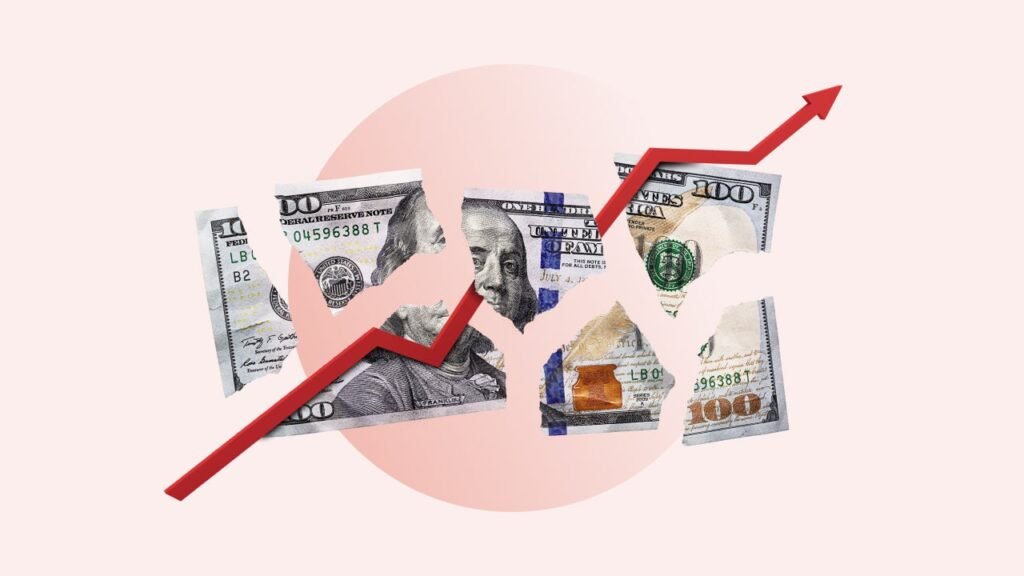
Inflation can reduce the real value of money held in savings when the return on those savings is below the inflation rate.
For example, if a savings account earns 2% while prices rise by 4%, the account balance increases in nominal terms but its purchasing power decreases.
This is why households should consider both the interest earned on savings and the rate at which prices are increasing.
That does not mean keeping an emergency fund in cash is a mistake. Emergency savings serve an important purpose because they provide liquidity when unexpected expenses or income disruptions occur. The key is to recognize that the amount required to cover several months of expenses can increase as the cost of living rises.
How Inflation Affect Wages and Household Income?
Inflation becomes particularly damaging to household finances when wages fail to keep pace with rising prices.
A salary increase only improves purchasing power if income grows faster than the prices of the goods and services the household buys.
The OECD’s 2026 employment research shows why real wages matter: nominal wage growth needs to be considered alongside inflation to determine whether workers are actually recovering purchasing power.
What Is the Difference Between Nominal and Real Income?
Nominal income is the amount of money a household receives.
Real income measures that income after accounting for changes in prices.
For household financial planning, real income is often the more useful measure because it shows whether the family’s purchasing power is actually improving.
How Inflation Affect Household Debt?
Inflation can have different effects depending on the type of debt a household holds.
A fixed-rate borrower has a payment that does not automatically rise simply because the general price level increases. If the borrower’s income rises with inflation, the fixed payment may become smaller relative to income over time.
The IMF notes that inflation can redistribute purchasing power between borrowers and lenders, particularly when debt carries a fixed interest rate.
Variable-rate borrowers face a different situation. If interest rates rise in response to inflation, their borrowing costs can increase.
This makes high-interest and variable-rate debt particularly important to monitor during periods of elevated inflation.
Why Inflation Hit Some Households Harder Than Others?
Inflation is not evenly distributed across households.
A household’s personal inflation experience depends heavily on what it buys. Families that devote a large proportion of their income to food, energy and housing can be more exposed when those categories become more expensive.
OECD research has found that lower-income households have experienced higher effective inflation in several periods because their spending patterns give greater weight to essential goods.
This also explains why simply quoting a national inflation rate does not tell the entire household-finance story.
How Can Households Protect Their Finances From Inflation?
There is no single strategy that eliminates the effects of inflation, but households can improve their financial resilience.
Review Your Household Budget
Track actual spending and identify which expenses have increased the most. Comparing current spending with previous months can reveal where inflation is putting the greatest pressure on the budget.
Protect Emergency Savings
Emergency savings should be based on current essential expenses rather than an outdated estimate. If monthly necessities become more expensive, the amount needed to cover several months of expenses may also need to increase.
Manage Expensive Debt
High-interest debt can become particularly difficult to manage when household expenses are already rising. Prioritizing expensive debt can help reduce the amount of income lost to interest payments.
Review Long-Term Savings Goals
Inflation should be considered when setting targets for retirement, education, a home purchase or other major financial goals. A future financial target may need to be larger than today’s equivalent because prices can rise over time.
Look at Real Returns
When evaluating savings or investments, do not focus only on the advertised or nominal return. Compare the expected return with inflation to understand whether purchasing power is actually increasing.
Does Falling Inflation Mean Household Prices Are Falling?
No. This is one of the most important distinctions households should understand.
If inflation falls from 6% to 3%, prices are still rising; they are simply rising more slowly.
For prices to broadly fall, the economy would need to experience deflation, which is different from a decline in the inflation rate.
The OECD has emphasized that even when inflation eases, households can continue to face a higher overall price level because earlier price increases are not automatically reversed.
What Should Households Watch When Inflation Is High?
Households should look beyond the headline inflation figure and monitor the expenses that have the greatest effect on their own finances.
Source: International Monetary Fund (IMF)