How Small Businesses Protect Margins Against Currency Fluctuation (FX Hedging Basics)
How Small Businesses Protect Margins Against Currency Fluctuation (FX Hedging Basics)
For a small business that imports products, pays overseas suppliers, receives foreign-currency revenue or operates across different markets, exchange rates can have a direct impact on profit.
A company may agree to buy goods at a fixed price today, only to discover that the cost has increased substantially in its local currency by the time payment is due. The supplier has not changed the invoice. The difference comes from the movement in the exchange rate.
This is known as foreign exchange risk, or FX risk.
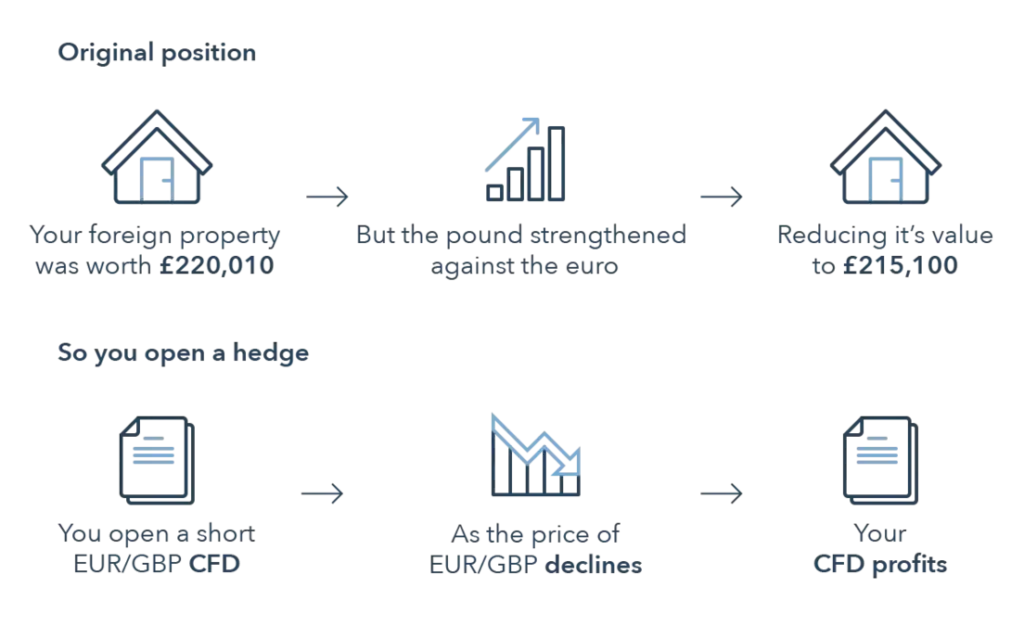
For businesses operating with relatively thin margins, currency movements can turn a profitable transaction into a disappointing one. FX hedging provides a way to reduce that uncertainty by protecting future foreign-currency payments or receipts.
The objective is not to predict whether a currency will rise or fall. It is to make the financial outcome of an underlying business transaction more predictable.
What Is FX Risk and Why Does It Matter for Small Businesses?
How Small Businesses Protect Margins Against Currency Fluctuation, FX risk for small businesses arises when the value of a future payment or receipt changes because the exchange rate moves.
An importer that needs to pay a US supplier in dollars is exposed if its domestic currency weakens against the dollar.
An exporter receiving dollars faces the opposite problem. If the dollar falls against its domestic currency before the exporter converts the money, the company may receive less local currency than expected.
According to the British Business Bank, foreign exchange risk can expose businesses to financial losses when exchange rates fluctuate, and companies can manage that exposure through strategies such as hedging, currency matching and systematic FX policies.
For a small business, the important question is not simply whether currencies are volatile. It is whether a currency movement could materially affect the company’s cash flow or profit margin.
How Currency Fluctuation Can Reduce a Small Business Profit Margin
Consider a business importing equipment worth $100,000.
How Small Businesses Protect Margins Against Currency Fluctuation ,When the order is priced, the company expects the exchange rate to be ₦1,500 per dollar.
That gives an expected local-currency cost of:
$100,000 × ₦1,500 = ₦150 million
Now imagine the local currency weakens to ₦1,650 before the supplier is paid.
The same invoice now costs:
$100,000 × ₦1,650 = ₦165 million
The company has suddenly absorbed an additional ₦15 million in cost without buying any additional equipment.
If the business had originally expected a ₦20 million margin, the currency movement has already consumed 75% of that expected margin.
This is why currency fluctuation and small business profit margins are closely connected.
How Small Businesses Identify Their FX Exposure Before Hedging
Before using an FX hedge, a business needs to know exactly how much currency risk it has.
According to the British Business Bank, businesses can begin by auditing their foreign-currency transactions, quantifying the potential impact of an adverse exchange-rate movement and establishing the level of currency loss they can tolerate.
A practical FX exposure review should identify:
Foreign-currency supplier invoices.
Expected export receipts.
Foreign-currency loans.
International subscriptions and operating expenses.
Planned equipment purchases.
Foreign-currency payroll or contractor payments.
The expected date of each payment or receipt is also important.
A $100,000 payment due tomorrow carries a different risk profile from a $100,000 payment expected nine months from now.
The business should therefore record the currency, amount, expected date and domestic-currency value of each significant exposure.
Natural Hedging Can Reduce Currency Risk Without Derivatives
Natural hedging for small businesses is one of the simplest ways to reduce FX exposure.
Instead of immediately converting every foreign-currency receipt into local currency, a business can use the foreign currency to meet expenses denominated in that same currency.
For example, an African company that receives $100,000 from international customers and owes a US supplier $70,000 can use part of its dollar revenue to settle the supplier invoice.
It does not need to convert the $70,000 into local currency and later buy dollars again.
This reduces the amount exposed to exchange-rate movements.
According to the Bank for International Settlements, businesses and financial institutions can use hedging arrangements to reduce currency mismatches. Natural hedging applies the same basic principle operationally by matching foreign-currency inflows with foreign-currency outflows.
For smaller businesses, this can sometimes be more practical than immediately entering a derivative contract.
FX Forward Contracts Can Lock In a Future Exchange Rate
FX forward contracts for small businesses are among the most straightforward financial hedging tools.
A forward allows a business to agree with a financial institution today on an exchange rate for a specified currency transaction at a future date.
Suppose an importer knows it must pay $100,000 in three months.
Instead of waiting until the payment date and accepting whatever exchange rate exists at that time, the business can arrange a forward contract for the required amount and maturity.
The major advantage is predictability.
The company can estimate its local-currency cost more accurately when preparing its budget and setting product prices.
According to the Bank for International Settlements, foreign-exchange forwards are among the derivatives used by market participants to manage currency exposures.
The trade-off is that the company may not fully benefit if the exchange rate later moves in its favour.
That is because the purpose of the forward is to reduce uncertainty rather than to maximise gains from favourable currency movements.
FX Futures Provide Another Way to Hedge Currency Exposure
FX futures for small business currency risk work on a similar basic principle but are standardized contracts traded on organized markets.
A company with a suitable foreign-currency exposure can use futures to offset some of the potential impact of an adverse exchange-rate movement.
The advantage is that futures are standardized and traded through established markets.
However, they may not perfectly match a small company’s exact payment amount or date. Futures can also involve margin requirements and other market mechanics that may make them less convenient for a straightforward supplier invoice.
According to the Bank for International Settlements, exchange-traded derivatives markets include foreign-exchange futures and options traded across organized exchanges.
For many smaller companies, a bank-negotiated forward may be easier to match with a specific commercial transaction.
FX Options Give Small Businesses More Flexibility
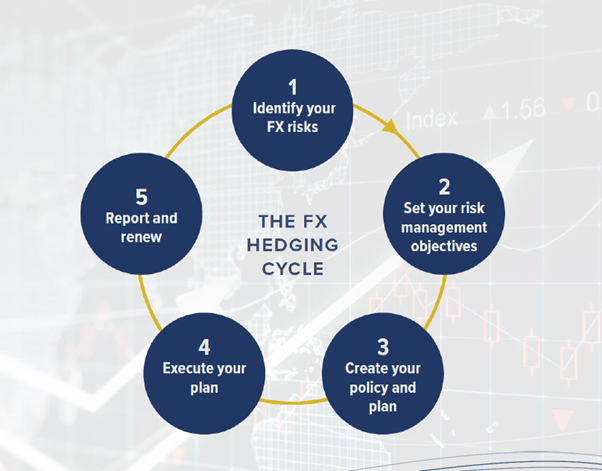
FX options for small businesses provide protection while allowing the company to retain some potential benefit from favourable currency movements.
An FX option gives the buyer the right, but not the obligation, to exchange currencies at an agreed rate.
Imagine an importer expects to need $100,000 in three months but is worried that the dollar could become more expensive.
The company could purchase an option that provides protection if the dollar rises significantly.
If the currency moves against the business, the option can provide protection.
If the currency moves favourably, the company may choose not to exercise the option and instead transact at the more favourable market rate.
That flexibility comes at a cost.
The business normally pays an option premium for the protection.
According to the Bank for International Settlements, options are used both to hedge currency risk and for speculative purposes. BIS data also showed that global FX options turnover more than doubled between 2022 and 2025, reaching 7% of global FX turnover in April 2025.
For a small business, the key question is whether the cost of the option is justified by the importance of the underlying currency exposure.
FX Swaps Can Help Businesses Manage Short-Term Currency Needs
FX swaps for currency risk management are another instrument used in the foreign-exchange market.
An FX swap generally combines a spot currency transaction with an agreement to reverse the transaction at a later date.
According to the Bank for International Settlements, FX swaps remained the most heavily traded FX instrument in April 2025, with average daily turnover of approximately $4 trillion.
The instrument is particularly relevant to liquidity and short-term foreign-currency funding management.
For a small business with one overseas supplier invoice, an FX forward may be easier to understand and implement. But companies with recurring international funding or liquidity requirements may eventually encounter FX swaps as part of a more advanced treasury strategy.
SUGGESTED ARTICLES:
Why Small Businesses Should Not Hedge Every Currency Exposure
FX hedging for small businesses is not automatically appropriate for every transaction.
According to the British Business Bank, hedging may not be worthwhile when transactions are small and irregular, when exposures naturally offset one another or when the timing of the underlying transaction is uncertain.
This is an important point.
A business could spend money protecting a tiny currency exposure and end up paying more for the hedge than the potential loss it was designed to prevent.
The business should compare:
The size of the FX exposure.
The possible financial loss.
The cost of the hedge.
The certainty of the underlying transaction.
The company’s ability to absorb an adverse exchange-rate movement.
A hedge should solve a business problem, not create another expense without sufficient benefit.
How FX Hedging Can Protect a Small Business From Margin Compression
The biggest advantage of FX hedging and small business margin protection is improved predictability.
Suppose an importer purchases goods for $200,000 and expects to sell them at a price that produces a 15% gross margin.
If the local currency suddenly weakens by 10%, the company’s foreign-currency purchasing cost can increase significantly when converted into its domestic currency.
If the selling price cannot immediately be increased, the margin gets squeezed.
A hedge can help protect the exchange rate used in the company’s cost calculation.
That allows management to make pricing decisions based on a more predictable cost rather than hoping the currency remains favourable.
This does not guarantee that the company will make its expected profit. Other costs can still change. But it reduces one major source of uncertainty.
Small Businesses Can Use Partial FX Hedging Instead of 100% Protection
Partial FX hedging for small businesses can be useful when future cash flows are uncertain.
A company may know that it will probably receive $1 million over the next six months, but it may not know the exact amount or timing.
Hedging the entire forecast could create a problem if the actual receipts are lower than expected.
The business could then have a hedge that is larger than its underlying exposure.
A company may instead hedge a portion of its expected exposure and increase the hedge as the underlying transaction becomes more certain.
For example, confirmed supplier invoices could receive stronger hedge coverage while less certain forecasts remain partially unhedged.
The appropriate hedge ratio depends on the company’s circumstances, risk tolerance and cash-flow certainty.
Why FX Hedging Should Be Connected to Business Pricing
FX hedging and small business pricing strategy should work together.
If a company imports products and sells them locally, the exchange rate used when calculating the selling price can have a major effect on its expected margin.
A business that ignores FX exposure may set a price based on today’s exchange rate while receiving the supplier invoice several months later.
If the currency moves sharply, the original price may no longer provide an adequate margin.
Businesses can respond by reviewing prices more frequently, negotiating currency-adjustment clauses or hedging confirmed foreign-currency costs.
However, pricing decisions should also consider competition. A company cannot simply transfer every increase in currency costs to customers if competitors are offering similar products at lower prices.
Why Timing Matters When Hedging Currency Risk
Timing FX hedges for small businesses is just as important as choosing the right instrument.
Hedging too early can create unnecessary exposure if a planned transaction is later cancelled or significantly reduced.
Hedging too late can leave the company exposed to a major exchange-rate movement.
This is why businesses often separate foreign-currency exposures into committed and forecast transactions.
A signed supplier contract may justify a stronger hedge than a sales forecast that has not yet become a confirmed order.
According to the British Business Bank, FX hedging works best when cash flows are predictable and businesses should regularly review their exposure and adjust their hedging strategy as forecasts change.
FX Hedging Has Costs and Risks of Its Own
FX hedging costs for small businesses should never be ignored.
Depending on the instrument, a company may face transaction spreads, fees, option premiums, margin requirements, collateral requirements and other costs.
There can also be counterparty risk when a business enters into an over-the-counter derivative with a financial institution.
Settlement risk is another consideration.
According to the Bank for International Settlements, FX settlement risk occurs when one party to a currency transaction delivers the currency it owes but does not receive the currency it is supposed to receive.
BIS research in 2026 highlighted that although most FX settlement volume in April 2025 was handled through methods that reduce or eliminate settlement risk, around 10% of the total remained exposed to gross bilateral settlement risk.
For small businesses, the practical lesson is simple: the hedge itself needs to be properly understood and managed.
How Small Businesses Can Create a Simple FX Hedging Policy
A small business FX hedging policy does not need to be complicated.
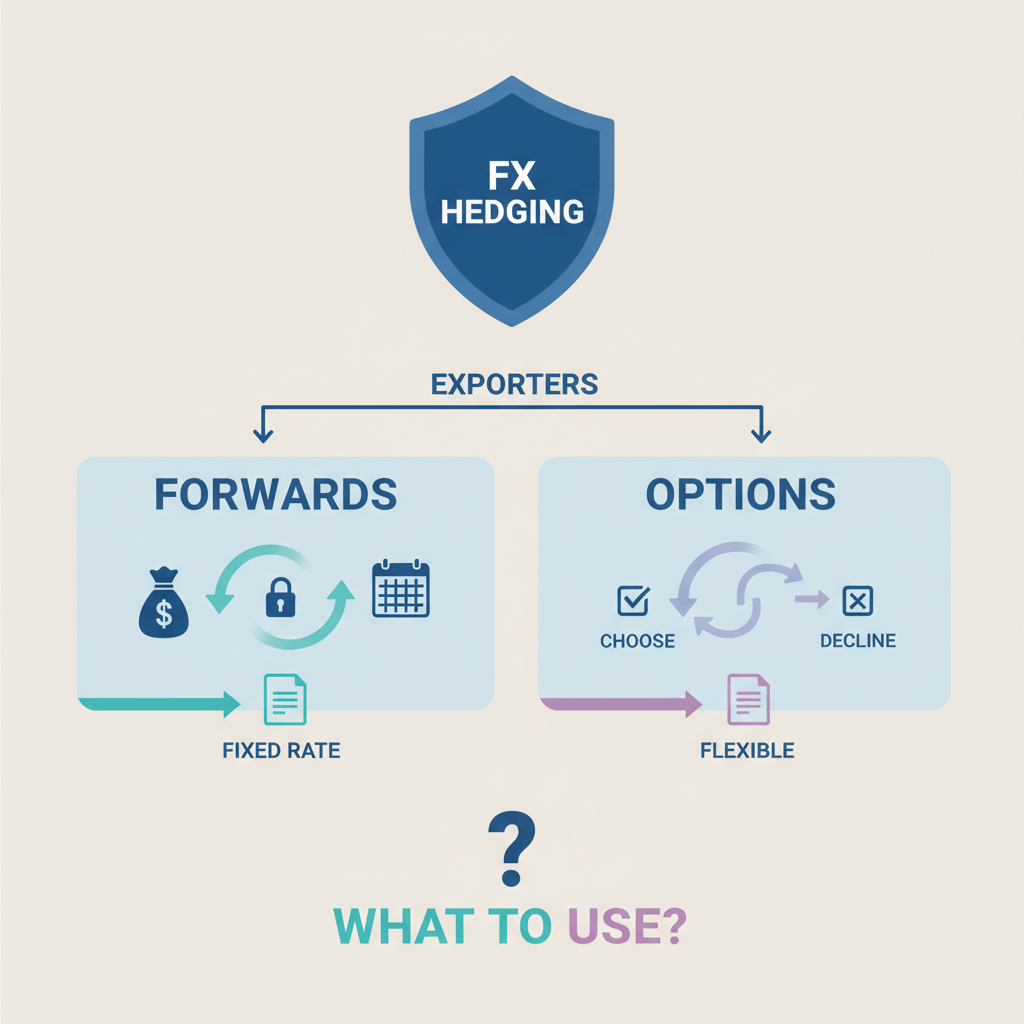
Management can establish basic rules covering which currencies create significant exposure, which transactions qualify for hedging, who can approve a hedge and how often foreign-currency positions are reviewed.
For example, a company could require management approval before entering a hedge for a large foreign-currency payment.
The business can maintain a simple FX exposure report showing:
Currency exposure.
Amount.
Payment or receipt date.
Current exchange rate.
Expected domestic-currency value.
Hedged amount.
Remaining unhedged exposure.
This gives management a clearer view of how much currency risk the business is carrying at any point in time.
What UAE Businesses Should Know About Currency Risk
FX risk management for UAE businesses has an additional consideration because the UAE dirham is maintained under a fixed exchange-rate arrangement against the US dollar.
The Central Bank of the UAE states that the dirham is maintained at a fixed exchange rate against the US dollar. This means UAE businesses dealing primarily in US dollars generally face a different currency-risk profile from businesses whose domestic currencies move freely against the dollar.
However, UAE companies trading with Europe, Asia, Africa and other markets can still face significant exposure to currencies such as the euro, pound, yuan, yen and other currencies.
The Central Bank of the UAE also has foreign-exchange swap operations involving UAE dirhams and US dollars as part of its liquidity-management operations.
Therefore, a UAE-based importer should not assume that having a dollar-linked domestic currency eliminates all FX risk. The company’s actual exposure depends on the currencies in which it earns revenue, pays suppliers, borrows money and holds financial obligations.
The Goal of FX Hedging Is Margin Protection, Not Currency Speculation
FX hedging for small business margin protection should be treated as a risk-management exercise rather than a trading strategy.
If an importer needs dollars to pay a supplier, the business already has a genuine commercial exposure.
The hedge exists to reduce the financial impact of an adverse exchange-rate movement.
If management starts taking additional currency positions simply because it believes the dollar will rise or fall, the company is moving beyond hedging and towards speculation.
That can introduce a new risk that has nothing to do with the company’s underlying business.
The Bank for International Settlements has highlighted how hedging activity can increase during periods of heightened FX volatility as market participants seek to manage currency exposures.
The lesson for small businesses is straightforward: the size of the hedge should be connected to the size of the underlying business exposure.
The Bottom Line for Small Businesses Managing Currency Fluctuation
Currency movements can quietly eat into a company’s margins, particularly when foreign-currency costs are large compared with the business’s overall profit.
The first step is not buying a derivative. It is understanding the exposure.
A business should identify its foreign-currency payments and receipts, measure how much a significant exchange-rate movement could affect its profit, and determine how much risk it can realistically absorb.
Natural hedging can reduce exposure without derivatives. Forwards can provide exchange-rate certainty for known future transactions. Futures can provide standardized exchange-traded protection, while options offer more flexibility at an additional cost. FX swaps can be useful for certain liquidity and funding requirements.
According to the British Business Bank, businesses should regularly review their foreign-currency exposure, establish risk tolerances and choose hedging tools that match their specific transaction patterns.
According to the Bank for International Settlements, FX markets remain enormous and highly active, with global FX turnover reaching an average of $9.5 trillion per day in April 2025. Increased volatility during that period also drove greater use of forwards and options as market participants managed currency exposures.
For a small business, however, the principle remains much simpler than the size of the global FX market suggests.
The purpose of FX hedging is not to win against the currency market. It is to stop the currency market from unexpectedly winning against the business.
EDITED BY, VICTOR BROOKS & ONYEKA D. | MAKON FINANCIALS





