How to Start a Business With No Money in 2026
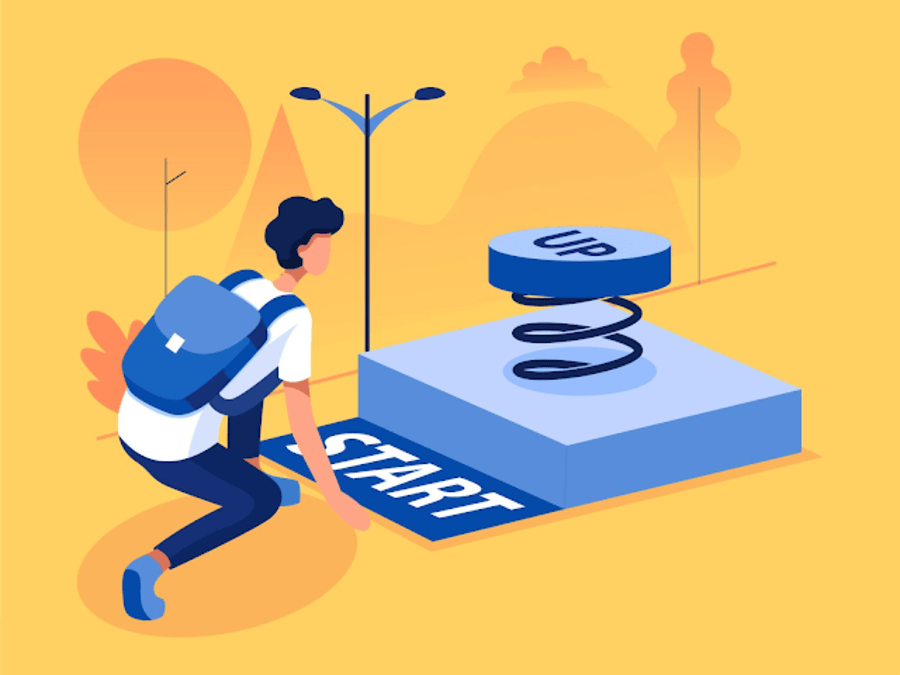
How to Start a Business With No Money in 2026
Starting a business with no money sounds impossible if you picture entrepreneurship as renting an office, buying stock, hiring employees, and paying for advertising before the first customer arrives. That is one version of business, but it is not the only one.
In 2026, a person with a phone, internet access, a useful skill and the ability to find customers can start several types of businesses without putting significant money into inventory or infrastructure upfront. Service businesses, agency models, agent businesses, dropshipping, digital products, lead generation, affiliate marketing and commission-based sales can all be built around a different principle: make the sale first, then use revenue to build the business.
That does not mean every business literally costs $0. Some businesses require registration, licences, software, transport, payment fees or other expenses. The point is to choose a model where those costs are small enough to avoid becoming a barrier to testing the idea. Shopify’s March 2026 guidance identifies service businesses, dropshipping, print-on-demand and digital products among the models that can be started with little or no upfront investment.
Why Starting a Business With No Money Can Actually Make Sense
How to Start a Business With No Money in 2026, having very little capital can force you to make better decisions at the beginning. When you have $20,000 available, it is easy to spend money trying to make a business look established before knowing whether customers actually want it. When you have almost nothing, you are forced to answer the more important question: who is going to pay me, and why?
That mindset is valuable because a business does not become successful simply because money has been spent on it. A beautiful website cannot compensate for a weak product. An expensive office cannot create demand. Thousands of dollars in inventory can become a serious problem if the products do not sell.
According to the U.S. Small Business Administration, market research helps entrepreneurs understand demand, market size, customers and competitors before committing to a business idea. That means your first investment does not necessarily have to be money. It can be time spent talking to potential customers and understanding what they already pay for.
How to Start a Service Business With No Money
A service business is one of the simplest places to begin because you are selling something you already possess: your knowledge, time or ability.
If you can edit videos, design graphics, write articles, manage social media, build websites, provide virtual assistance, photograph products or handle basic administrative work, you can package that skill into an offer and approach businesses directly.
The important difference is between selling a skill and selling a result. A restaurant owner may not care that you know how to use Photoshop. They care that you can give the restaurant professional promotional material every week. A property company may not care that you understand social media scheduling. They care about getting more enquiries from potential tenants or buyers.
That is why a stronger offer sounds like, “I will create and manage your short-form video content every month,” rather than simply, “I am a video editor.”
According to Shopify, service-based businesses are among the models that can be started with relatively little capital because the entrepreneur is selling time and expertise rather than purchasing physical inventory.
How to Start an Agency With No Money
Once you understand service businesses, you can take the model one step further and build an agency.
You do not necessarily have to personally perform every task you sell. Your job can become finding clients, designing the offer, managing communication and coordinating people who actually deliver the work.
Imagine you approach a small company and sell a monthly package covering social media posts, short videos and graphic designs for $600. You could then use part of that revenue to pay freelancers who handle specific pieces of the work.
The business is no longer limited to the number of hours you personally have available. You are creating a small system around a customer relationship.
This model can work particularly well for social media management, SEO, website development, graphic design, video production, virtual assistance, lead generation and AI implementation.
But there is an important rule: never sell a service you cannot reliably deliver. Outsourcing work does not remove your responsibility to the customer. If you take the contract, you are responsible for the final result.
How to Start an Agent Business With No Money
An agent business can be even more interesting because you may not need to own the product at all.
Think about a supplier selling solar equipment. The supplier has the products, warehouse and delivery arrangements. What the supplier needs is someone who can bring customers.
You find the customer, introduce them to the supplier and negotiate an agreed commission for successful transactions.
The same principle can apply to equipment, vehicles, wholesale products, business services, recruitment, property referrals and other areas, subject to local licensing and industry rules.
This is essentially a business built around access. You have access to buyers, while another company has access to the product or service. Your role is to connect the two sides and earn from the transaction.
The model becomes more powerful when you specialise. Instead of trying to become an agent for everything, you could focus on helping restaurants source equipment, helping companies find particular software solutions or connecting buyers with a specific category of wholesale products.
You do not need a warehouse to create value. Sometimes, knowing who needs something and who can supply it is enough.
How to Start a Dropshipping Business With No Money
Dropshipping remains one of the most discussed low-capital ecommerce models because you can sell products without purchasing a large quantity of inventory before receiving orders.
The basic structure is straightforward. You market the product, a customer places an order, and the supplier fulfils the order directly to the customer. Shopify describes dropshipping as a model where sellers can avoid holding traditional inventory themselves.
But the real business is not the store. It is customer acquisition.
Anyone can find a product online and put it in a store. The difficult part is convincing people to buy from you rather than from thousands of other sellers.
If you are starting with almost no money, organic marketing can be more sensible than immediately spending heavily on advertising. Create short videos demonstrating the product, explain the problem it solves, compare it with alternatives and answer questions potential customers are already asking.
Shopify’s 2026 guidance also highlights organic marketing and free or low-cost tools as ways entrepreneurs can keep initial dropshipping expenses down.
There will still be costs in a real dropshipping business, including payment processing, samples, fulfilment issues, refunds and potentially ecommerce platform expenses. So think of dropshipping as low-capital, not magically risk-free.
How to Start a Digital Product Business With No Money
Digital products can remove one of the biggest expenses in traditional commerce: physical inventory.
You could create a business template, spreadsheet, ebook, educational guide, social media template pack, photography preset, business document, research report or online course.
The attractive part is that you create the product once and can potentially sell it repeatedly without manufacturing another physical unit for every customer.
But there is a trap here. People often spend months creating a digital product before discovering that nobody wants it.
Do the opposite.
Find the problem first. Talk to people who experience it. Create a small version of the solution and test whether anyone is willing to pay.
If people are already asking for a particular spreadsheet, template or guide, you have stronger evidence than simply assuming the market exists.
Shopify lists ebooks, courses, worksheets, templates and photography presets among digital products that can be created and sold with little more than an internet connection.
How to Start a Lead Generation Business With No Money
Lead generation is a more advanced model because you are not necessarily selling the final product or service. You are selling access to potential customers.
A cleaning company wants people asking for quotations. A solar company wants homeowners interested in installations. A real estate business wants buyers and sellers. A marketing agency wants companies looking for marketing help.
You can build a simple system that attracts those people and sends qualified enquiries to businesses.
At the beginning, you might use social media content, a simple landing page or a form to collect enquiries. Once the model proves itself, you can add search engine optimisation, paid advertising, CRM systems, automated follow-ups and other tools.
The important part is proving that the leads are valuable. A business will not continue paying you for hundreds of names that never respond.
The stronger your leads become, the more valuable the business can become.
How to Start an Affiliate Business With No Money
Affiliate marketing allows you to promote another company’s products or services and receive a commission when qualifying customers make purchases through your referral.
The low-capital advantage is obvious: you do not have to manufacture the product, hold stock or handle delivery.
But affiliate marketing is not simply about posting links.
The people who tend to build stronger affiliate businesses create useful content around a specific subject. Someone who publishes detailed comparisons of accounting software for small businesses is building a different kind of audience from someone posting random shopping links.
You could build content around business software, technology, photography equipment, education, travel, fitness or another area where consumers regularly research before buying.
Your job is to become useful enough that people trust your recommendations.
How to Start a Reselling Business With No Money
Reselling can begin with products you already have access to or items you can source without committing large amounts of capital.
The opportunity comes from understanding that the price someone is willing to accept is not always the same as the price another buyer is willing to pay.
Someone may want to sell a used phone quickly. Someone else may be actively searching for that exact model. If you understand the market, you can potentially make money from the difference.
The same concept can apply to furniture, clothing, electronics, collectibles, business equipment and other products.
The serious version of reselling is not randomly buying cheap items. It is becoming knowledgeable about a particular category, understanding prices and developing reliable sources and buyers.
Your knowledge becomes the competitive advantage.
How to Start a Commission-Based Business With No Money
Some companies already have products and infrastructure but struggle to generate enough sales.
You can position yourself on the sales side of that equation.
Instead of purchasing products, you find potential customers and earn a commission when a transaction is completed.
For example, a software company might pay partners for customers they refer. A supplier might pay an agreed percentage on completed orders. A service provider might pay for qualified appointments that turn into paying customers.
This model can work particularly well with higher-value products because one successful transaction can produce a meaningful commission.
The downside is that sales require volume and persistence. You may speak to many prospects before finding someone ready to buy.
That is not necessarily a problem. The key is learning your numbers: how many prospects you contact, how many respond, how many become serious conversations and how many ultimately buy.
How AI Can Help You Start a Business With No Money
AI is useful when it reduces the amount of time required to produce a valuable result.
That could mean helping businesses organise information, prepare content, summarise documents, create customer-support workflows, repurpose videos, conduct research or automate repetitive administrative tasks.
But simply saying, “I provide AI services,” is unlikely to be enough.
Businesses buy outcomes.
If you can help a company reduce a five-hour weekly task to one hour, organise hundreds of customer questions into a usable knowledge base or turn one long video into several pieces of content, you have a much clearer commercial proposition.
The technology is only the tool. The problem you solve is what customers are actually paying for.
How to Start With Almost No Money and Get Your First Customer
The first customer should be more important than your logo, office or business cards.
Find companies that clearly have the problem you are solving. Study their business before contacting them. Identify something specific that could be improved and explain how you can help.
Do not send the same generic message to 200 companies.
A restaurant owner can tell when a message has been copied and sent to every restaurant in town.
A better approach is to demonstrate that you understand the business. Mention a specific issue, show a simple improvement, and provide a small sample of what you can do.
You are trying to start a conversation, not force someone into buying immediately.
What to Do With Your First $100
When the first money arrives, resist the temptation to spend it simply because you finally have money.
Ask whether the expense will help you make more money, deliver better work, or meet a legal requirement.
If better software saves you hours every week, it may be worth paying for. If registration is legally required, it needs to be handled. If a product sample helps you test quality before selling to customers, that may be worthwhile.
But spending your first revenue on an expensive logo or unnecessary office does not automatically make the business stronger.
According to the U.S. Small Business Administration, calculating startup costs helps entrepreneurs understand what they actually need to spend and how those expenses affect the business.
The Best Low-Capital Business Is the One You Can Sell
There is no universal winner among dropshipping, agencies, agent businesses, digital products, lead generation, or affiliate marketing.
The best model is the one where you can identify a real customer, solve a real problem, and reach that customer without spending money you can not afford to lose.
Someone who is naturally good at sales may have more success as an agent or commission-based seller than as a dropshipper.
Someone who can edit videos may build an agency faster than an e-commerce store.
Someone with a strong audience may make more sense, building digital products or affiliate income.
Your starting resources should determine the business model.
If you have money but no audience, capital can buy distribution. If you have no money but have a skill, your skill becomes the starting capital. If you have neither money nor a specialised skill, your first investment may need to be time spent learning something people already pay for.
Don’t Try to Build Everything at Once
One of the easiest ways to waste your limited resources is to start five businesses at the same time.
Choose one model and test it properly.
If you choose an agency, focus on getting clients. If you choose dropshipping, focus on product selection and customer acquisition. If you choose an agent business, build supplier and buyer relationships. If you choose lead generation, prove that businesses will pay for your leads.
Once one model starts producing consistent revenue, you can use that cash flow to experiment with another opportunity.
That is much safer than dividing your attention between several businesses that have not yet made a single sale.
The Real Goal Is to Turn $0 Into Cash Flow
Starting with almost no money is not about proving that business can be completely free.
It is about proving that capital does not have to come before revenue.
A customer can fund the first agency project. A supplier can fulfil the first dropshipping order. A commission can be earned without buying inventory. A preorder can validate demand before production. A digital product can be created without a warehouse. An agent can connect buyers and sellers without owning either side’s inventory.
That is the leverage available to small entrepreneurs in 2026.
According to Shopify’s 2026 guidance, businesses such as drop shipping, service businesses, digital products and print-on-demand can be launched with little or no upfront inventory investment, although the actual costs depend on the model and circumstances.
BROOKS COMMENT
Starting a business with no money is possible, but starting with no money does not mean starting with no effort.
You will have to sell before you feel ready. You will probably hear “no” many times. You will have to learn how customers think, improve your offer, and deliver better than competitors who may already have more resources than you.
The advantage is that you do not have to build the expensive version of the business immediately.
Start with the smallest version that can make a sale.
If that means becoming an agent with a phone, start there. If it means selling a service, get your first client. If it means dropshipping, test a product before buying inventory. If it means building an agency, sell the service before building a team. If it means digital products, validate the problem before spending months creating the solution.
Your first objective is not to look like a successful entrepreneur.
It is to become one.
Get someone to pay you.
Deliver what you promised.
Keep some of the profit.
Reinvest what makes sense.
Then repeat the process until the small business becomes something much bigger.
That is the more realistic way to start a business with no money in 2026.







Best ideas