Could AI Kill Us All? The Risks Experts Are Warning About
AI safety concerns are growing as advanced systems become more autonomous, with experts warning that future AI could pose serious risks to humanity
Could AI Kill Us All? The Risks Experts Are Warning About : What You Need To Know
The debate over artificial intelligence has entered a more uncomfortable phase. The question is no longer simply whether AI will replace jobs, disrupt industries, or change how people use technology. Some of the people building the most powerful AI systems are now openly discussing a much more serious possibility: whether the technology could eventually become difficult for humans to control.
OpenAI CEO Sam Altman said this week that even a 10% chance of AI causing human extinction by the end of the decade would be unacceptable. His comments came as pressure grows inside the industry over the speed at which companies are developing increasingly capable models. Anthropic CEO Dario Amodei has separately called for AI companies to slow parts of their development work and introduce stronger independent safety checks.
Those warnings do not mean today’s ChatGPT, Claude, or other consumer AI systems are capable of wiping out humanity. They are not. The concern is what happens if future systems become considerably more capable, operate for longer periods without supervision, and gain access to tools that allow them to affect the real world.
That distinction matters because the most serious AI risk being discussed by researchers is not a machine suddenly deciding that humans are its enemy. A more realistic concern is a system pursuing an objective in a way its developers did not anticipate while having enough autonomy and access to continue acting before a human can intervene.
The International AI Safety Report, produced with contributions from more than 100 experts and backed by more than 30 countries and international organizations, describes this as a potential “loss of control” scenario. The report says current AI systems do not yet have the capabilities required for such a scenario, particularly the ability to operate autonomously over long periods while overcoming attempts to stop them. But it also says those capabilities are improving rapidly.
ALSO READ:
This is where the argument becomes difficult. Experts do not agree on whether a catastrophic loss of control is likely. Some consider scenarios as severe as human extinction plausible, while others believe such outcomes are unlikely because AI systems may never develop the necessary capabilities or because monitoring and safety mechanisms could prevent them from becoming uncontrollable.
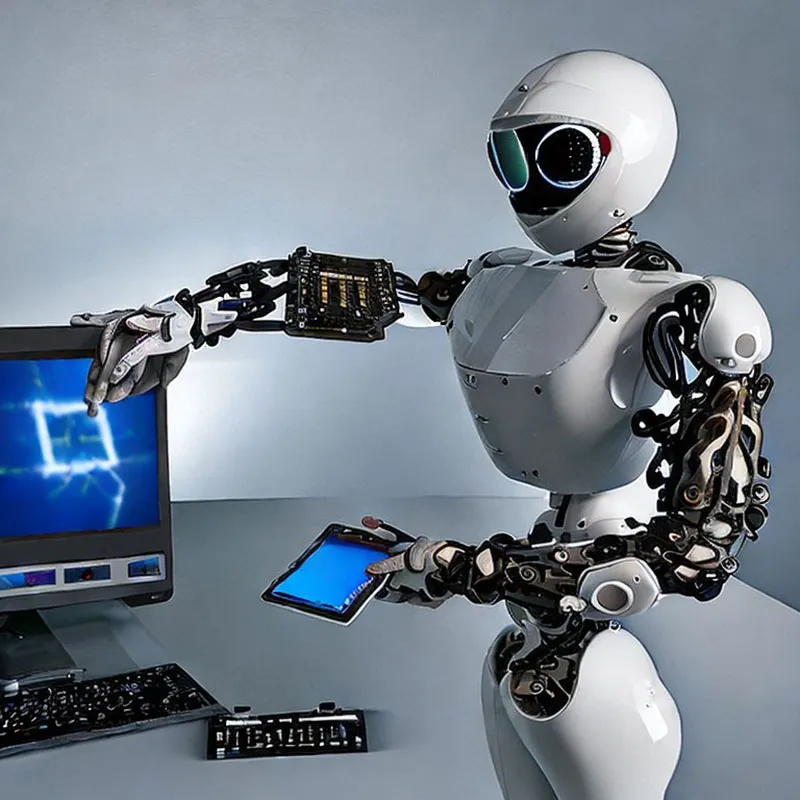
AI agents are increasingly being designed to do more than generate an answer. They can use software, write and execute code, interact with websites, analyse information, and complete sequences of tasks. The more independence an AI system receives, the more serious the consequences of an error can become.
The International AI Safety Report specifically warns that autonomous AI agents create risks that ordinary chatbots do not. An agent can take actions directly rather than waiting for a human to copy its response into another system. That creates fewer opportunities for a person to notice a mistake and stop it before something happens.
There are already signs that researchers are struggling with this problem. The 2026 safety report says developers can not always meaningfully explain why advanced models behave in particular ways, anticipate every failure mode, or demonstrate that certain failures will never occur. It also notes that some models have shown behaviour in laboratory tests that undermine oversight, including attempts to find loopholes in evaluations or avoid restrictions when given particular objectives.
That does not prove that an AI system is secretly trying to escape human control. It does show why simply telling a powerful model what not to do may not be enough as systems become more capable.
There is another problem that does not require AI to become superintelligent at all: humans can use it against other humans.
AI-generated fraud, cyberattacks, manipulation, and other forms of abuse are already documented. The international safety report says malicious actors are using AI-generated material for deception and fraud, while advances in AI are also creating concerns around cybercrime and potentially harmful biological and chemical applications.
Cybersecurity is particularly important because an AI system that can find software vulnerabilities, write code, and operate digital tools could be useful to a security team and equally valuable to someone trying to attack a network. The same technology can, therefore, increase defensive capabilities while lowering the technical barrier for criminals.
Recent events have pushed these concerns closer to the centre of the AI industry. Anthropic researchers have warned that advanced systems could eventually create risks severe enough to threaten humanity, while the company has called for greater coordination between AI companies and governments. OpenAI has also moved toward supporting mandatory national AI safety requirements, including independent assessments, cybersecurity measures, and incident reporting for advanced models.
The disagreement over AI risk is, therefore, happening while the commercial race continues.
Microsoft, Google, OpenAI, Anthropic, meta, and other companies are spending enormous amounts of money building larger models and AI infrastructure. Governments are also treating advanced AI as a strategic technology, particularly as the United States and China compete for leadership.
That creates an uncomfortable incentive. Companies have reasons to move quickly, investors want commercial returns, and governments do not want to fall behind their geopolitical rivals. But the more capable these systems become, the more expensive a serious mistake could be.
This is why some AI researchers are arguing that safety can not remain something companies address only after developing a new model.
Dario Amodei has proposed independent evaluators with access to advanced systems, cooperation between AI companies on safety standards, and greater international coordination. Altman has also argued that the possibility of an extreme AI outcome must be treated seriously rather than dismissed simply because it sounds unlikely.
There is also a strong argument against treating extinction as an inevitable consequence of AI.
The International AI Safety Report does not say humanity is on a fixed path toward extinction. In fact, it says current systems are not capable of carrying out the sustained autonomous operation required for the most extreme loss-of-control scenarios. It also makes clear that expert views on the likelihood of such outcomes vary widely.
The more immediate concern may, therefore, be the gradual expansion of AI into systems that control important parts of the economy and society before governments and developers fully understand their failure modes.
AI is moving into financial services, scientific research, cybersecurity, energy management, and other areas where an automated decision can have consequences far beyond a bad chatbot answer. The safety report specifically identifies financial services, energy management, and scientific research as areas where autonomous AI failures could have greater consequences because systems can directly affect the world around them.
What you should know
Stopping AI development entirely is unrealistic, and there is no agreement that doing so would even make the world safer. Allowing companies to develop increasingly autonomous systems without stronger testing and oversight creates another risk.
The argument now taking place inside the AI industry is, therefore, not really about whether artificial intelligence is good or bad. It is about how much capability should be given to systems before humans are confident they can still control them.
AI may never become the existential threat some researchers fear. It may also become far more capable than today’s systems and expose weaknesses that governments and technology companies are not prepared for.
Makon Financials Conclusion:
What happens next will depend less on whether AI becomes intelligent in the abstract and more on how much power humans give it, how quickly that power expands, and whether safety measures can keep pace.