How UAE Investor Tarek Al Ashram Is Positioning for Africa’s Data Centre Boom

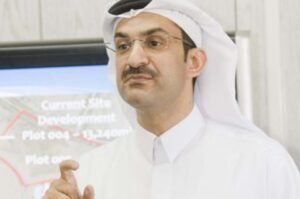
Tarek Al Ashram, founder of Dubai-based Gulf Data Hub, is extending his data centre investment interests into Africa through a partnership with MTN Group to develop artificial intelligence infrastructure in Nigeria and South Africa.
The agreement, announced on August 27, 2026, brings together MTN Digital Infrastructure and Africa Data Hub Holding Limited, an investment platform backed by Al Ashram. The initial plan targets approximately 150 megawatts of AI-ready data centre capacity across the two markets.
The move takes a business developed in the Middle East into a region where demand for cloud computing, data storage, and artificial intelligence infrastructure is growing, but investment in large-scale facilities remains uneven.
Al Ashram founded Gulf Data Hub in 2012, building the company around the development and operation of data centres in the United Arab Emirates and Saudi Arabia. The business attracted a major international investment partner in January 2025, when global investment firm KKR announced a strategic partnership involving more than $5 billion in planned investment to support Gulf Data Hub’s expansion across the region.
That commitment was directed at Gulf Data Hub’s Gulf operations. The African venture is a separate undertaking, although it reflects a similar investment thesis: developing large-scale facilities to serve businesses and technology companies that require reliable computing infrastructure close to their customers.
Also Read:
MTN brings a different asset to the partnership. The telecommunications group operates across 16 African markets and has an established network of connectivity infrastructure and enterprise relationships. Its subsidiary, Bayobab, is expected to support the venture through its pan-African fibre and connectivity network.
Nigeria and South Africa offer two distinct markets for the proposed facilities. South Africa has an established data centre industry, supported by financial services, international connectivity, and demand from global technology providers. Nigeria, meanwhile, offers access to one of the continent’s largest digital economies, with growing requirements from banks, telecommunications operators, technology businesses, and other large enterprises.
The proposed 150MW capacity is significant, particularly as AI workloads require more computing power, electricity, and cooling infrastructure than conventional data storage services. However, the announced figure represents planned capacity, not facilities already completed or operating.
MTN chief executive Ralph Mupita has indicated that the partners are working on land acquisition and power arrangements as part of the development process. The companies have not publicly disclosed a complete breakdown of the project’s financing, individual facility locations, or a detailed construction timetable.
Those details will matter to the commercial viability of the investment. Data centres require substantial upfront capital, dependable electricity supplies, high-capacity fibre connections, and customers willing to commit to long-term service agreements. In markets where power infrastructure remains constrained, securing reliable energy can be as important as financing the buildings and computing equipment.
The partnership also gives MTN an opportunity to participate more directly in the infrastructure supporting cloud computing and AI rather than relying exclusively on its traditional telecommunications business. For Al Ashram, it provides an entry into two major African markets through a partner with an established regional presence.
The scale of the opportunity will ultimately depend on how quickly the proposed facilities move from investment plans to construction and commercial operation. For now, the agreement places UAE-backed capital alongside one of Africa’s largest telecommunications groups in a market increasingly central to the development of the continent’s digital economy.