Nigeria’s Bank Branch Network Shrinks by 476 Locations in Three Years – CBN
Nigeria’s physical banking network declined by 476 branches and cash centers between 2022 and 2025, as banks continued to reduce their physical presence across the country.
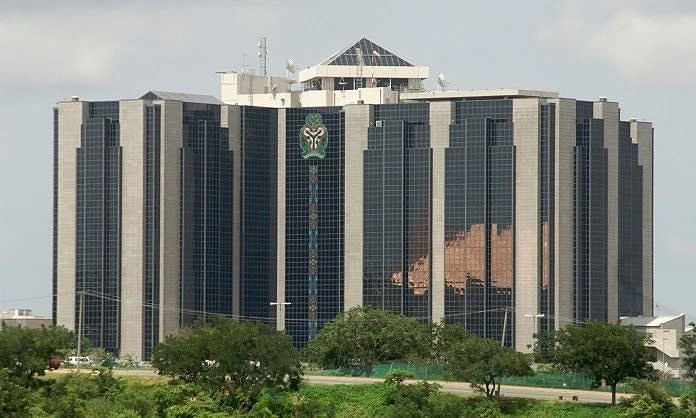
Nigeria’s banking network fell by 476 branches and cash centers between 2022 and 2025, according to figures attributed to the Central Bank of Nigeria’s 2025 Statistical Bulletin, Financial Sector. The reported number of branches and cash centers operated by commercial, merchant, and non-interest banks declined from 5,410 in 2022 to 5,373 in 2023, 5,144 in 2024 and, 4,934 in 2025.
The 476 figure represents the net decline in reported branches and cash centres between 2022 and 2025, the number of individual locations closed during the period.
The decline was concentrated in the final two years of the period. The network fell by 229 locations in 2024 and another 210 in 2025, making the reported number of branches and cash centres around 439 lower at the end of 2025 than it was at the end of 2023. As cited by Makon Financials.
Lagos recorded the largest reduction among the locations identified in the reported data. The number of branches and cash centres in the state fell from 1,602 in 2022 to 1,532 in 2023, 1,521 in 2024, and 1,444 in 2025. That represents a net decline of 158 locations between 2022 and 2025.
The Federal Capital Territory also recorded a decline during the period. Its reported number of branches and cash centres stood at 400 in both 2022 and 2023, before falling to 391 in 2024 and 362 in 2025. The difference between the 2022 and 2025 figures was 38 locations.
Ekiti recorded a decline from 107 locations in 2022 to 57 in 2025, a difference of 50 locations. Enugu fell from 162 to 118, while Oyo declined from 237 to 196 over the same period.
Other reported declines included Ondo, where the number fell from 127 locations in 2022 to 105 in 2025; Osun, from 113 to 96; Plateau, from 80 to 61; Cross River, from 83 to 67; and Rivers, from 290 to 275.
ALSO READ
The data also recorded increases in some states. Delta rose from 173 locations in 2022 to 196 in 2025, while Edo increased from 155 to 165. Jigawa moved from 31 to 37, while Kogi increased from 63 to 68 during the same period.
The reported figures show that the change in Nigeria’s banking network was not uniform across the country. Some states recorded sizeable reductions, while others recorded increases between 2022 and 2025.
Lagos remained the largest concentration of reported banking locations among the figures cited, with 1,444 branches and cash centres in 2025. The reported number was 23 in Yobe, 26 in Taraba, 28 in Zamfara, 31 each in Bayelsa and Gombe, and 32 in Ebonyi.
The data provides a measure of how the physical banking network changed over the period, but it does not by itself establish why individual branches or cash centres were opened, closed, or relocated. It also does not establish that the decline was caused by digital banking, operating costs, or any other single factor.
Can a bank branch shutdown affect my savings?
The closure of a particular bank branch is not the same thing as the closure of the bank itself. A branch is a physical location through which a bank provides services, while a customer’s account is held with the banking institution.
Therefore, the closure or relocation of a branch does not by itself establish that customers’ savings accounts have been closed. Customers affected by a branch closure would need to follow the specific communication issued by their bank concerning where and how services will continue to be provided.
A branch closure should also be distinguished from the revocation of a bank’s license. The two are separate events, and the closure of one physical location does not by itself demonstrate that the institution has stopped operating.
ALSO READ TECH NEWS
What you need to know about bank branch shutdowns
The key figure in the CBN data is the change in the total reported network. Nigeria had 5,410 branches and cash centres in 2022 and 4,934 in 2025, leaving a difference of 476 locations.
That does not mean the CBN recorded 476 individual branch closures. It means the number of reported branches and cash centres was 476 lower in 2025 than it was in 2022.
The yearly figures make the change clearer: the network declined from 5,410 to 5,373 in 2023 to 5,144 in 2024 and then to 4,934 in 2025. The difference between each year produces the overall 476-location net decline.
For customers, a reduction in the number of branches and cash canters should, therefore, not automatically be interpreted as evidence that a particular bank is in financial trouble. The data is an industry-wide measure of the physical banking network and does not identify the financial condition of individual banks.