What Happens When a Country Defaults on Its Debt?
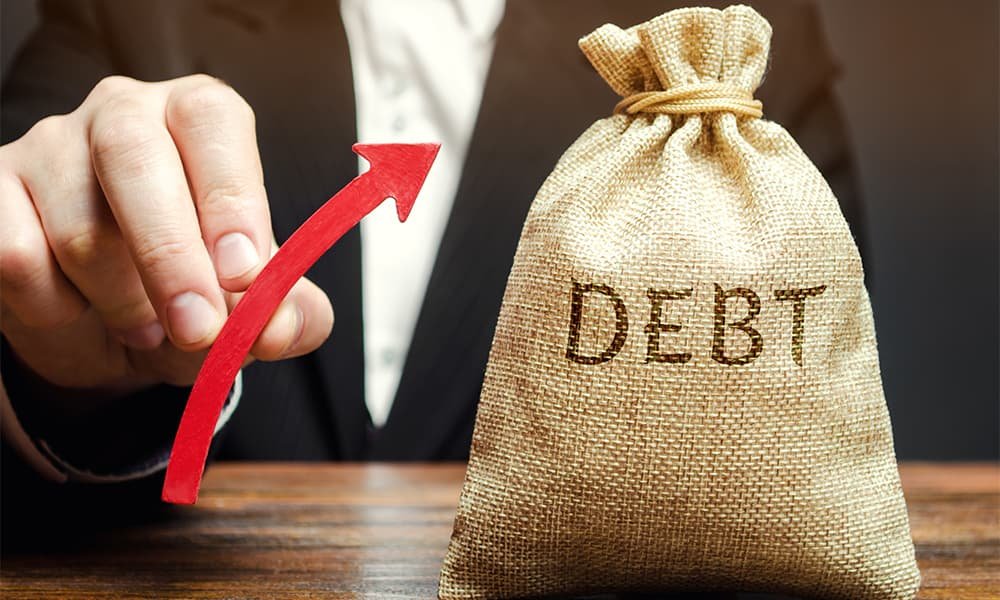
A country defaults on its debt when its government fails to make a scheduled payment to creditors or otherwise does not meet the terms of its debt obligations.
It sounds straightforward, but sovereign default is rarely just a missed payment. It can trigger negotiations with creditors, pressure on government finances, stress in domestic banks, weaker investor confidence, and, in some cases, a sharp economic downturn.
A default also does not necessarily mean that a country has stopped functioning or is officially “bankrupt.” Governments continue operating, collecting taxes, and paying for public services. The problem is that the government can no longer meet some of its debt obligations under the existing terms.
The consequences depend heavily on why the country defaulted, how much debt is involved, who owns that debt, and whether the government can reach an agreement with creditors.
What Does Sovereign Default Mean?
Sovereign default occurs when a government fails to meet its debt obligations according to the agreed terms.
The default may involve missed interest payments, missed principal repayments, or another failure to comply with the terms of a debt contract.
It is also possible for a government to default on some obligations while continuing to service others. Sovereign debt can be owed to commercial banks, bondholders, other governments, and international institutions, so the situation is not always an all-or-nothing event.
One important distinction is between default and debt distress.
A country can be under severe financial pressure without having formally defaulted. If the government believes it can not continue meeting its obligations, it may negotiate with creditors before a payment is missed.
The World Bank has found that preemptive debt restructurings can be resolved more quickly and are associated with shorter periods of exclusion from international capital markets and smaller output losses than restructurings carried out after default.
What Happens Immediately After a Country Defaults?
The first major effect is usually financial uncertainty.
Creditors want to know when and how they will be repaid. Investors reassess the risk of holding the country’s bonds. The government may also face difficulty raising fresh money to refinance existing debt.
For a country that relies heavily on borrowing, this can become a serious problem.
Governments often issue new debt to repay maturing obligations. Once investors lose confidence that the government can repay, access to new financing can become much more difficult or expensive.
The IMF notes that sovereign arrears can disrupt relations with external creditors and limit access to financing.
That is why a default can quickly become a broader financing crisis rather than simply a missed payment.
The Government Usually Has to Negotiate With Creditors
After a serious debt crisis, the government will often seek to restructure its obligations.
Debt restructuring means changing the original terms of the debt so that the government has a more manageable payment schedule.
The changes can take different forms. A government may ask creditors to extend maturities, reduce interest payments, delay payments, or accept a reduction in the amount owed.
The precise solution depends on the country’s debt position and the type of creditors involved.
The IMF makes clear that the country’s authorities, working with legal and financial advisers, determine the restructuring strategy and which debt is included. The IMF does not run the restructuring process itself.
The objective is not simply to postpone the problem. A restructuring is supposed to put the country’s debt on a path that it can realistically sustain.
Bondholders and Other Creditors Can Take Losses
When debt is restructured, creditors may receive less than they were originally promised.
This is known as a haircut when restructuring reduces the economic value of what creditors are expected to receive.
For example, a government bond might originally promise repayment of $1,000 plus interest. Under restructuring, creditors could receive a smaller principal amount, lower interest payments, or repayment over a much longer period.
The loss does not necessarily happen in exactly the same way for every creditor.
A country’s debt may be spread across domestic investors, foreign bondholders, banks, governments, and multilateral institutions. Different types of debt can, therefore, receive different treatment.
This is one reason sovereign restructurings can take time: the government must negotiate with creditors whose interests are not always identical.
The Country Can Lose Access to International Markets
One of the most important consequences of default is the damage to market access.
Investors generally demand compensation for taking greater risks. After a sovereign default, investors may demand much higher interest rates before buying the country’s new bonds.
That can make borrowing prohibitively expensive.
The problem can persist even after a restructuring agreement has been reached. Investors may want evidence that the government’s finances have improved before returning in significant numbers.
The World Bank notes that the timing of restructuring matters. Its research finds that preemptive restructurings tend to have better outcomes than restructurings conducted after default, including shorter periods of exclusion from global capital markets.
For a government that needs continuous access to financing, losing that market access can be one of the most damaging parts of a default.
ALSO READ
What Is Purchasing Power and How Is It Calculated
Government Spending Comes Under Pressure
A government facing debt distress has fewer options.
If large amounts of revenue are going toward debt service, there may be less money available for infrastructure, healthcare, education, salaries, and other public programmes.
After a default, however, the government does not simply get free money because it has stopped making payments.
The underlying fiscal problem still exists.
A government may need to raise revenue, reduce spending, reform subsidies, improve tax collection, or restructure state-owned enterprises. These measures can be politically difficult because they can affect households and businesses.
The IMF has repeatedly emphasized that restoring debt sustainability generally requires credible economic and fiscal policies alongside financing or restructuring where necessary.
Banks and Pension Funds Can Also Be Hit
The consequences can spread into the domestic financial system, particularly when local banks and institutional investors hold large amounts of government debt.
If the market value of government bonds falls sharply, banks holding those bonds can suffer losses.
That can weaken their balance sheets and potentially reduce their ability to provide loans to households and businesses.
The IMF has specifically warned that domestic sovereign debt restructuring can transmit losses to domestic banks, pension funds, and households. In severe cases, governments may need to recapitalize banks or take other measures to protect financial stability.
This is why restructuring domestic debt can be particularly sensitive. The creditors are not necessarily distant foreign investors. They can include institutions and households within the country itself.
What Happens to the Currency?

A sovereign default can also put pressure on a country’s currency, especially when investors begin moving money out of the economy or when the country has significant foreign-currency debt.
If the currency falls sharply, servicing foreign-currency debt can become even more expensive in local-currency terms.
For example, a government that owes $10 billion in dollar-denominated debt will need more units of its domestic currency to make the same dollar payment if its currency depreciates.
Currency weakness can also increase the domestic price of imported goods.
But depreciation is not an automatic consequence of every sovereign default. The effect depends on the country’s exchange-rate system, foreign exchange reserves, external financing position, and broader economic conditions.
Can Default Cause Higher Inflation?
It can, but again, there is no automatic formula.
Currency depreciation can make imported goods more expensive. A government that loses access to normal borrowing may also face pressure to finance spending in ways that can increase inflationary risks.
At the same time, a severe debt crisis can weaken economic activity and reduce demand.
The inflation outcome, therefore, depends on the policies adopted after the crisis and the country’s broader economic conditions.
This is why a sovereign default should not be analysed in isolation. Debt exchange rates, inflation, interest rates, and economic growth can reinforce one another.
What Role Does the IMF Play?
The International Monetary Fund (IMF) can become important when a country’s debt crisis is also creating a balance-of-payments or external financing problem.
But the IMF does not simply pay off a country’s creditors.
It can provide financing under an economic programme designed to restore financial stability and debt sustainability. Where debt is judged unsustainable, IMF financing generally requires the country to take steps to restore sustainability, which can include restructuring its debt.
The IMF’s debt sustainability analysis is therefore important. It examines whether the government can realistically meet its current and future obligations.
The Fund can also lend under certain circumstances when a country is already in arrears, subject to its policies and the conditions of the programme.
Is a Country Bankrupt After Default?
Not in the same way a private company can be.
There is no ordinary bankruptcy court that can take control of a sovereign government and liquidate the country.
Sovereign debt is handled through negotiations, domestic and international legal frameworks, creditor agreements, and, where relevant, international financial institutions.
The IMF notes that when debt becomes unsustainable, the country’s government decides whether to negotiate a restructuring with creditors.
So, a default is better understood as a sovereign financial crisis rather than the country shutting down.
How Does a Country Recover From Default?
Recovery normally depends on more than reaching an agreement with creditors.
The government needs to restore confidence in its ability to manage public finances. That can involve fiscal reforms, stronger debt management, improved revenue collection, economic reforms, and measures designed to restore growth.
The World Bank describes debt restructuring as part of a broader process of restoring debt sustainability rather than the final solution by itself.
The length of recovery varies considerably. A country with a relatively contained debt problem and credible reforms may regain investor confidence faster than a country facing weak growth, political instability, large external debts, or repeated defaults.
A country’s default on its debt is not simply a government refusing to pay.
It is usually the point at which a debt problem becomes impossible to manage under existing terms.
The immediate consequences can include missed payments, falling bond prices, and reduced access to new borrowing and negotiations with creditors. The effects can then move into the wider economy through government spending, banks, pension funds, exchange rates, and inflation.
Debt restructuring can give a government breathing room, but it does not eliminate the underlying economic problem. The country still needs a credible path toward sustainable public finances and economic growth.
That is why the most important question after a sovereign default is not only how much debt the country has failed to pay.
It is whether the country can rebuild enough financial credibility and economic strength to borrow, invest, and grow again without returning to the same debt crisis.