US Military Funding Helped Propel China’s Robot Dogs
US Military Funding Helped Propel China’s Robot Dogs
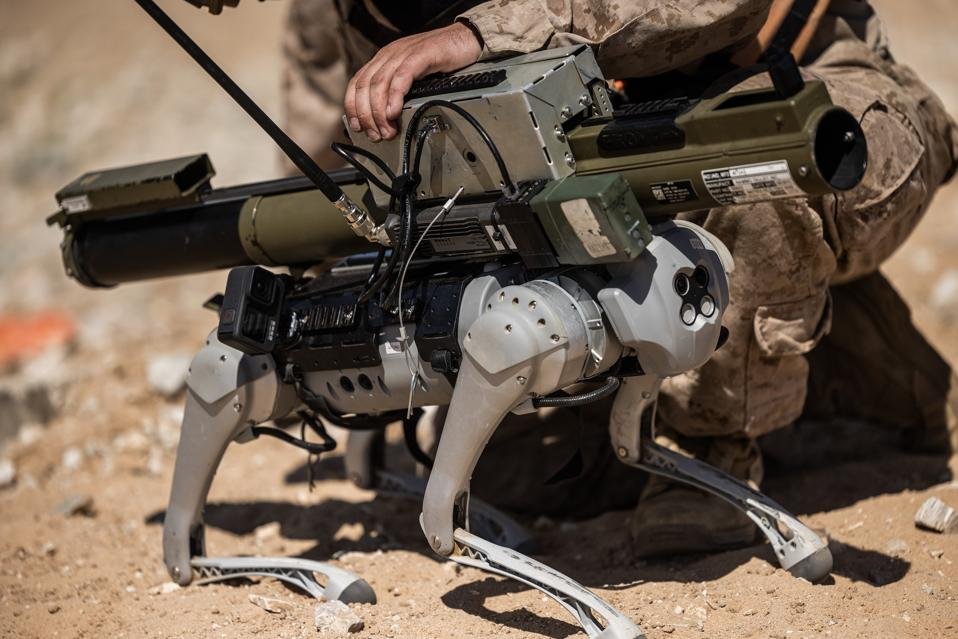
China’s Unitree Robotics has become one of the world’s leading producers of robot dogs, but some of the technology behind its rise can be traced to robotics research funded by the US military.
According to Reuters, researchers involved in the US Army-funded programme said Unitree’s successful robot dogs drew on innovations developed through Pentagon-backed research into quadruped robotics.
The development highlights a growing weakness in the US-China technology race: Washington helped fund important robotics research, but Chinese manufacturers have been more successful at turning similar advances into affordable products at scale.
US Military Research Helped Advance Quadruped Robots
According to Reuters, the US Army funded the Robotics Collaborative Technology Alliance between 2010 and 2020 to advance research into four-legged robots.
The programme involved researchers from institutions including MIT and the University of Pennsylvania. One of the projects produced the Mini Cheetah, a small quadruped robot designed to move quickly and maintain stability across difficult terrain.
Researchers involved in the programme told Reuters that the dimensions and structure of Unitree’s popular Go series were remarkably similar to the Mini Cheetah.
The important point, however, is that Unitree did not obtain classified military technology. The US research was deliberately published openly to encourage scientific progress, meaning researchers and companies around the world could study the work.
Unitree Turned Robotics Research Into Affordable Machines
According to Reuters, Unitree launched its Go2 robot dog in 2023 at a price of about $1,600.
That relatively low price helped the company rapidly expand its presence in the global quadruped robotics market. Unitree has also moved into humanoid robots and is preparing for its Shanghai stock-market debut.
The company sold more than 5,500 humanoid robots and 18,000 quadruped robots in 2025, according to company filings cited by Reuters.
This is where China’s manufacturing advantage becomes important.
The US research produced important robotics breakthroughs, but China has a dense network of suppliers for motors, gears, actuators and other components needed to manufacture robots at scale.
China’s Manufacturing Advantage Is the Bigger Story
According to Reuters, US robotics researchers involved in the original military-funded programmes do not argue that the research should have been kept secret.
Instead, they point to a different problem: the US has struggled to move advanced research quickly from laboratories into large-scale manufacturing.
Unitree was able to build on publicly available research while benefiting from China’s manufacturing ecosystem.
That gives Chinese robotics companies an important commercial advantage. Producing a capable robot is one challenge; producing thousands of them at a competitive price is another.
The same pattern has appeared in other industries where China has rapidly expanded production, including electric vehicles, solar panels and drones.
Unitree’s Robots Are Now Raising Security Concerns
The technology has also taken on military significance.
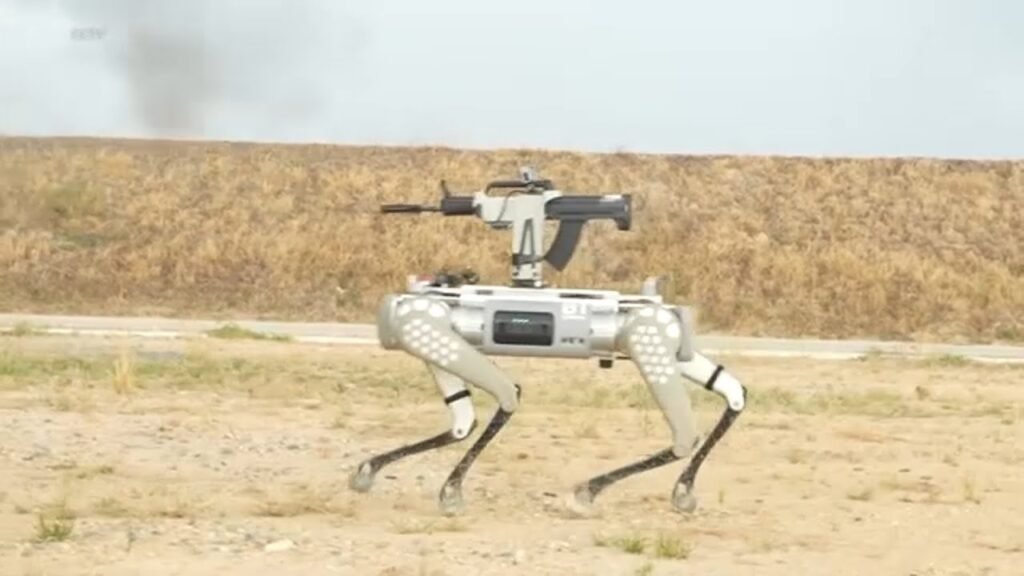
According to Reuters, Unitree robots have appeared alongside Chinese military personnel in state-media footage, including demonstrations involving armed robot dogs.
Unitree has said its products are intended for civilian use.
The US government has nevertheless increased scrutiny of the company. In June, the Pentagon added Unitree to a list of Chinese military companies, describing it as a contributor to China’s defence industrial base.
The designation is not itself a sanction, but it restricts the US military’s future use of Unitree technology.
US Faces a Bigger Robotics Challenge
According to Reuters, the robot-dog competition reflects a broader problem for the United States: innovation alone does not guarantee manufacturing leadership.
The US remains strong in robotics research, software and artificial intelligence, but China has built an industrial base capable of taking emerging technologies into mass production.
That difference could become increasingly important as robotics expands into manufacturing, logistics, security and defence.
The lesson from Unitree is therefore not simply that China benefited from American research.
It is that the country capable of manufacturing advanced technology cheaply and at scale can sometimes capture more commercial value than the country that developed the original breakthrough.
For Washington, closing that gap may require more than export restrictions on Chinese robots. It could require greater investment in domestic manufacturing, component supply chains and the commercialisation of US-funded research.
According to Reuters, that is now at the center of the debate over America’s ability to compete with China’s rapidly expanding robotics industry.