UAE Wants Deeper BRICS Financial Cooperation: What It Means for Global Markets
UAE Wants Deeper BRICS Financial Cooperation: What It Means for Global Markets
12/08/26 | Makon Financials
The United Arab Emirates is pushing for deeper financial cooperation among BRICS countries as the group looks to strengthen the role of emerging economies in the global financial system.
The UAE made the call during the first BRICS Finance Ministers and Central Bank Governors Meeting under India’s 2026 presidency, being held in Jaipur on August 12 and 13. Mohamed bin Hadi Al Hussaini, the UAE Minister of State for Financial Affairs, is representing the country at the meeting.
The discussions are covering infrastructure financing, capital markets, tax and customs cooperation, public-private partnerships and reforms to global economic governance.
For the UAE, the issue is bigger than simply increasing trade between BRICS members. Abu Dhabi wants the group to develop stronger financial systems that can help emerging economies attract investment, finance infrastructure and have a greater voice in institutions that shape the global economy.
Why the UAE wants deeper BRICS financial cooperation
The UAE is arguing that emerging and developing economies need a stronger position in the international financial system.
Al Hussaini called for reforms that can improve productivity, attract private capital and deepen domestic capital markets. He also pushed for increased development financing and greater representation for emerging economies in international financial institutions.
That matters because access to capital remains one of the biggest challenges for developing economies. Large infrastructure projects, energy developments and technology investments require significant amounts of financing, and emerging markets often face higher funding costs and greater financial risks.
Stronger cooperation within BRICS could create more channels for investment between member economies rather than relying entirely on traditional sources of international capital.
What BRICS financial cooperation could look like
The current discussions are not about creating a single BRICS financial system overnight.
Instead, the focus is on practical areas where member countries can work together.
Infrastructure financing is one of them. The UAE is also presenting initiatives involving public-private partnerships, sustainable infrastructure, artificial intelligence, digital transformation, climate finance and private capital mobilisation.
Tax and customs cooperation is another area. The UAE has previously explored cooperation with BRICS countries on tax administration, information exchange, training and digitalisation.
Capital markets are also receiving attention because stronger domestic markets can give companies and governments more ways to raise money without depending entirely on foreign financing.
The New Development Bank is part of the picture
The New Development Bank, established by BRICS, is also being discussed as a way to mobilise more private capital across member economies.
The UAE is participating in a seminar focused specifically on how the bank can help attract private investment into BRICS countries. Another workshop is examining risk financing and infrastructure resilience in emerging economies.
This is important because development banks can help bridge the gap between large infrastructure needs and the private investors who may be unwilling to take on all the risks themselves.
If BRICS can make that process more efficient, it could increase financing for infrastructure, energy, technology and other projects across emerging markets.
What this means for global markets
The bigger financial-market story is diversification.
BRICS countries have been looking for ways to increase economic cooperation among themselves, while giving emerging economies a greater role in global decision-making.
That does not mean the US dollar is suddenly being pushed out of international trade, nor does the latest UAE proposal mean BRICS is creating a common currency.
The immediate focus is much more practical: how member countries can improve access to financing, increase investment flows, strengthen capital markets and cooperate on financial issues.
Over time, deeper cooperation could make BRICS economies more interconnected financially.
That could create new investment opportunities for banks, asset managers, infrastructure companies and businesses operating across emerging markets.
Why the UAE is particularly important
The UAE brings a different position to the BRICS discussion.
It is already a major international trading and financial centre, with strong commercial relationships across Asia, Africa, Europe and the Middle East.
That gives the country an interest in making cross-border investment and trade easier while maintaining its position as a global capital hub.
The UAE’s approach to BRICS has also been heavily focused on economic cooperation and diversification. Its participation in the group’s financial discussions therefore fits with its broader strategy of building relationships across multiple major economic blocs.
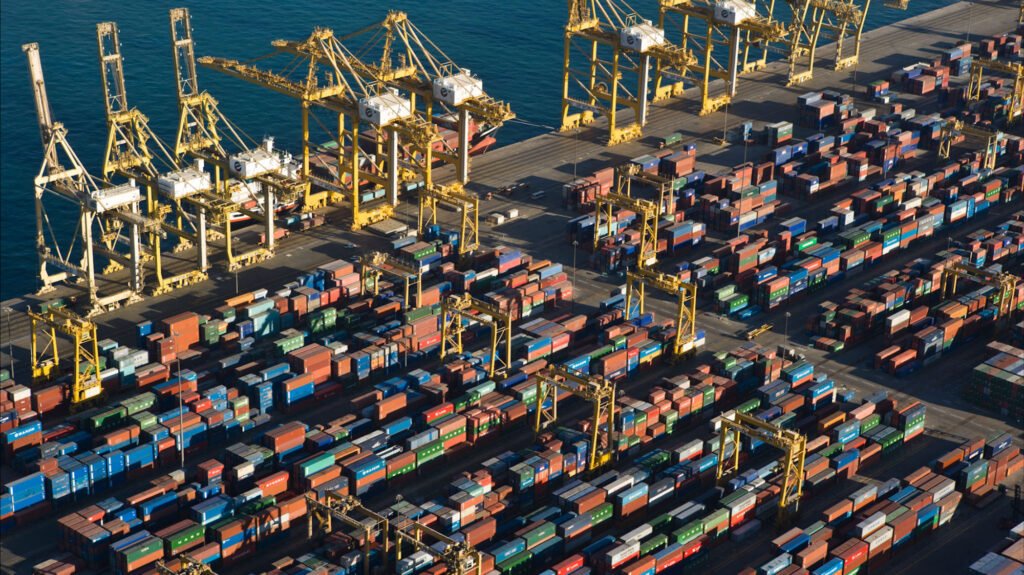
The UAE has also been active in the 2026 BRICS trade agenda. Its non-oil trade with BRICS countries has grown significantly, with recent reporting putting the figure above $312 billion.
BRICS is becoming more important to the global economy
India is chairing BRICS in 2026, and the expanded group now includes countries such as the UAE, Egypt, Ethiopia, Iran and Indonesia alongside the original members.
That expansion has made financial cooperation more complicated, but potentially more important.
The economies involved have different currencies, banking systems, economic structures and policy priorities. Getting them to cooperate effectively will therefore require more than political agreements.
Payment systems, investment rules, financial regulation, tax cooperation and capital-market development all have to work together.
That is why the UAE’s push is significant. It is asking BRICS to move beyond broad statements about economic cooperation and concentrate on financial mechanisms that can actually support investment and growth.
What investors should watch next
The immediate question is what comes out of the BRICS finance meeting and the wider 2026 BRICS process.
Investors should watch for concrete measures involving development financing, capital-market cooperation, cross-border investment, tax and customs coordination and the New Development Bank.
If these initiatives move from discussions into actual financial mechanisms, the impact could be much more meaningful for emerging-market investors.
For now, the UAE’s message is clear: BRICS should play a bigger role in shaping how emerging economies finance growth and participate in the global financial system.
That does not mean the existing financial order is disappearing. It means countries such as the UAE want more options, more investment channels and a stronger voice for emerging markets as the global economy becomes increasingly multipolar.
Makon Financials | Markets & Global Economy