UAE Reroutes LNG Cargoes Outside Strait of Hormuz as Shipping Disruption Deepens
By Victor Brooks
UAE Reroutes LNG Cargoes Outside Strait of Hormuz as Shipping Disruption Deepens
The UAE is changing how some liquefied natural gas (LNG) cargoes reach overseas buyers as disruption in the Strait of Hormuz makes normal shipping increasingly difficult.
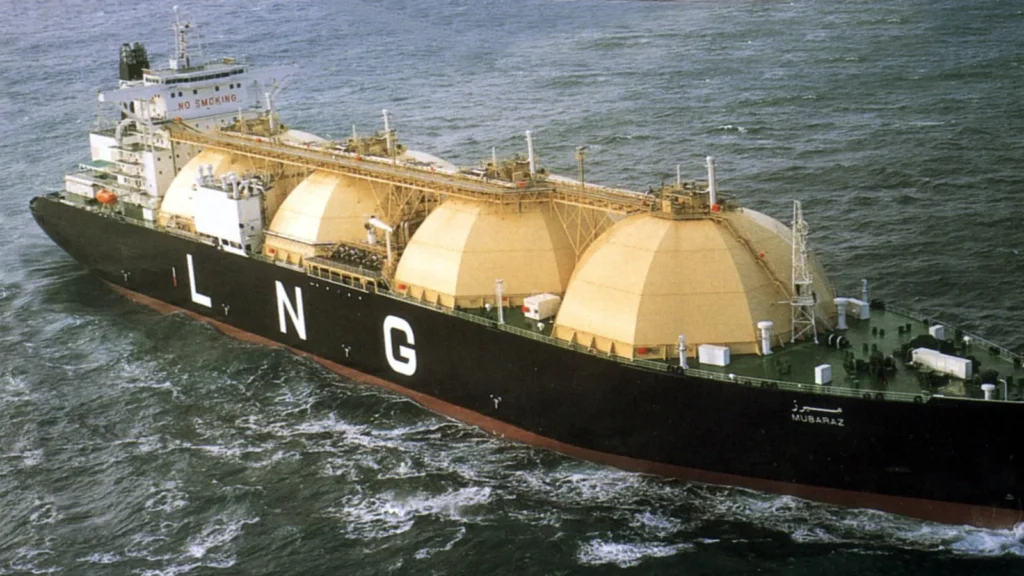
Three LNG cargoes from the UAE and Qatar were transferred between vessels in international waters off Oman and the UAE, according to ship-tracking data reviewed by Reuters. The shipments were ultimately headed for India and Japan.
One operation involved an ADNOC-linked cargo. The vessels Mraweh and LNG Enugu were identified in the transfer, with the cargo continuing toward Japan.
The development offers a clear view of the pressure now facing Gulf energy exporters: the gas remains available, but moving it to customers has become more complicated.
Gulf LNG is facing a transport problem, not simply a supply problem
The UAE and Qatar export LNG from terminals located inside the Strait of Hormuz. Under normal conditions, LNG carriers leave the Gulf through the Strait and continue directly toward Asian and other international markets.
The disruption has complicated that process.
Kpler data cited by Reuters showed only four commodity vessels transited the Strait on Tuesday, compared with 10 the previous day and a 10-day average of about 13. Tracking data can change because vessels may turn off their transponders.
For LNG exporters, reduced traffic creates a practical problem. A cargo can be ready for delivery while the normal route used to transport it becomes difficult to rely on.
That is where ship-to-ship transfers become useful.
Why do the ship-to-ship transfers matter
Moving LNG between vessels outside the Strait allows exporters and shipping operators to reorganize a journey that would normally be completed by one carrier.
It does not eliminate the disruption. Instead, it shifts part of the logistical burden to waters outside the main chokepoint.
That can provide greater flexibility when vessels face difficulty passing through Hormuz while allowing cargoes to continue toward their customers.
The trade-off is complex. Additional vessel coordination, transfers, and routing decisions can increase operational demands and potentially raise transportation costs.
So, the key development is not simply that LNG is being transferred between ships. It is that export logistics are being redesigned around the disruption.
ADNOC cargo highlights the UAE’s exposure to Asian demand
The ADNOC-linked shipment heading toward Japan shows why maintaining reliable logistics matters.
Japan is a major LNG-importing market, and Asian buyers depend heavily on seaborne gas supplies. When shipping conditions deteriorate around a major energy chokepoint, the consequences can quickly reach importers thousands of kilometers away.
For the UAE, keeping cargo moves helps preserve access to international customers.
But the longer the disruption lasts, the more important shipping flexibility becomes. Exporters must consider not only how much LNG they can produce but also whether they can secure the vessels and routes needed to deliver it.
LNG prices are already reflecting the risk
Asian spot LNG prices have risen sharply during the disruption.
Reuters reported prices at $23.20 per million British thermal units, more than double their level before the conflict began.
That increase shows how transportation disruption can affect prices even when the underlying commodity has not suddenly disappeared.
Importers may have to compete more aggressively for available cargoes when deliveries become uncertain. Higher procurement costs can then feed into electricity generation and industrial energy costs in markets that rely heavily on imported LNG.
The longer the disruption persists, the more difficult it becomes for buyers to treat shipping uncertainty as a short-term issue.
Higher oil prices do not solve the shipping problem
Oil prices have also come under upward pressure as the conflict involving the United States and Iran raises concerns about energy flows through Hormuz.
For Gulf exporters, however, higher commodity prices come with an important complication.
A higher oil or LNG price can improve the value of exported energy, but it does not guarantee that cargoes can move efficiently.
This creates a two-sided market effect: the same geopolitical event can support energy prices while making physical delivery more expensive and uncertain.
That distinction matters for the UAE because energy exports depend on both production and transportation.
The bigger risk is prolonged logistics disruption
The latest LNG transfers show that Gulf exporters can adapt when conventional shipping becomes difficult.
But alternative arrangements are not necessarily a permanent substitute for normal maritime traffic.
If conditions around Hormuz improve, these transfers could remain limited workarounds. If disruption continues, however, shipping flexibility could become a much more important part of LNG trading and procurement.
For Asian buyers, that could mean greater attention to cargo availability, vessel capacity, and delivery routes alongside the price of LNG itself.
For the UAE, the immediate priority is keeping contracted cargoes moving. The broader lesson for energy markets is clearer: when a major chokepoint becomes unreliable, the first disruption may appear in logistics before it appears as a physical shortage of the commodity.
That is what the latest UAE LNG movements are beginning to demonstrate.





