How to Build a Low-Risk Passive Income Stream (Even with Little Capital)
How to Build a Low-Risk Passive Income Stream (Even with Little Capital)
How to Build a Low-Risk Passive Income Stream (Even with Little Capital)
Everyone wants to make money while they sleep. But in today’s volatile economic climate, the old advice of “just buy crypto” or “flip real estate” doesn’t work for everyone. High volatility can wipe out your savings overnight, and real estate requires thousands of dollars in upfront capital.
So, how do you build a sustainable stream of extra cash without risking your hard-earned principal, especially if you are starting small?
At Makon Financials, we believe in smart, data-driven wealth creation. In this ultimate guide, we will break down the exact financial strategies institutional fund managers use to generate low-risk passive income, and show you how to apply them even if you are starting with little capital.
What Exactly is a “Low-Risk” Passive Income Stream?
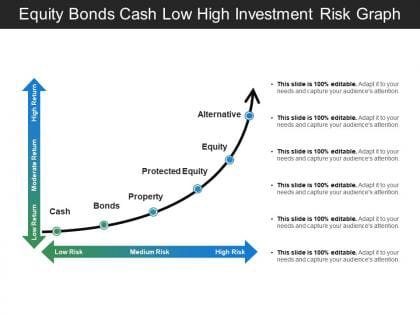
Before we look at the strategies, let’s clear up a major myth. In the financial world, risk and return are directly connected. Anyone promising you 50% returns per month with “zero risk” is running a scam.
When we talk about a low-risk passive income stream at Makon Financials, we mean investing in assets where your principal capital is highly protected, usually backed by governments, high-grade corporations, or heavily regulated financial institutions.
Instead of chasing wild, unpredictable gains, a low-risk strategy focuses on the power of arbitrage and steady compounding, yielding consistent monthly or annual payouts that reliably beat standard bank savings accounts.
3 Low-Risk Passive Income Strategies for Small Capital
You don’t need millions to start earning passive income. Thanks to modern financial technology, institutional-grade investments have been fractionalized. Here are the top ways to deploy your capital safely:
- High-Yield Flexible Savings Accounts (The Cash Buffer)
If you have very little capital and need absolute liquidity (the ability to withdraw your money at any time), high-yield digital saving accounts are your starting point. Modern fintech apps pass their lean operational costs back to you in the form of daily interest.
Instead of letting your spare cash sit dead in a traditional bank account earning minimal interest annually, moving it to a verified digital wealth platform can net you a solid yield, calculated and paid out into your dashboard every single morning. It acts as an excellent holding tank for your passive income engine. - High-Yield Government Bonds
If you want the safest investment possible, you look to government-backed securities. When you buy short-term government bonds or Treasury bills, you are lending money to the government to fund public services or infrastructure.
Government bonds are virtually risk-free because a stable government can print money or raise taxes to pay you back. While direct institutional auctions require larger sums, many modern asset management apps allow you to buy fractionalized bonds for a fraction of the cost, making it easy to earn predictable interest. - Corporate Commercial Papers (The Smart Arbitrage)
For investors who want a slightly higher yield than government bonds while keeping risk remarkably low, Commercial Papers are the ultimate hidden gem.
A Commercial Paper is a short-term loan you extend to massive, highly credible blue-chip corporations to fund their immediate daily operations. Because lending to a corporation carries a microscopic fraction of more risk than lending to the government, these companies offer premium interest rates.
The 1.5% Monthly Rule: How the Math Works
To make passive income feel real, you need to transition your mind away from “annual returns” to “monthly cash flow.”
Let’s look at how institutional fund managers structure money, and how you can mimic them on a smaller scale using a hybrid model. Imagine you have a starting capital base of $10,000:
- The Growth Engine ($8,000): You lock this major portion into a high-yield corporate asset or a fixed note earning a reliable annual percentage. This sitting capital is heavily protected and does the heavy lifting for your portfolio.
- The Flexible Buffer ($2,000): You keep this smaller portion in a high-yield flexible digital account that earns interest daily but allows you to pull money out whenever you want.
By putting $8,000 of your money into a fixed corporate asset earning a high yield, and keeping $2,000 in a flexible digital account, you create an internal banking system. The fixed engine easily covers a steady 1.5% monthly payout goal, giving you consistent cash alerts of $150 every month, while the flexible buffer ensures you always have immediate liquidity. At the end of the year, your original $10,000 remains entirely intact.
How to Protect Yourself from High-Risk Traps
As you build your passive income portfolio, the Makon Financials team recommends sticking to three unbreakable rules: - Say No to Guaranteed Upfront Luxury: If a platform promises you massive monthly percentages (like 10% to 20% monthly), they are taking massive trading risks behind the scenes or running a Ponzi scheme.
- Lock the Principal, Don’t Lock the Interest: Ensure your underlying contracts clearly state that your core capital is locked for a fixed tenor (like 6 or 12 months), but your yield should flow into an accessible account.
- Diversify Across Institutions: Never put all your capital into a single digital app or a single company’s commercial paper. Spread your weight.
Start Small, Scale Early
The biggest barrier to building a passive income stream isn’t the amount of money you have, it’s the delay in starting. Beginning with just $100 or $500 in a low-risk, high-yield digital asset trains your mind to understand cash flow dynamics. As your savings grow, you can seamlessly migrate your wealth into institutional commercial papers and government bonds.
For more deep dives into low-risk wealth generation strategies, step-by-step investment tutorials, and verified platform reviews, keep it locked to Makon Financials.