In the waters off Malaysia, Iranian oil sales continue despite blockade
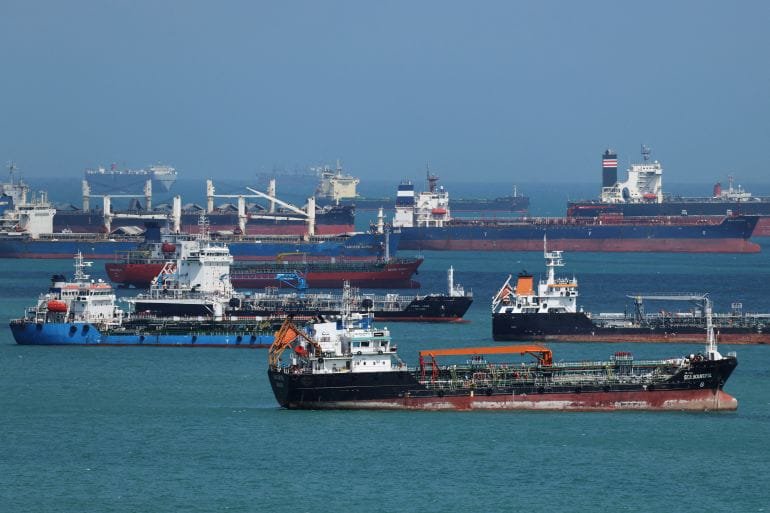
In the waters off Malaysia, Iranian oil sales continue despite blockade
In the Waters Off Malaysia, Iranian Oil Sales Continue Despite Blockade
Global oil markets are once again confronting a familiar reality: sanctions and military pressure can disrupt supply chains, but they rarely eliminate them. In 2026, even as the United States intensifies efforts to restrict Iran’s oil exports through sanctions and maritime enforcement, evidence shows that Iranian crude continues to flow across international waters, particularly in regions near Malaysia.
Recent investigations using satellite imagery, shipping data, and maritime intelligence have revealed a complex and highly coordinated network of oil transfers taking place far from the Persian Gulf. These operations highlight the resilience of Iran’s energy trade and expose the structural limits of modern economic blockades.
At the center of this activity lies a strategic maritime corridor near Malaysia, where ship to ship oil transfers have become a critical mechanism for bypassing restrictions.
The Mechanics of Offshore Oil Transfers
Unlike traditional oil exports, which move directly from ports to buyers, Iran’s current strategy relies heavily on offshore transfers. Tankers carrying crude oil depart from Iranian ports and travel toward Southeast Asia. Rather than delivering cargo directly, they rendezvous with other vessels in international waters, often just beyond national jurisdiction.
These ship to ship transfers effectively disguise the origin of the oil. Once transferred, the receiving tanker can continue its journey under a different identity, with altered documentation or routing patterns, making it extremely difficult for authorities to trace the cargo back to Iran.
Satellite evidence confirms that multiple such transfers have occurred near the Riau Archipelago and areas off Malaysia’s southern coast. In some cases, dozens of vessels have been involved, collectively moving millions of barrels of crude.
This method is not new, but its scale and sophistication have increased significantly in response to heightened geopolitical tensions in 2026.
Why Malaysian Waters Matter
The waters near Malaysia have emerged as a key hub for these operations due to a combination of geography and legal complexity. Areas such as the Eastern Outer Port Limits, located off the coast of Johor, sit along one of the busiest shipping routes in the world, connecting the Middle East to East Asia.
Crucially, many of these transfer zones exist outside strict national enforcement boundaries. Authorities have acknowledged that these activities exploit jurisdictional gaps, taking place beyond direct radar coverage and territorial control.
This creates an environment where enforcement is difficult, even when activities are widely known. Maritime agencies can monitor but often lack the legal authority to intervene unless vessels enter territorial waters.
The Role of the Shadow Fleet
Iran’s ability to sustain these operations depends on what analysts describe as a shadow fleet. This network consists of aging oil tankers, frequently operating under opaque ownership structures, false flags, or shell companies.
These vessels often disable or manipulate their Automatic Identification Systems, making real time tracking unreliable. In some cases, ships change names, identities, or registry details multiple times during a single journey.
Reports indicate that a large proportion of tankers involved in Iranian oil trade are already under international sanctions, yet they continue to operate across global shipping lanes.
This shadow infrastructure has effectively created an alternative oil distribution system, one that exists parallel to the regulated global energy market.
China’s Strategic Position
A major driver behind the continuation of these flows is sustained demand from China. As the world’s largest energy importer, China has maintained access to Iranian crude through indirect channels, often purchasing oil at discounted rates.
Industry data suggests that a significant share of Iran’s exports ultimately reaches Chinese buyers, even when routed through multiple intermediaries. In some cases, floating storage facilities near Southeast Asia serve as temporary holding points before final delivery.
Recent reporting indicates that China has continued to secure Middle Eastern oil supplies, including Iranian crude, through these offshore networks despite disruptions and enforcement efforts.
This demand ensures that Iran’s oil trade, while constrained, remains economically viable.
Limits of the Blockade Strategy
The persistence of these activities underscores a broader challenge in global energy enforcement. While sanctions and naval patrols can restrict direct exports from Iranian ports, they are far less effective once oil has already entered international waters.
Ship to ship transfers, identity masking, and rerouted shipping lanes allow previously loaded cargo to continue moving through the system. As a result, the blockade slows the flow of new shipments but does not immediately stop the monetization of existing supply.
This dynamic creates a lag effect, where Iranian revenues continue even during periods of heightened enforcement.
At the same time, the continued evolution of these tactics suggests that enforcement measures are being actively studied and countered in real time.
Global Market Implications
For global oil markets, the continuation of Iranian exports through covert channels introduces both stability and uncertainty.
On one hand, the availability of additional supply, even through unofficial routes, helps prevent sharp price spikes that could result from a complete shutdown of Iranian exports. On the other hand, the opaque nature of these transactions complicates market transparency and forecasting.
Energy traders, policymakers, and investors must now account for a shadow supply chain that operates outside traditional reporting systems.
This hidden flow of oil also raises concerns about regulatory compliance, insurance risks, and geopolitical escalation, particularly as enforcement efforts intensify.
Makon Financials Insight
What is unfolding near Malaysian waters is not merely a workaround to sanctions, it is a structural shift in how restricted economies participate in global trade.
Iran’s ability to maintain oil exports under pressure reflects the growing adaptability of sanctioned states in a highly interconnected world. The combination of maritime loopholes, alternative buyers, and decentralized logistics networks is redefining the effectiveness of economic isolation.
For global markets, this signals a new era where official supply figures may no longer tell the full story. The real balance of power increasingly lies in the ability to operate within, and around, the grey zones of international systems.
Conclusion
The evidence is clear: Iranian oil sales are continuing despite the blockade, and Malaysian waters have become a critical node in that process. While enforcement efforts have disrupted traditional export routes, they have not eliminated Iran’s presence in the global oil market.
Instead, the trade has evolved, becoming more complex, less transparent, and increasingly difficult to control.
As geopolitical tensions persist, this shadow network of oil transfers is likely to remain a defining feature of the global energy landscape, shaping both market dynamics and policy responses in the years ahead.