Big Tech Is Borrowing Billions for AI: Governments Now Face More Competition for Investors’ Money
Big Tech’s AI spending boom is driving billions in borrowing, raising questions about debt costs, investor demand and competition with government bonds.
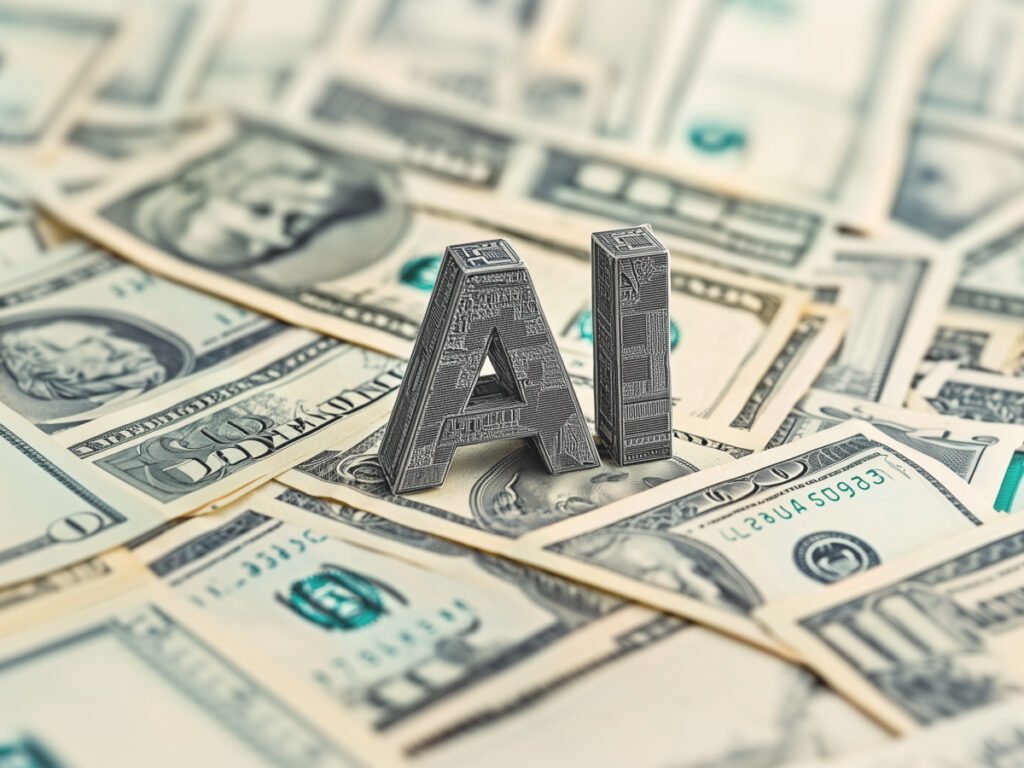
The artificial intelligence boom is creating a new source of demand in global debt markets. Technology companies are borrowing heavily to build data centres and expand computing capacity, putting them in competition with governments that also depend on bond investors to finance their spending.
Amazon, Alphabet, Meta, Oracle, and Microsoft had issued about $194 billion in bonds by July 7, 2026, according to Reuters. That was 79% more than the five companies borrowed during the whole of 2025. Goldman Sachs projected their combined borrowing could reach $250 billion by the end of 2026.
Oracle’s plans show how much capital the expansion requires. In February, the company said it expected to raise $45 billion to $50 billion during 2026 to expand its cloud infrastructure and meet customer demand. Its fiscal 2026 results later reported $43 billion in debt financing and $5 billion in equity financing.
The investment is driven by the need for physical infrastructure to support AI services. Data centres, advanced chips, and computing systems require substantial spending, often before companies can fully realize the returns from their investments.
ALSO READ:
Governments are competing for capital in the same broad market. They issue bonds to cover budget deficits, refinance maturing debt, and fund public expenditure. As technology companies sell more debt, investors have a wider range of borrowing opportunities to consider.

The risk for technology companies is whether the returns from AI investment will justify the cost. Building infrastructure at this scale requires substantial funding, while the revenue and cash flow generated by that investment may take time to develop. Companies must balance their expansion plans against debt repayments and other financial commitments.
For investors, the growing supply of corporate debt presents a question of relative value: whether technology companies offer sufficient returns to justify their risks compared with government bonds and other investments.
The AI boom is therefore becoming more than a technology investment story. The scale of financing required to sustain it is also becoming an important development in global capital markets, with implications for companies, investors, and governments alike.
Why Credit-Rating Agencies Are Watching AI Spending
The scale of AI investment is putting companies’ finances under closer scrutiny. Credit-rating agencies will be watching whether the spending translates into enough revenue and cash flow to support the debt being accumulated. Strong demand for AI services may improve future earnings, but the returns are not guaranteed to arrive as quickly as the investment requires.

A company’s credit profile could come under pressure if borrowing rises while cash generation weakens. That matters because lenders and bond investors consider credit risk when deciding the interest rate they require. A higher perceived risk can make future financing more expensive, adding to the cost of an already capital-intensive expansion.
Investors will, therefore, need to look beyond announcements about new data centres and AI contracts. Cash flow, debt levels, and the ability to meet interest payments will help determine whether companies can sustain their investment plans without putting excessive pressure on their balance sheets.
The Maturity of the Debt Matters as Much as Its Size
The total amount borrowed does not tell investors when the money must be repaid. A company with debt spread across several years may have more time to generate returns from its AI investments, while one facing substantial repayments within a short period could be forced to refinance under less favourable conditions.
Interest terms also affect the risk. Fixed-rate borrowing gives companies greater certainty over interest expenses during the agreed period, whereas floating-rate debt can become more expensive when benchmark rates rise. The structure of a company’s debt can, therefore, be just as important as the headline amount.
What Investors Should Watch in the Coming Quarters
One of the clearest indicators will be whether operating cash flow keeps pace with capital expenditure. If spending continues to climb without a similar improvement in cash generation, companies may need to borrow more or reconsider the pace of expansion. Investors will also be watching credit-rating changes and the volume of new corporate bond issuance for signs of growing financial pressure.
For government bond markets, the implications are less direct. More corporate borrowing can give investors additional choices, but government yields are also shaped by inflation, central-bank policy, fiscal deficits, and demand for safe assets. The question is whether AI-related financing becomes large enough to materially change how investors allocate capital across these markets.
Makon Financials