Oil Price Rises Above $107 Amid Middle East Tension
Oil prices climbed above $107 as rising Middle East tensions threaten global crude supplies.
Oil Price Rises Above $107 Amid Mideast Tension
Oil prices climbed above $107 a barrel on Monday as renewed tensions across the Middle East raised concerns about further disruption to global crude supplies.
Brent crude for November delivery rose 2.8% to $107.54 a barrel, while U.S. West Texas Intermediate crude for October delivery gained 2.3% to $102.34. Both benchmarks extended their recent gains after moving back above the $100 level last week.
The latest increase came as attacks on energy infrastructure and commercial shipping added to concerns about the movement of oil from the Middle East.
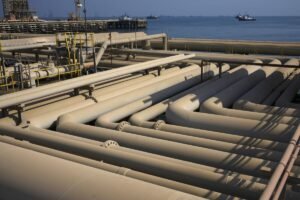
Saudi Arabia temporarily shut its East-West oil pipeline after a drone attack. The pipeline is an important alternative route for transporting Saudi crude to the Red Sea without passing through the Strait of Hormuz.
The shutdown comes as shipping through the region is already facing increased risks. The Strait of Hormuz is one of the world’s most important oil transit routes, while the Bab el-Mandeb Strait provides another major route for energy shipments between the Red Sea and the Gulf of Aden.
The situation around Hormuz also deteriorated after a vessel was struck by a projectile while travelling through the strait. The attacks and security concerns have increased the risk that more vessels could avoid the area or face higher costs to continue operating there.
ALSO READ
The Saudi pipeline is particularly important because it gives the country a route to move crude toward the Red Sea while avoiding Hormuz. Its closure therefore removes part of Saudi Arabia’s ability to bypass the increasingly risky shipping route.
The oil market had already been under pressure from the wider conflict in the region. Brent crude rose sharply last week, moving above $100 for the first time since May as traders assessed the possibility of prolonged disruptions to production and exports.
The latest attacks have added another layer of uncertainty because the potential disruption is no longer limited to crude production. Oil infrastructure, pipelines, and shipping routes are all facing increased risks.
For oil traders, the key question is how long the Saudi pipeline will remain out of operation and whether attacks on vessels and energy infrastructure will continue.
A prolonged shutdown of important export routes could tighten available supplies and keep crude prices elevated. Further disruption around Hormuz or Bab el-Mandeb could put additional upward pressure on prices.
For now, Brent remains above $107 a barrel and WTI above $102 as markets continue to react to developments across the region.
What You Need to Know
The latest rise in crude prices is closely tied to the growing risk around Middle East energy infrastructure and shipping routes. Brent, moving above $107, a barrel puts the market at a significantly higher level than it was before the latest escalation, while WTI has also remained above $100.
The temporary shutdown of Saudi Arabia’s East-West pipeline is important because the route allows crude to reach the Red Sea without travelling through the Strait of Hormuz. Any prolonged disruption would reduce the flexibility available to Saudi oil exports.
The Strait of Hormuz remains a major concern for the market because a large share of global oil shipments passes through the waterway. Further attacks on vessels or restrictions on shipping could increase the risk premium built into crude prices.
What Investors Should Expect
Investors should expect oil prices to remain highly sensitive to developments around Saudi Arabia, the Strait of Hormuz, and other regional shipping routes.
If the Saudi pipeline resumes normal operations and shipping conditions improve, some of the recent gains in crude could ease. But, further attacks on oil facilities, pipelines, or vessels could push prices higher as traders price in the possibility of tighter supplies.
Higher oil prices could also increase fuel and transportation costs and complicate efforts by central banks to bring inflation down. Energy companies could benefit from stronger crude prices, while airlines, transport companies, and other businesses with high fuel costs could face higher expenses.