Why Stronger UK Growth Could Keep Bank of England Rates Higher
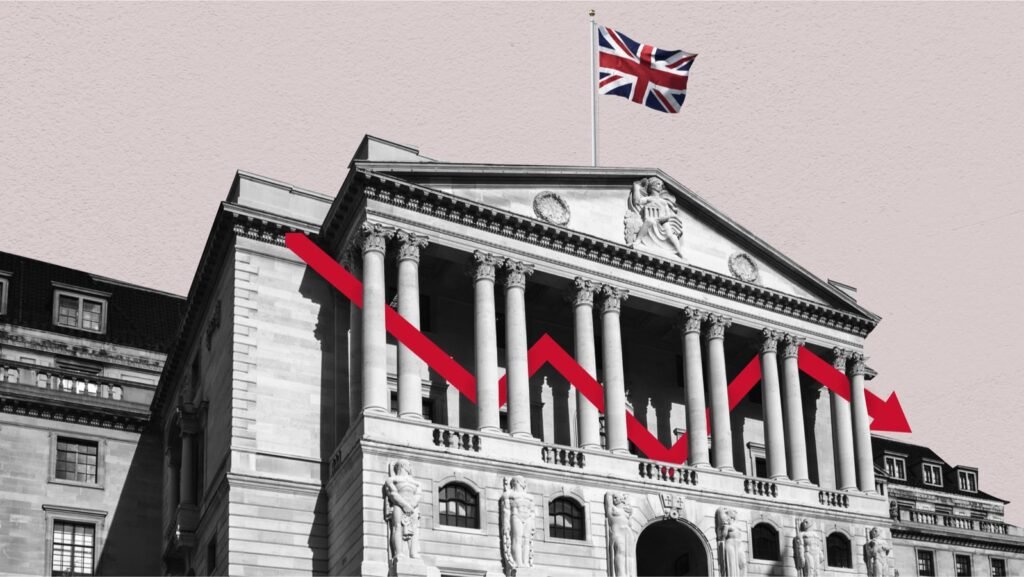
Why Stronger UK Growth Could Keep Bank of England Rates Higher
Stronger UK economic growth is usually good news. But when inflation remains above the Bank of England’s 2% target, faster growth can make interest-rate cuts more difficult.
The reason is not that the bank automatically raises rates when the economy expands. The issue is whether demand is growing faster than the economy’s ability to supply goods and services.
That distinction helps explain why a stronger economy can sometimes lead to interest rates staying higher for longer.
Stronger growth does not automatically mean higher rates
GDP can increase for very different reasons.
Households may spend more, businesses may invest, employment may rise, exports may strengthen, or companies may become more productive.
These forces do not have the same effect on inflation.
If consumer demand is accelerating while businesses are struggling to expand supply, companies can gain more pricing power. A tight labour market can also push wages higher as employers compete for workers.
But if growth comes from stronger productivity or greater productive capacity, the economy can produce more without generating the same degree of price pressure.
That is why the Bank of England looks beyond the headline GDP figure.
The more important question is whether demand is running ahead of supply.
Why Bank Rate matters
Bank Rate affects the cost of borrowing and the return on saving across the economy.
Higher interest rates can discourage households from taking on debt or making large purchases. They can also make businesses more cautious about borrowing to invest or expand.
Lower rates generally loosen those conditions, encouraging more borrowing and spending.
That creates a delicate balance for monetary policymakers.
When inflation is falling and economic activity is weak, lower rates can support the economy without necessarily creating significant additional price pressure.
But if demand is already strengthening while inflation remains elevated, cutting rates could add further stimulus before existing inflationary pressures have fully faded.
The result can be a slower path toward lower rates.
RELATED ARTICLE
Bank of England’s Catherine Mann Sees Stronger UK Growth, Keeps Rate-Hike Risks in Focus
Why inflation matters more than GDP alone
Consider two economies growing at the same rate.
In one, productivity is improving. Businesses can produce more with existing resources, increasing supply alongside output.
In other words, households are spending aggressively while companies struggle to keep up with demand.
Both economies are growing. But the second creates a much greater risk that businesses will respond to strong demand by raising prices.
This is why a strong GDP reading should not be interpreted on its own as a signal for higher interest rates.
Inflation, wages, employment, consumer demand, and productivity provide the context needed to understand what the growth actually means for monetary policy.
Where wages fit into the picture
A stronger economy can increase demand for workers.
When businesses compete for a limited supply of labour, wages can rise. That is not necessarily a problem for inflation if productivity is improving at a similar pace.
The pressure becomes more persistent when wages rise significantly faster than productivity.
Businesses then face higher labour costs without a corresponding increase in output per worker. Some may respond by raising prices, particularly in labour-intensive industries.
If those higher prices feed into further wage demands, inflation can become harder to bring down.
This is one reason the labour market can matter almost as much as the headline growth rate when investors assess the outlook for UK interest rates.
Why do today’s data not tell the whole story
Monetary policy works with a delay.
The Bank of England says it can take around 18 to 24 months for the full effects of monetary policy to work through the economy.
That means policymakers can not simply respond to today’s economic conditions as though interest-rate changes take effect immediately.
A weak economy today may already reflect the impact of earlier rate increases. Likewise, a rate cut made today could continue stimulating demand well after economic conditions have changed.
The Bank therefore has to consider where inflation and demand are heading, not just where they stand at a particular moment.
Could stronger growth actually support lower rates?
Growth driven by productivity can increase the economy’s capacity to produce goods and services.
If companies become more efficient, invest in technology, or expand productive capacity, output can rise without the same increase in costs that might accompany a demand-led expansion.
That can allow the economy to grow while inflation remains contained.
In such a situation, stronger GDP does not necessarily argue for higher rates. It could give policymakers more confidence that growth can continue without reigniting inflation.
The key difference is, therefore, between demand-led growth and supply-led growth.
What higher rates mean for households and businesses
If stronger demand keeps inflation elevated, interest-rate cuts may be pushed further into the future.
For mortgage borrowers, that can mean refinancing at higher rates for longer. Businesses face a similar calculation when deciding whether the expected return from an investment is sufficient to justify the cost of borrowing.
Consumers may also delay major purchases when financing becomes more expensive.
Higher rates can, however, make saving more attractive by increasing returns on deposits and other interest-bearing assets.
Monetary policy, therefore, affects different parts of the economy in different ways. The bank’s challenge is to create enough restraint to bring inflation under control without causing an unnecessarily deep slowdown.
Why can sterling react to growth expectations
The pound can strengthen when stronger economic data lead markets to expect UK interest rates to remain higher than previously anticipated.
Higher expected returns on UK assets can make sterling more attractive to investors.
But the relationship is not automatic.
Currencies are valued relative to other economies. If investors expect the US or euro area to maintain similarly high interest rates, Britain’s relative advantage may be limited.
Global risk sentiment, energy prices, and trade conditions can also have a major influence on sterling.
Why can gilts move before the bank does
UK government bonds are highly sensitive to expectations for future interest rates.
If stronger economic data convince investors that the bank will cut rates more slowly, gilt yields can rise. Because bond prices generally move in the opposite direction to yields, existing bonds can fall in value.
The effect can extend beyond government debt.
Gilt yields help influence borrowing costs across the financial system, meaning markets can tighten financial conditions before the Bank of England actually changes Bank Rate.
What matters most from here?
GDP is only one part of the picture.
The more useful indicators are the ones that reveal whether economic growth is creating sustained pressure on prices.
Inflation shows whether price growth is moving convincingly toward the 2% target.
Wages indicate whether labour costs are continuing to build pressure.
Employment helps show whether demand for workers is strengthening or weakening.
Consumer spending reveals whether households are continuing to support demand.
Productivity helps determine whether the economy is becoming capable of producing more without generating equivalent cost pressures.
Taken together, these indicators provide a much clearer picture of where interest rates could go than any single economic release.
The bigger lesson
The relationship between UK growth and interest rates is not as simple as stronger growth equals higher rates.
What matters is the quality of that growth.
If demand is accelerating while inflation remains persistent, the Bank of England has less room to cut rates quickly.
If productivity and productive capacity are improving while inflation continues to ease, stronger growth can be much less concerning and could coexist with lower rates.
For investors, borrowers, and businesses, the crucial question is, therefore, not simply whether Britain is growing faster.
It is what is driving that growth and whether the economy can absorb it without creating fresh inflation pressure.
That is the distinction that can determine whether Bank Rate stays higher for longer or whether policymakers eventually have room to ease.