How Rising Oil Prices Affect Bond Yields, Inflation, and Interest Rates
How Rising Oil Prices Affect Bond Yields, Inflation, and Interest Rates
By Victor Brooks
Oil prices can move far beyond the energy market.
When crude becomes more expensive, the impact can work through transportation, manufacturing, household spending, and business costs. Eventually, those changes can influence inflation and the expectations that drive financial markets.
For bond investors, the important relationship is not simply that higher oil prices lead to higher bond yields. The real connection runs through inflation, economic growth, and expectations for monetary policy.
Understanding that chain makes it easier to interpret why bond markets sometimes react sharply to movements in crude oil.
Why Oil Prices Matter to the Wider Economy
Oil is an important input into transportation and many production processes.
Higher crude prices can increase the cost of fuel and other energy-related products. Businesses that rely heavily on transportation or energy may face higher operating expenses, while households can spend more on fuel and other goods affected by energy costs.
Some businesses absorb those additional expenses. Others pass part of them on to customers.
The result can be an increase in consumer prices, particularly in the energy component of inflation.
But, the effect does not necessarily spread throughout the economy.
The size and persistence of the oil increase matter. The European Central Bank notes that small, short-lived energy shocks often have limited effects beyond energy prices, while larger or more persistent shocks have a greater risk of spilling into broader inflation.
From Oil Prices to Inflation
The first place an oil-price increase normally appears in headline inflation.
Petrol, diesel, and other energy-related prices can respond relatively quickly to changes in crude prices.
The more difficult question is what happens afterwards.
If companies continue facing higher energy and transportation costs, some may raise their prices. If households and businesses begin expecting inflation to remain high, those expectations can also become economically important.
This is why central banks pay attention not only to the size of an energy shock but also to its duration and whether it is spreading into broader price-setting behaviour.
The ECB has emphasised that the persistence of an energy shock and the extent of its pass-through into wages, prices, and inflation expectations are important when assessing the appropriate monetary-policy response.
Why Inflation Matters to Bond Investors
A conventional bond generally promises fixed payments.
When inflation rises, the purchasing power of those future payments becomes less certain. Investors may, therefore, place greater importance on the inflation risk associated with holding longer-term fixed-income securities.
There is also a market-pricing effect.
If investors expect inflation to remain higher, they may revise the return they require from bonds. Existing bond prices can fall as investors adjust their portfolios, which causes their yields to rise.
This is one reason inflation expectations are closely watched in fixed-income markets.
But inflation is only one part of the calculation.
SUGGESTED FOR YOUY
The Interest-Rate Expectations Channel
The connection between oil and interest rates often works through expectations.
Central banks set policy rates, but bond markets continuously price expectations about where those rates could be in the future.
If a sustained increase in oil prices appears likely to keep inflation elevated, investors may become less confident that a central bank can reduce interest rates quickly.
Bond yields can respond to that change in expectations before the central bank actually changes its policy rate.
Recent Federal Reserve analysis provides a useful illustration of this mechanism. The Fed has noted that energy-related supply shocks contributed to higher inflation, while financial markets also adjusted their expectations for future policy rates.
The important distinction is, therefore,
The central bank controls its policy rate. The bond market prices expectations about future rates.
Those two things are closely connected, but they are not identical.
Why Higher Oil Prices Do Not Always Mean Higher Bond Yields
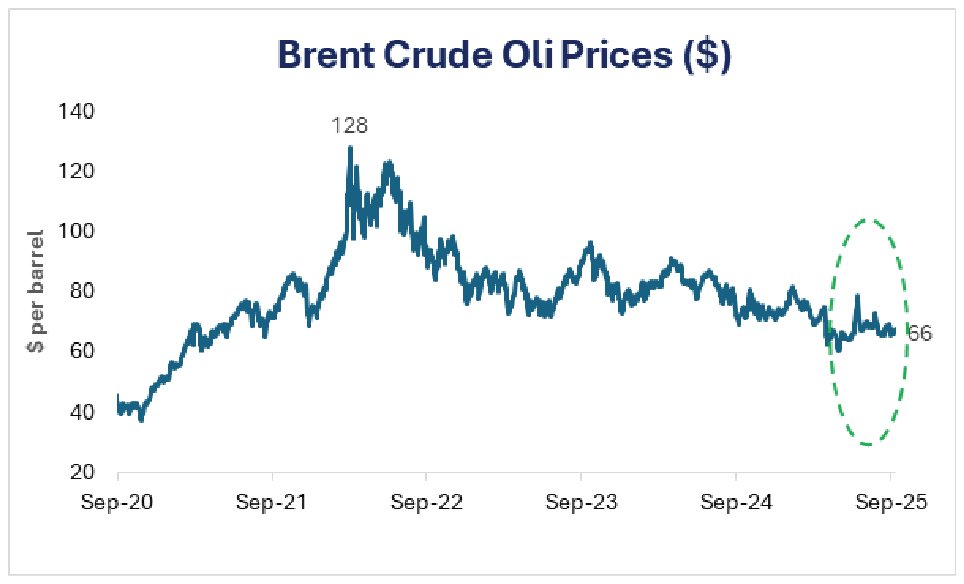
This is where the relationship becomes more interesting.
Higher oil prices can push inflation higher, but they can also weaken economic activity.
Consider an economy that imports most of its energy.
If crude becomes substantially more expensive, households have to spend more on energy, and businesses face higher costs. That can reduce purchasing power, consumption, and investment.
The result can be an uncomfortable combination of higher inflation and weaker growth.
The ECB’s research on energy supply shocks highlights exactly this tension: higher energy costs can increase inflation while reducing real household income, corporate profits, and activity in energy-consuming sectors.
For bond markets, that creates competing forces.
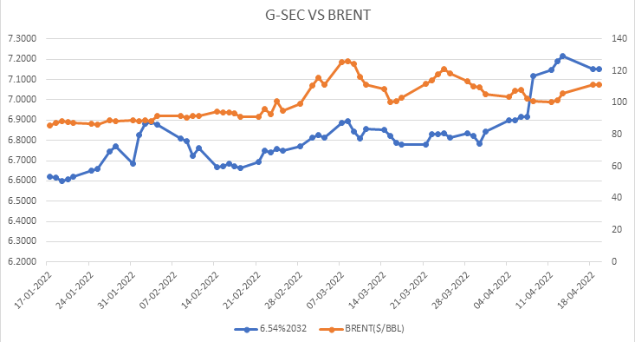
Inflation concerns can push yields higher.
Growth concerns can increase demand for safer government bonds and put downward pressure on some yields.
The final outcome depends on which force investors believe will dominate.
The Reason Behind the Oil Increase Matters
Not every oil-price increase carries the same economic meaning.
Oil can rise because global demand is strong. It can also rise because supply has been disrupted.
A demand-driven increase can coincide with stronger economic activity and greater inflation pressure.
A supply-driven increase can raise energy costs while simultaneously damaging production and household purchasing power.
That distinction is important for monetary policy.
The ECB specifically distinguishes supply-driven energy shocks from demand shocks because their effects on economic activity and inflation can be different.
For investors, the question should, therefore, be:
Why is oil rising?
The answer can be more important than the size of the move itself.
Why Long-Term Bond Yields Need Special Attention
Short-term government bond yields are particularly sensitive to expectations for central-bank policy.
Longer-term yields have a broader set of influences.
Investors buying a long-maturity bond are considering the expected path of interest rates and inflation over many years. They also consider economic growth, government borrowing, and the compensation they require for taking long-term interest-rate risk.
An oil shock can, therefore, influence long-term yields if investors believe it could have lasting effects on inflation or monetary policy.
But if the market views the oil increase as temporary, the effect on longer-term inflation expectations may be much smaller.
That is why looking at one bond yield in isolation can give an incomplete picture.
What Happens to Companies When Energy Costs Rise
The effect of higher oil prices is not uniform across businesses.
An airline, logistics company, or energy-intensive manufacturer can have much greater direct exposure to fuel and energy costs than a software company.
Companies with strong pricing power may be able to pass some of their additional costs to customers.
Others may have to absorb the increase, putting pressure on profit margins.
If higher energy costs occur alongside higher interest rates, companies can face two separate pressures at once: rising operating expenses and more expensive financing.
That does not mean every company will suffer. It means the impact depends heavily on the company’s business model, energy exposure, and balance sheet.
Oil Exporters and Oil Importers Face Different Pressures
The economic consequences of higher oil prices also depend on whether a country is a major exporter or importer of crude.
For an oil-exporting economy, higher prices can increase export revenues and potentially improve government income.
For an oil-importing economy, higher crude prices can increase the country’s energy bill and reduce purchasing power.
This difference can produce very different effects on currencies, government finances, corporate earnings, and economic growth.
Investors comparing countries, therefore, need to look at their position in the global energy market rather than assuming that every economy experiences an oil shock in the same way.
Why Oil Matters to Gulf Financial Markets
The relationship is particularly relevant for Gulf markets because hydrocarbons remain economically important across the region.
Higher oil prices can support the revenues of major producers, while changes in global interest rates can affect financing conditions.
The two forces can operate simultaneously.
A stronger oil market can support economic and fiscal conditions in an oil-producing economy, while higher global borrowing costs can make financing more expensive.
For investors in Gulf markets, separating these two effects is important.
Oil can be supportive for one part of the economy while tighter global financial conditions create pressure elsewhere.
What Investors Should Watch When Oil Rises
Oil itself is only the beginning of the analysis.
Investors should watch what happens to inflation after the initial energy-price move.
They should also monitor inflation expectations, government bond yields, central-bank communication, and economic-growth data.
The key question is whether the oil increase remains largely within energy prices or beginning to influence broader inflation and expectations.
The IMF has similarly stressed that the economic impact of an oil shock depends heavily on its size and duration, with persistent increases having larger potential effects on inflation and global output.
That makes persistence one of the most useful things to monitor.
A temporary price spike can produce a very different market outcome from an oil price that remains elevated for months.
The Bigger Picture for Bond Investors
Oil is important to the bond market because it can alter several economic variables at once.
A sustained increase can raise energy costs and headline inflation. If the effect becomes broader or more persistent, investors may reassess inflation expectations and the future path of interest rates.
That can change bond prices and yields.
At the same time, higher energy costs can weaken economic activity, creating a force that may work in the opposite direction.
So there is no reliable rule that says:
Oil up = bond yields up.
The more useful framework is:
Oil prices → inflation and growth → inflation expectations → monetary-policy expectations → bond yields.
The chain can move in different directions depending on what caused the oil-price change and how long it lasts.
That is what makes oil such an important variable for fixed-income investors.
The price of crude is not just telling investors what energy costs today. A sustained change in oil prices can influence assumptions about inflation, interest rates, economic growth, and the cost of capital across the wider economy.
For investors trying to understand bond-market movements, that broader chain is far more useful than watching the oil price alone.