How the U.S. Dollar Shapes Global Trade, Markets and Investment
From commodity prices to corporate debt and investment flows, movements in the dollar can create financial consequences thousands of miles from the United States.
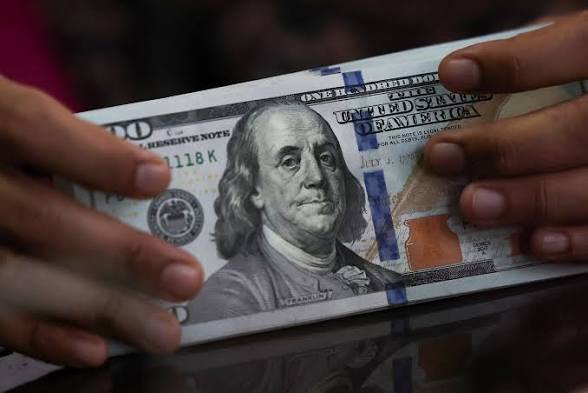
The U.S. dollar is more than the currency used for transactions inside the United States. It is deeply embedded in international trade, banking, investment, and financial markets, giving movements in the dollar consequences that extend well beyond the American economy.
The Federal Reserve says the dollar remains the most widely used currency in foreign exchange transactions and cross-border payments while also maintaining the largest share of official reserve holdings and a dominant position in international debt and lending.
That position means a change in the value of the dollar can affect the cost of importing goods, the repayment burden on foreign borrowers, and the returns investors receive from assets held across borders.
Why Global Trade Uses the Dollar
International trade requires businesses in different countries to agree on a currency in which goods are priced and payments are settled. The dollar has become the dominant choice for many transactions, even when neither the buyer nor the seller is American.
The Bank for International Settlements has estimated that roughly half of international trade is invoiced in the U.S. dollars. Its research also shows that dollar invoicing is particularly widespread outside Europe, where the euro plays a larger role. This creates an important link between the dollar and the cost of international commerce.
For example, a company importing machinery priced in dollars must ultimately obtain dollars to complete the transaction. If its domestic currency loses value against the dollar, the local-currency cost of the machinery can rise even when the supplier has not changed its dollar price.The same mechanism affects commodities, manufactured goods, and other internationally traded products whose contracts are commonly denominated in dollars.
The Dollar’s Influence on Emerging Markets
The dollar’s importance becomes particularly significant for countries and companies that borrow in dollars. A business may generate revenue in its local currency while owing interest and principal in dollars. When the dollar appreciates, the amount of local currency required to service that debt increases.
Also Read
AI Infrastructure Investment Set to Reach $769 Billion in 2026
Federal Reserve research has found that dollar appreciation can weigh on economic activity, investment, and private-sector credit in emerging markets, particularly where economies have greater exposure to dollar-denominated borrowing. This is one reason a move in the U.S. currency can become a financial issue elsewhere. A stronger dollar does not simply change exchange rates; it can alter financing conditions for businesses and governments with dollar liabilities.
Why Investors Watch the Dollar
The dollar is also central to global investment because international investors use the U.S. financial markets as a major destination for capital. For an investor outside the United States, however, investing in a U.S. asset introduces two separate considerations: the performance of the asset itself and the movement of the dollar against the investor’s home currency.
A foreign investor can, therefore, earn a positive return on a U.S. stock but see part of that gain reduced after converting the proceeds back into their domestic currency if the dollar has weakened. The opposite can also occur when the dollar strengthens.
The Dollar and Global Financial Conditions
Dollar funding extends far beyond the U.S. banks and companies.The BIS has reported that around half of cross-border bank loans and international debt securities have historically been denominated in dollars. It describes the dollar as the dominant currency for international funding and investment.
This creates a global financial network in which banks, companies, and investors outside the United States can still have substantial exposure to the U.S. dollar funding conditions.When dollar funding becomes more expensive or difficult to obtain, the effects can spread through international banking and credit markets. The BIS has noted that the widespread use of the dollar can transmit financial shocks across countries because borrowers and lenders are connected through dollar-denominated markets.
Why the Dollar’s Strength Matters
A stronger dollar can have different effects depending on where an economy or company sits in the global financial system. For U.S. consumers and companies purchasing imported goods, a stronger dollar can increase purchasing power against foreign currencies. For U.S. exporters, however, an appreciating dollar can make American products more expensive for overseas buyers when prices are converted into local currencies.
Outside the United States, the consequences can be different. Importers that pay in dollars may face higher costs when their domestic currencies weaken, while borrowers with dollar-denominated debt can face a larger repayment burden. The BIS has also found a relationship between dollar strength and tighter dollar credit conditions, which can affect global supply chains and trade financing.
Why the Dollar Remains Central
The dollar’s position is supported by several interconnected factors rather than one single advantage.The United States has deep financial markets, a large economy, and a substantial supply of highly liquid dollar-denominated assets. These characteristics make it easier for international businesses and investors to use the currency across different types of transactions. There is also a network effect.
The more businesses use the dollar for trade, borrowing, and payments, the more useful the currency becomes to other participants in the global economy. The BIS describes this process as a combination of trade invoicing, dollar debt, and deep capital markets that reinforce the dollar’s international use.
The Dollar’s Global Role Is Bigger Than U.S. Trade
One of the most important features of the dollar’s international position is that its use extends beyond America’s share of global trade. Foreign companies can borrow dollars from banks outside the United States. International investors can purchase dollar-denominated securities issued by non-U.S. companies.
Businesses in different countries can invoice transactions in dollars even when the United States is not directly involved.That means the dollar functions as a common financial language for a large part of the global economy. Its influence is, therefore, felt whenever companies price goods, raise financing, manage foreign exchange exposure, or invest across borders.
Makon Financials