What Is Purchasing Power and How Is It Calculated
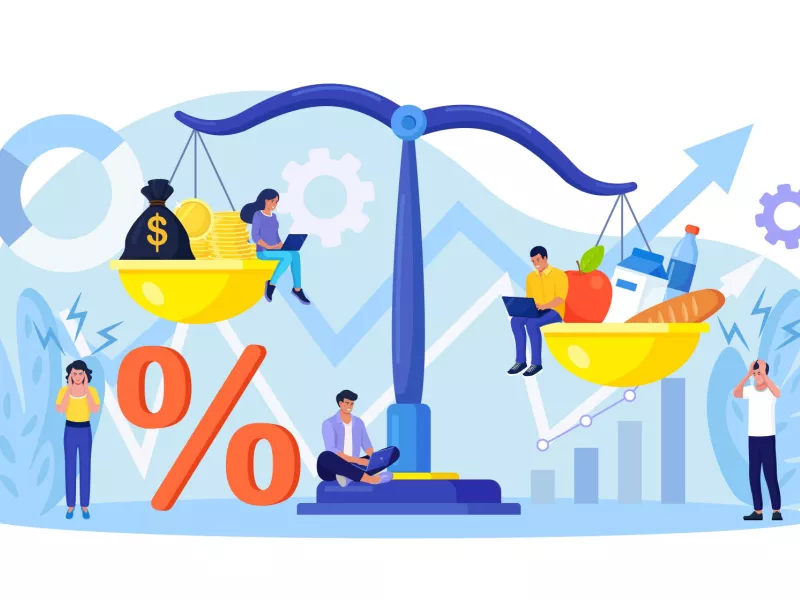
Purchasing power is the amount of goods and services that a unit of money can buy at a given time. It is one of the clearest ways to understand the real value of money because a currency’s face value does not tell you how much it can actually buy.
When prices rise across the economy, the purchasing power of money generally falls. When prices fall, the same amount of money can buy more.
This is why a person can receive a salary increase and still feel financially worse off. If income rises more slowly than the prices of goods and services, the person’s real purchasing power has declined.
The concept is closely connected to inflation, consumer prices, wages, interest rates, and investment returns.
What Is Purchasing Power?
Purchasing power refers to the quantity of goods and services that can be purchased with a specific amount of money.
For example, if $100 buys a particular basket of goods today but the same basket costs $110 next year, $100 has lost purchasing power relative to that basket.
The important point is that the amount of money has not changed. The prices of the goods and services have changed.
Economists, therefore, use price indexes to track changes in purchasing power over time. The Consumer Price Index (CPI), for example, measures the average change over time in the prices consumers pay for a representative basket of goods and services.
How Is Purchasing Power Calculated?
A common way to measure the change in purchasing power is to compare price indexes between two periods.
The basic calculation is:
Purchasing Power = Price Index in the Base Period ÷ Price Index in the Current Period
Suppose a price index was 100 in the base period and has increased to 125.
The calculation would be:
100 ÷ 125 = 0.80
That means the purchasing power represented by the currency is 80% of its level in the base period, based on that price index.
Put another way, the currency has lost about 20% of its purchasing power relative to the basket represented by the index.
The U.S. Bureau of Labor Statistics uses this type of price-index comparison to show how the purchasing power of a dollar changes over time.
Purchasing Power Calculation Example
Assume a basket of goods costs:
$1,000 in Year 1
and:
$1,200 in Year 2
The price level has increased by:
($1,200 − $1,000) ÷ $1,000 × 100 = 20%
The purchasing power of the original $1,000, measured against that basket, is:
$1,000 ÷ $1,200 = 0.8333
So, the $1,000 has about 83.3% of the purchasing power it had when the basket cost $1,000.
This does not mean every product became exactly 20% more expensive. A price index represents changes across a defined basket of goods and services, and individual prices can move very differently.
How Does Inflation Affect Purchasing Power?
Inflation reduces the purchasing power of money when the general price level rises.
The Federal Reserve defines inflation as a general increase in the overall price level of goods and services in the economy. A rise in the price of only one product is not, by itself, inflation.
Consider an economy where inflation is 5%.
If a basket of goods costs $100 before the price increases, it would cost approximately $105 after a 5% increase in the price level.
The original $100 would therefore buy less than it did before.
This is why inflation is often described as a decline in the purchasing power of money. The relationship becomes particularly important when inflation remains elevated for several years because price increases accumulate over time.
Purchasing Power vs. Inflation
Purchasing power and inflation describe related but different things.
Inflation measures how quickly the general price level is increasing. Purchasing power measures what money can buy at that price level.
For example, if inflation rises from 2% to 6%, the rate at which purchasing power is being eroded becomes faster.
But inflation does not tell you exactly how much an individual’s purchasing power has changed.
That depends on the person’s income, spending pattern, and the prices of the goods and services they actually purchase.
A household that spends a large share of its income on a category experiencing rapid price increases can experience a greater reduction in its personal purchasing power than a household whose spending is concentrated in categories with slower price growth.
Research from the Federal Reserve also shows why household-level inflation can differ depending on consumption patterns.
Purchasing Power and Real Income
One of the most important applications of purchasing power is the difference between nominal income and real income.
Nominal income is the amount of money a person earns.
Real income adjusts that income for changes in prices.
Suppose a worker’s salary increases by 5% while the relevant price level increases by 8%.
The worker has more money in nominal terms, but that does not mean the worker can buy more.
A useful approximation is:
Real income growth ≈ Nominal income growth − Inflation
So:
5% − 8% = −3%
The exact calculation is:
Real income growth = [(1 + nominal income growth) ÷ (1 + inflation)] − 1
Using the example:
(1.05 ÷ 1.08) − 1 = −2.78%
The worker’s real purchasing power has therefore fallen by about 2.8%, assuming the inflation measure used is appropriate for the comparison.
The distinction between nominal and real values is fundamental in economic analysis. BEA, for example, describes real values as inflation-adjusted measures that remove the effects of price changes.
Purchasing Power and Investment Returns
The same principle applies to investments.
An investment can produce a positive nominal return while generating a much smaller real return after inflation.
For example, assume an investment earns 7% in a year, and inflation is 4%.
The approximate real return is:
7% − 4% = 3%
The more precise calculation is:
Real return = [(1 + nominal return) ÷ (1 + inflation)] − 1
Therefore:
(1.07 ÷ 1.04) − 1 ≈ 2.88%
The investment increased the investor’s purchasing power by roughly 2.9% rather than 7%.
This is why investors can not evaluate returns properly by looking only at the percentage shown on an investment statement. The price level matters, too.
Why Purchasing Power Matters to Businesses
Purchasing power also matters to companies because consumers ultimately buy goods and services with their income.
When prices rise faster than household incomes, consumers may have less real income available for discretionary spending.
For businesses, the effect can appear in several places at once.
A retailer may face higher wholesale costs. A manufacturer may pay more for inputs. Employees may demand higher wages as living costs increase. Consumers may also become more selective about what they buy.
This can create a difficult environment for companies because raising prices can protect margins but may also reduce demand.
At the same time, higher nominal sales do not automatically mean a business has achieved stronger real growth. If prices increase substantially, part of the increase in revenue may simply reflect higher prices rather than a larger volume of goods or services being sold.
That is why economists and investors distinguish between nominal growth and real growth.
YOU MAY ALSO READ
How Rising Oil Prices Affect Bond Yields, Inflation, and Interest Rates
Purchasing Power and Interest Rates
Interest rates also matter because they influence borrowing, saving, and spending.
When a central bank raises interest rates, borrowing generally becomes more expensive, while the incentive to save can increase. When rates fall, borrowing generally becomes cheaper, and financial conditions become more supportive of spending and investment.
The connection with purchasing power is not straightforward, however.
A higher interest rate does not automatically increase purchasing power. Its effect depends on what happens to inflation, wages, savings returns, borrowing costs, and the wider economy.
For someone holding cash or savings, the relevant question is often whether the return on that money is keeping pace with inflation.
If a savings account earns 2% while inflation is 5%, the money is earning a positive nominal return but losing purchasing power in real terms.
Purchasing Power Parity Is Different
Purchasing power parity (PPP) is related to purchasing power but refers to international comparisons between currencies.
The IMF describes PPP as an exchange rate that would allow currencies to buy the same amount of goods and services in different countries.
For example, suppose the same basket of goods costs the equivalent of $100 in one country and the equivalent of $80 in another after converting currencies at the market exchange rate.
A PPP comparison would examine the exchange rate that would make the purchasing power of the two currencies equivalent for that basket.
PPP is therefore useful when comparing economies, living costs, and economic output across countries.
It should not be confused with the ordinary calculation of how inflation changes the purchasing power of a currency over time.
Why Purchasing Power Matters
Purchasing power provides a more useful view of money than its face value.
A person may have the same amount of money in a bank account from one year to the next, but if prices have increased, that money may buy less.
The same principle applies to wages, savings, pensions, investments, and government benefits.
For investors, the key question is whether returns are beating inflation.
For workers, it is whether income is growing faster than living costs.
For businesses, it is whether customers can continue to afford their products while the company’s own costs are changing.
For policymakers, purchasing power is one of the reasons maintaining price stability matters.
Victor’s Remark
Purchasing power measures what money can buy, while inflation measures how the general price level changes over time.
The basic relationship is straightforward: when the price level rises, the purchasing power of a unit of currency falls.
A simple purchasing-power comparison can be made by dividing the price index for the earlier period by the price index for the later period. The result shows how much purchasing power remains relative to the earlier period.
But purchasing power is more than a calculation.
It is a way of separating nominal money from its real economic value. A higher salary is not necessarily a real pay increase. A 7% investment return is not necessarily a 7% increase in wealth. A larger amount of money in a bank account does not necessarily mean greater financial purchasing power.
The real question is always the same: what can that money buy?
Source: U.S. Bureau of Labor Statistics (BLS)