Bank of Canada Interest Rate Announcement: September 2026 Hold, Inflation Trend, Economic Forecast Update
Bank of Canada Interest Rate Announcement: September 2026 Hold, Inflation Trend, Economic Forecast Update
The Bank of Canada interest rate announcement in September 2026 will be closely watched by investors, businesses and households as the central bank weighs a gradually improving economy against inflation that is still being affected by higher energy prices and global uncertainty.
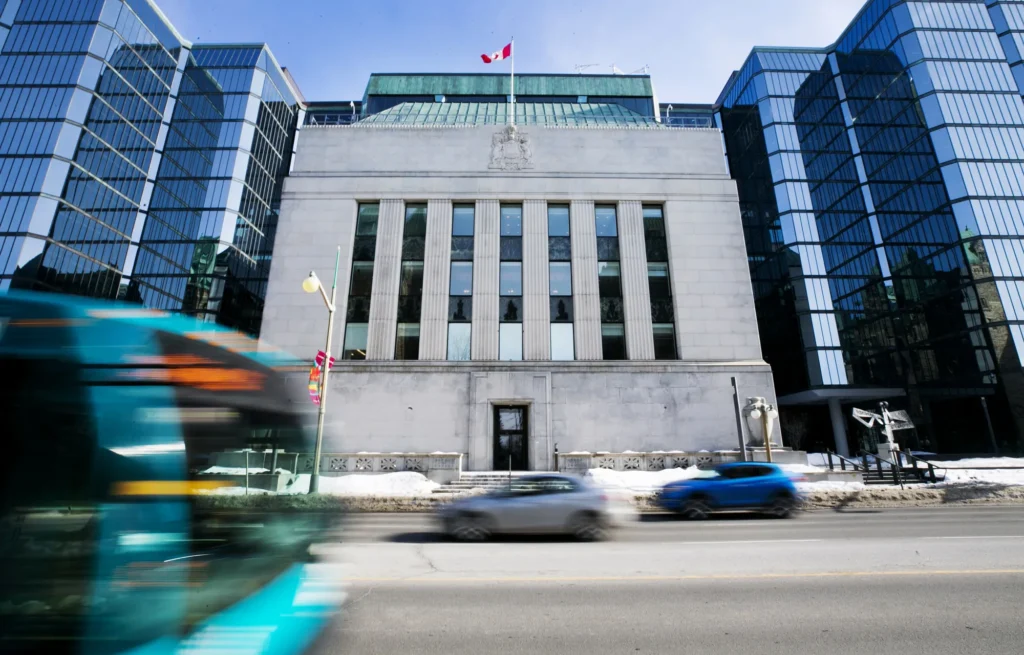
The Bank of Canada is scheduled to announce its next interest-rate decision on September 2, 2026, at 9:45 a.m. Eastern Time. However, the September decision has not yet been announced, so a hold at 2.25% should currently be treated as the expected scenario rather than a confirmed outcome. The Bank’s latest decision on July 15 kept the overnight rate at 2.25%.
The September decision will be important because policymakers are trying to avoid two opposite problems: keeping interest rates too high while the economy is still recovering, or easing policy too quickly while inflation remains vulnerable to another increase.
Why the Bank of Canada interest rate announcement matters
The Bank of Canada interest rate announcement affects the cost of borrowing across the Canadian economy.
When the Bank raises its policy rate, borrowing generally becomes more expensive. That can discourage spending and investment while helping to reduce inflationary pressure.
When rates are lowered, borrowing becomes cheaper, which can support household spending, housing activity and business investment.
A hold at 2.25%, if delivered in September, would signal that the Bank believes its current policy setting remains appropriate while it waits for clearer evidence about inflation and economic growth.
That approach would also be consistent with the Bank’s July decision, when Governing Council said the existing rate remained appropriate to support the recovery while bringing inflation back toward the 2% target.
Bank of Canada September 2026 hold: why a pause makes sense
A Bank of Canada September 2026 hold would allow policymakers to gather more economic information before making another move.
The central bank has already kept the policy rate at 2.25% at every scheduled decision in 2026 through July. The rate was last reduced in October 2025, when it was cut by 25 basis points from 2.50%.
The decision to remain at 2.25% reflects a complicated economic picture.
Canada’s economy has been weak and volatile, but there are signs that activity is recovering. At the same time, inflation rose sharply because of higher gasoline prices linked to the conflict in the Middle East.
That combination gives the Bank a reason to wait.
A rate cut could provide additional support to the economy, but it could also make it harder to bring inflation back to target if price pressures remain persistent.
Inflation remains the biggest question
The inflation trend will be one of the most important factors behind the Bank of Canada September 2026 interest rate decision.
Canada’s headline CPI inflation reached 3.2% in May, largely because gasoline prices increased. However, inflation excluding gasoline was much closer to the Bank’s 2% target, at 2.2%, while core inflation measures remained close to 2%.
This distinction is important.
Headline inflation can move sharply because of energy prices, even when underlying price pressures are relatively contained.
For the Bank of Canada, the question is whether higher energy costs will remain temporary or begin to spread more broadly through the economy.
The Bank expects inflation to remain elevated in the near term before gradually easing, with inflation returning to around 2% in early 2027 under its July forecast.
The Bank of Canada economic forecast points to a slow recovery
The economic forecast provides another reason why September’s decision could be a hold.
The Bank expects Canadian GDP growth of just 0.7% in 2026, followed by stronger growth of 1.8% in both 2027 and 2028.
That is not a picture of an overheating economy.
Instead, policymakers are dealing with an economy that is gradually recovering from weak activity, trade uncertainty and slower population growth.
The Bank said Canada’s GDP data had been choppy as the economy adjusted to tariffs, uncertainty and slower population growth. However, it estimated that the economy grew at an annualized pace of about 2.5% in the second quarter, although some of that improvement reflected temporary factors.
For the central bank, that means there is less urgency to stimulate the economy aggressively.
Labour market weakness could keep the Bank cautious
Employment conditions will also matter for the Bank of Canada interest rate announcement.
Canada’s unemployment rate stood at 6.5% in June and has remained in a range of roughly 6.5% to 7% since the end of 2024, according to the Bank. The central bank described labour-market conditions as soft and said there was still economic slack.
This gives policymakers room to remain patient.
If unemployment remains elevated while inflation continues to ease, the argument for keeping rates steady becomes stronger.
However, if the labour market deteriorates sharply, pressure could build for the Bank to consider lower rates to support economic activity.
Oil prices are creating an unusual inflation problem
One of the biggest complications facing the Bank of Canada is energy prices.
Higher oil prices can increase inflation because gasoline, transportation and other energy-related costs become more expensive.
But Canada is also a major energy producer and exporter.
That means higher oil prices can provide additional income to Canadian producers and exporters, partially offsetting the negative impact of higher energy costs on consumers.
The Bank has therefore warned that the inflation outlook is highly dependent on developments in the Middle East and the path of oil and gasoline prices.
This makes future inflation harder to predict.
Trade uncertainty remains a major risk
The Bank of Canada is also dealing with continued uncertainty surrounding trade with the United States.
Canada’s economy is heavily connected to the U.S. market, so tariffs and changes in trade arrangements can affect exports, investment and business confidence.
The Bank said businesses were adjusting to the new trade environment and that some were finding ways to navigate the uncertainty surrounding the Canada-United States-Mexico Agreement.
It expects export growth to resume, although on a lower path than previously anticipated.
For Canadian businesses, this means interest rates are only one part of the economic picture.
A company may benefit from lower borrowing costs but still face weaker demand or higher costs if trade restrictions disrupt its supply chain.
What a September hold would mean for Canadian borrowers
If the Bank of Canada keeps the overnight rate at 2.25% in September, borrowers would not receive another immediate reduction in the central bank’s benchmark rate.
For households, the effect would be particularly relevant to mortgages and other variable-rate borrowing.
For businesses, a prolonged period at 2.25% would mean financing conditions remain considerably easier than during the earlier period of monetary tightening, but borrowing costs would not continue falling automatically.
The bigger question would then shift toward when the Bank might make its next move.
What investors should watch after the decision
The Bank of Canada September 2026 rate decision should not be judged only by whether the Bank holds, cuts or raises rates.
Investors will also examine the language used by Governor Tiff Macklem and other policymakers.
If the Bank sounds confident that inflation is moving toward 2%, markets could increase expectations for future rate cuts.
If policymakers become more concerned about energy-driven inflation or persistent price pressures, investors could instead expect rates to remain higher for longer.
The Canadian dollar, government bonds and interest-rate-sensitive stocks could all react to changes in those expectations.
SUGGESTED ARTICLE
The next major economic forecast comes in October
One important detail for investors is that the September announcement will not come with a new Monetary Policy Report.
The Bank publishes its full quarterly Monetary Policy Report alongside its January, April, July and October rate decisions. The next one is scheduled for October 28, 2026.
That means September’s decision will be based on incoming economic data and the Bank’s existing assessment rather than a completely new quarterly forecast.
The October meeting could therefore become even more important because policymakers will have another full economic projection to work with.
What the September Bank of Canada decision means for 2026
The September decision comes down to a delicate balance.
Canada’s economy is showing signs of recovery, but growth remains modest. The labour market is soft, but inflation has been pushed higher by energy costs. Underlying inflation is much closer to the Bank’s 2% target, but geopolitical developments could quickly change the outlook.
That explains why a Bank of Canada September 2026 hold at 2.25% is a plausible scenario, although it remains unconfirmed until the September 2 announcement.
For investors, the bigger story is what happens after the pause.
If inflation continues to move toward 2% and economic growth remains weak, the door to future rate cuts could reopen.
If inflation remains elevated for longer, the Bank may have to keep rates at 2.25% or potentially reconsider its policy stance.
The September announcement will therefore be less about one interest-rate number and more about what that number says about Canada’s economic direction heading into the final quarter of 2026.